From Code Commit to Cloud Takeover: How Attackers Are Hijacking DevOps Tools
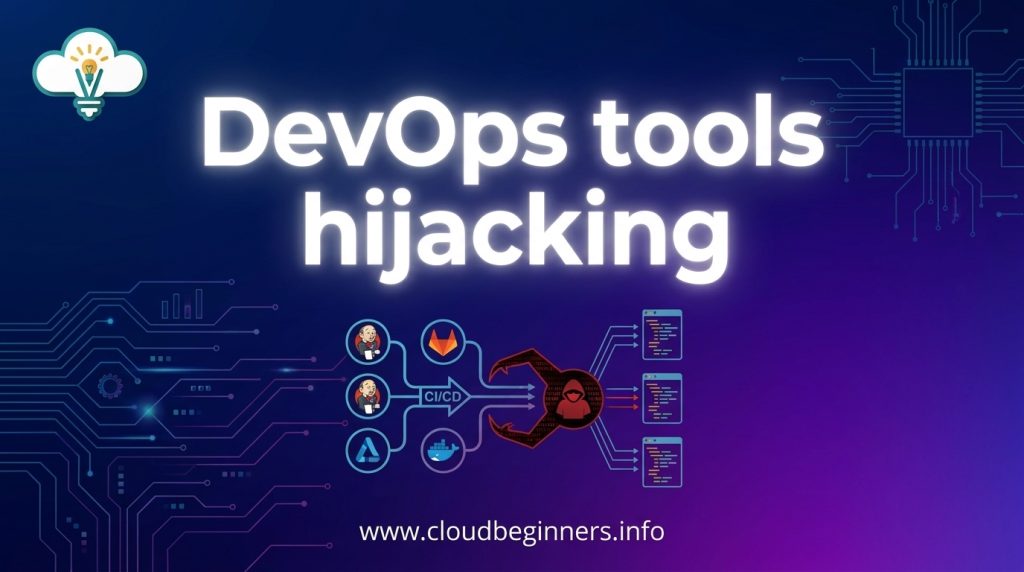
Have you ever wondered how attackers go from stealing your Git credentials to controlling your entire cloud infrastructure? It’s happening right now, and your DevOps pipeline is the perfect attack vector.
Your CI/CD tools have become the new favorite target for sophisticated threat actors. They’re exploiting the very tools meant to streamline your development process to gain persistent access to sensitive systems.
What makes DevOps security so challenging is the perfect storm of complexity, automation, and privileged access. One compromised build server can give attackers keys to your entire kingdom.
The scariest part? These supply chain attacks targeting DevOps tools are increasing at an alarming rate, yet most security teams are still focused on traditional perimeter defenses.
But what exactly makes your build systems so vulnerable, and why are attackers so drawn to them?
Understanding the Modern DevOps Attack Surface
How CI/CD Pipelines Create New Security Vulnerabilities
Ever noticed how your shiny new CI/CD pipeline is both your biggest productivity win and potentially your biggest security headache? When you automate code deployment, you’re essentially creating a conveyor belt that can quickly move vulnerabilities from development straight into production.
Your pipelines often run with elevated privileges to deploy code, provision infrastructure, and manage secrets. Think about it – that’s essentially giving your automation tools the keys to your kingdom.
One compromised pipeline configuration, and attackers can inject malicious code that rides your automation highway straight into production.
Common Entry Points Attackers Exploit in DevOps Workflows
Attackers aren’t looking for complex ways in – they’re hunting for the path of least resistance:
- Developer credentials: Your GitHub or GitLab access tokens are prime targets
- Insecure pipeline configurations: Those YAML files controlling your builds? They’re a goldmine for attackers
- Leaked secrets: Hard-coded API keys in repositories or unsecured environment variables
- Unpatched build tools: Your Jenkins server might be several vulnerable versions behind
The Rising Trend of Supply Chain Attacks Targeting Development Tools
You’re not just defending your own code anymore. The SolarWinds and Codecov incidents proved that attackers have moved upstream.
When you pull that npm package or container image, you’re trusting a complex supply chain. Attackers know this and target popular dependencies, knowing one poisoned package can compromise thousands of downstream environments.
Why Traditional Security Measures Fail in DevOps Environments
Your legacy security tools simply can’t keep up with DevOps speed. Traditional security was built for quarterly releases, not dozens of deployments per day.
Static perimeters have dissolved. Your infrastructure is defined as code, provisioned on demand, and torn down hours later. You can’t scan what doesn’t exist, and you can’t rely on fixed IP addresses when everything is ephemeral.
Critical Vulnerabilities in Code Management Systems
A. Exploiting misconfigured repository permissions
When was the last time you checked who has access to your code repositories? Misconfigured permissions are a goldmine for attackers looking to hijack your DevOps tools.
You might think your repo is secure, but one overlooked setting can give unwanted guests the keys to your kingdom.
Common mistakes you’re probably making include:
- Granting admin access to everyone on your team
- Not revoking permissions when someone leaves
- Using the same access level for all branches, including production
These slip-ups create a perfect entry point for attackers to insert malicious code that can spread throughout your entire system without raising any alarms.
B. Leveraging compromised developer credentials
Your developers’ credentials are hot commodities on the dark web. Once an attacker grabs those login details, they can commit code as a trusted member of your team.
No suspicious activity flags, no unusual access patterns – just a normal-looking commit that happens to contain a backdoor.
Two-factor authentication helps, but you’d be shocked how many development teams skip this basic protection. When credential theft happens, attackers often lay low, observing your workflow and planning their attack for maximum impact.
C. Code injection techniques in continuous integration environments
Your CI pipelines are particularly vulnerable. Attackers target these environments because they know you’ve optimized for speed, not security. They inject malicious code during the build process, where it gets distributed with your official release.
Common techniques include:
- Inserting backdoors during automated testing
- Modifying build scripts to include remote payloads
- Exploiting environment variables to gain persistent access
D. Trojanized dependencies and poisoned packages
Think about how many third-party packages your projects depend on. Each one represents a potential attack vector. Attackers are increasingly poisoning popular packages with seemingly innocent code that creates hidden access points to your systems.
The scariest part? You often pull these dependencies automatically during builds, and rarely inspect their contents. This “supply chain” attack method has skyrocketed in popularity because it’s so effective – you’re literally installing the malware yourself.
E. Case study: Recent high-profile repository breaches
Remember the SolarWinds attack? Attackers compromised the build system and inserted malicious code into official software updates. Over 18,000 organizations downloaded these compromised updates, leading to one of the most devastating supply chain attacks ever.
Or look at the Codecov breach, where attackers modified a bash uploader script to exfiltrate sensitive information from thousands of CI environments. Organizations using Codecov in their pipelines unknowingly leaked secrets, tokens, and credentials to attackers for months before discovery.
These weren’t isolated incidents – they represent a growing trend of DevOps tool targeting that could affect your systems next.
From Development to Deployment: Attack Progression
From Development to Deployment: Attack Progression
A. Initial access through compromised repositories
You’ve worked hard securing your network perimeter, but attackers have shifted their focus to your code repositories. They’re targeting your GitHub, GitLab, or Bitbucket accounts through stolen credentials or exploiting misconfigurations.
When you accidentally commit API keys or access tokens (happens to the best of us!), attackers grab these instantly and gain their foothold.
Most teams don’t realize they’ve been compromised until it’s too late. A single poisoned dependency in your package manager can open doors to your entire infrastructure. Think about it – when was the last time you audited every package in your package.json or requirements.txt?
B. Lateral movement via CI/CD pipeline abuse
Once attackers get into your repositories, your CI/CD pipelines become their highway to broader access. Your Jenkins, CircleCI, or GitHub Actions configurations are gold mines for attackers.
Here’s what they’re exploiting in your pipelines:
| Vulnerability | How it’s exploited | Impact |
|---|---|---|
| Excessive permissions | Pipeline runs with admin access | Complete environment control |
| Unprotected secrets | Environment variables exposed | Access to production systems |
| Insecure build configs | Injection of malicious build steps | Backdoors in your applications |
C. Privilege escalation in cloud infrastructure
Your cloud infrastructure is the ultimate prize. After compromising your pipelines, attackers hunt for your AWS roles, Azure service principals, or GCP service accounts with overly permissive policies.
They’re searching for IAM misconfigurations in your Terraform code or CloudFormation templates. Those temporary credentials you generated for “just testing” and never revoked? That’s their ticket to creating backdoor admin accounts or hijacking your Kubernetes clusters.
D. Persistence mechanisms in containerized environments
Containerized environments give attackers plenty of hiding places. They’re injecting malicious code into your container images or tampering with your Helm charts to maintain access even after you’ve patched initial vulnerabilities.
Your Kubernetes environment is particularly vulnerable if you haven’t locked down RBAC permissions. Attackers create privileged pods, establish backdoor service accounts, or plant cronjobs that ping their C2 servers. Unless you’re specifically looking for these persistence techniques, they’ll remain hidden for months.
Container and Orchestration Security Failures
Kubernetes Security Misconfigurations Exploited by Attackers
You’ve built a beautiful Kubernetes cluster, but attackers are eyeing those misconfigurations you glossed over during deployment. Default RBAC settings? They’re a goldmine.
Those wide-open network policies? Practically an invitation. When you skip hardening your control plane components or leave your API server exposed, you’re basically rolling out the red carpet for threat actors.
The scariest part? Many attacks start with something as simple as an overprivileged service account or a dashboard you forgot to properly secure. Fix these issues now before someone else “fixes” them for you.
Container Escape Techniques and Their Impacts
Think your containers are isolated? Think again. Attackers aren’t just staying in their container lane – they’re breaking out and taking over your entire host.
Container escape techniques exploit weak configurations like:
- Mounted host directories you thought were harmless
- Privileged containers you deployed “just temporarily”
- Kernel vulnerabilities you haven’t patched
Once attackers escape, they can move laterally through your network, access secrets across containers, and potentially compromise your entire cloud infrastructure. Your containerized app isn’t just vulnerable; it’s a potential launchpad for a complete DevOps environment takeover.
Vulnerable Image Registries as Attack Vectors
Your container registry might be the weakest link in your DevOps security chain. Unscanned images, poor access controls, and outdated base images create perfect storm conditions for attackers.
Supply chain attacks targeting your registries are surging. Without proper signing and verification, you can’t really know what’s running in your environment. That Ubuntu base image might contain more “features” than you bargained for.
Runtime Security Blind Spots
Runtime is where the rubber meets the road for container orchestration vulnerabilities. You’re monitoring for suspicious processes, right? What about network connections between containers? Resource utilization spikes?
Without runtime security tools, you’re flying blind. Attackers count on these blind spots to establish persistence, exfiltrate data, and pivot through your environment undetected.
Most compromises go unnoticed for weeks because teams focus on deployment security but neglect runtime protection.
Defending Your DevOps Pipeline
A. Implementing secure coding practices and automated scanning
You’re building fast, but are you building safe? Your code is the foundation of your DevOps pipeline – and attackers know it. Start by integrating security into your development workflow with these practices:
- Use pre-commit hooks to catch secrets and vulnerabilities before they enter your repository
- Run SAST (Static Application Security Testing) tools to identify code vulnerabilities automatically
- Implement dependency scanning to catch vulnerable libraries before they reach production
Remember that automation is your friend. You don’t need to choose between speed and security when tools can scan every code commit without slowing you down.
B. Hardening CI/CD systems with least privilege principles
Your CI/CD pipeline has become an attractive target. Want to protect it? Implement least privilege access everywhere:
- Give your build servers only the permissions they absolutely need
- Rotate credentials regularly and use ephemeral credentials when possible
- Isolate your build environments from production systems
- Never store secrets in plaintext in your pipeline configuration
Think of your pipeline as a chain – it’s only as strong as its weakest link. By limiting what each component can access, you minimize the blast radius if one piece gets compromised.
C. Monitoring for suspicious activities in build processes
You can’t defend what you can’t see. Set up comprehensive monitoring across your pipeline:
- Track unusual build behaviors like suspicious package installations
- Monitor for unexpected code changes or unauthorized commits
- Set up alerts for abnormal build timing or resource usage
- Implement build signing to verify integrity throughout the process
Your build logs aren’t just for debugging – they’re a security goldmine. Make them work for you by establishing baselines and watching for deviations.
D. Securing cloud infrastructure against compromised deployments
Your cloud infrastructure needs safeguards against potentially compromised deployments:
- Implement infrastructure as code (IaC) scanning to catch misconfigurations
- Use immutable infrastructure patterns to eliminate drift and unauthorized changes
- Enable just-in-time access for administrative functions
- Deploy network segmentation to contain potential breaches
Cloud environments give attackers plenty of room to hide. By applying defense-in-depth strategies, you make their job exponentially harder.
E. DevSecOps strategies that don’t sacrifice speed
Security doesn’t have to be the department of “no.” Your DevSecOps transformation can actually accelerate delivery:
- Shift security left by embedding it into development, not bolting it on later
- Automate compliance checks to reduce manual reviews
- Build security champions within development teams
- Focus on fixing root causes rather than individual vulnerabilities
When you treat security as a quality attribute rather than a checkpoint, you’ll find your teams delivering secure code faster than ever before.
Protecting your DevOps environment requires a proactive, multi-layered security approach that addresses vulnerabilities across your entire pipeline.
From securing code repositories and implementing strict access controls to regularly scanning containers and monitoring deployment workflows, each defensive measure strengthens your organization against sophisticated attack chains that can turn a simple code commit into a complete cloud infrastructure compromise.
As you enhance your DevOps security posture, remember that the most successful defense strategies combine technological solutions with security-aware practices and team education.
By treating security as an integrated component of your development lifecycle rather than an afterthought, you can maintain the speed and efficiency of modern DevOps while effectively safeguarding your most valuable digital assets against increasingly sophisticated threats.
I’ve also built a platform that shows you how to build the right hands-on cybersecurity skills to help businesses achieve their cloud security goals while you build the career you love for a better, higher-paying reward. Check it out here and start working on projects that will help you get hired.
The Author