The 5 Most Dangerous CI/CD Vulnerabilities You Should Know (Number 2 Will Shock You!)
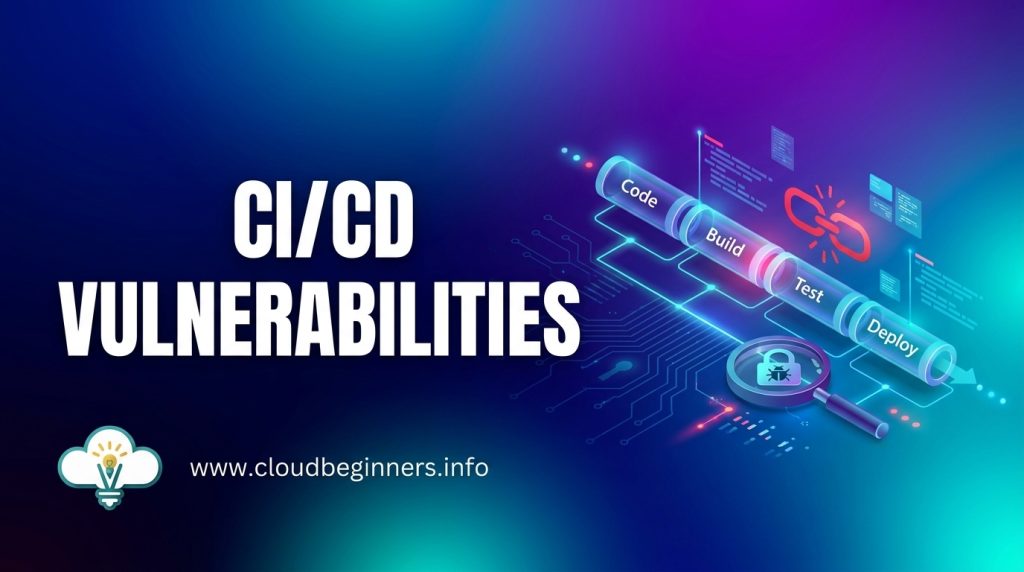
Have you deployed code on Friday afternoon only to get that 2 AM emergency call? That’s amateur hour compared to what modern CI/CD vulnerabilities can do to your infrastructure. Your pipeline might be a ticking time bomb right now.
You’re about to discover the five deadliest CI/CD security vulnerabilities that could derail your entire development ecosystem. And yes, secure CI/CD pipelines should be your top priority this year.
The threat landscape has evolved beyond recognition. Remember when we only worried about basic injection attacks? Now attackers are targeting the very foundation of how you build and deploy software.
But what makes vulnerability #2 so particularly terrifying? It’s the perfect combination of simplicity and devastation, and almost nobody is checking for it.
Understanding Modern CI/CD Security Landscape
A. Evolution of CI/CD threats since 2023
You’ve probably noticed how CI/CD threats have transformed dramatically since 2023. Back then, attackers mainly focused on stealing credentials and exploiting basic misconfigurations. Today, they’re targeting the entire pipeline with sophisticated supply chain attacks that can go undetected for months.
Remember when compromised dependencies were rare? Now they’re commonplace. Attackers have shifted from opportunistic breaches to strategic pipeline infiltrations where they can manipulate your code during the build process itself.
The scariest part? Many of these attacks now leverage AI to identify vulnerabilities and adapt to your security measures in real-time.
B. Why vulnerabilities are increasing in complexity
Your CI/CD pipelines are facing increasingly complex threats for several reasons. First, as you’ve added more tools and integrations to your DevOps workflow, you’ve inadvertently expanded your attack surface. Each connection point creates a potential entry for attackers.
The rapid adoption of infrastructure as code has introduced new security misconfigurations that weren’t possible in traditional environments. When you declare your infrastructure in code, a single syntax error can expose your entire system.
Container escape vulnerabilities have evolved too. In 2023, attackers needed multiple exploits to break out of containers. Now, they can leverage just one sophisticated vulnerability to jump from your container to your host system.
C. The impact of automation on security risks
Automation is a double-edged sword for your security posture. You’ve probably automated large portions of your pipeline to speed up delivery, but this acceleration comes with risks. When you automate without proper security checks, you’re essentially creating high-speed highways for attackers.
Your automated pipelines can propagate vulnerabilities faster than ever before. A single compromised component can infect your entire system within minutes rather than days. This multiplication effect makes CI/CD security threats particularly dangerous.
The most concerning trend? Attackers are now using the same automation tools you love to orchestrate their attacks. They’re creating automated exploits that continuously probe your pipelines for weaknesses.
D. Key industries most affected by CI/CD attacks
Financial services lead the pack as prime targets, with attackers going after your payment processing pipelines. When your money-moving systems are compromised, the damage is immediate and substantial.
Healthcare organizations are next on the list. Your patient data systems and connected medical devices are increasingly built and deployed through CI/CD pipelines, creating life-threatening risks when compromised.
| Industry | Primary CI/CD Attack Target | Average Breach Cost |
|---|---|---|
| Financial | Payment Processing Pipelines | $9.2M |
| Healthcare | Patient Data Systems | $7.8M |
| Government | Critical Infrastructure | $6.5M |
| Retail | Customer Payment Info | $5.3M |
Government agencies running critical infrastructure through DevOps pipelines have seen targeted attacks rise 340% since 2023. Your energy grids, water systems, and defense networks are in the crosshairs.
Supply Chain Poisoning: The Silent Epidemic
A. How attackers compromise your dependencies
Think your code is secure because you wrote it carefully? That’s only half the battle. Your application likely depends on dozens or hundreds of third-party packages that could be compromised right under your nose.
Attackers don’t need to hack your systems directly anymore. They target the packages you trust and use daily. Here’s how they do it:
- Typosquatting: Creating malicious packages with names similar to popular ones (like “lodsh” instead of “lodash”)
- Account takeovers: Compromising the accounts of legitimate package maintainers
- Dependency confusion: Exploiting how your package manager resolves dependencies by publishing malicious packages with higher version numbers
You’re particularly vulnerable when your CI/CD pipeline automatically pulls dependencies without proper verification. One poisoned package, and your entire delivery pipeline becomes an attack vector.
B. Real-world examples that shocked the industry
Remember the SolarWinds attack? That wasn’t just another breach; it was a wake-up call. Attackers infiltrated SolarWinds’ build system and injected malicious code into official software updates. Over 18,000 organizations downloaded the compromised update, including government agencies.
More recently:
- The event-stream incident where a seemingly innocent package maintenance transfer led to cryptocurrency theft
- codecov bash uploader compromise that stole sensitive environment variables and tokens from thousands of CI pipelines
- ua-parser-js, a package with over 7 million weekly downloads, was hijacked to deploy cryptocurrency miners
Each case shows how one weak link in your supply chain can compromise everything downstream: your code, your customers, and your reputation.
C. Why traditional security measures fail to detect this threat
Your antivirus and firewalls? Nearly useless against supply chain attacks. Here’s why your current security approach probably isn’t cutting it:
- Traditional security focuses on known signatures, but supply chain attacks use legitimately signed code
- Your vulnerable window begins the moment a dependency is compromised, not when you deploy it
- Trust relationships in CI/CD pipelines mean compromised dependencies inherit permissions to access sensitive resources
- The complexity of dependency trees makes manual inspection virtually impossible
Most security tools scan your code; not the infrastructure that builds it. This disconnect creates blind spots where malicious code can hide for months before anyone notices.
D. The cascading effect of compromised packages
When a dependency in your supply chain gets poisoned, the damage spreads faster than you can contain it. One compromised package doesn’t just affect a single application; it impacts everything that depends on it.
The cascade typically follows this pattern:
- Initial compromise of a dependency you use
- Automatic incorporation into your build process
- Distribution to all your environments, including production
- Execution across your infrastructure with inherited privileges
- Lateral movement to connected systems and services
What makes this particularly dangerous is that your CI/CD pipeline, designed for efficiency and automation, becomes the perfect distribution mechanism for malicious code. A single compromised package can infect hundreds of downstream applications before you even realize there’s a problem.
E. Prevention strategies for supply chain integrity
Protecting your supply chain requires a multi-layered approach:
- Implement dependency pinning – Lock versions and use checksums to ensure you get exactly what you expect
- Set up a private artifact repository – Create an internal buffer zone where you can scan packages before use
- Use Software Bill of Materials (SBOM) – Maintain a comprehensive inventory of all components in your software
- Enable multi-factor authentication everywhere in your pipeline
- Deploy automated scanning tools specifically designed for supply chain threats
Consider implementing these specific measures in your CI/CD pipeline:
- Dependency vendoring for critical components
- Reproducible builds to detect tampering
- Least privilege principles for build systems
- Regular dependency audits
- Automated vulnerability scanning before dependency updates
Don’t wait for a breach to take supply chain security seriously. Your entire software ecosystem depends on the integrity of every component you bring into it.
Pipeline Configuration Vulnerabilities

Secrets Management Failures
Your secrets aren’t as secret as you think. In this age, poor secrets management continues to be one of the most dangerous CI/CD vulnerabilities you’ll face.
When your build pipelines have access to deployment credentials, API keys, and database passwords, they become prime targets for attackers.
Think about it – how many times have you hardcoded a secret directly in your pipeline configuration? Or stored credentials in environment variables without proper encryption? These seemingly minor shortcuts create massive security gaps in your DevOps workflow.
The worst part? Many teams still store secrets in plain text within their pipeline configurations or commit them directly to source code repositories. Once an attacker gains access to your CI/CD system, they can easily extract these secrets and use them to move laterally through your infrastructure.
Overprivileged CI/CD Systems
You’re giving your pipelines way too much power. Many CI/CD systems run with excessive privileges that go far beyond what they actually need. When your build agent can access production environments with admin rights, you’re practically rolling out the red carpet for attackers.
The principle of least privilege exists for a reason, but it’s shocking how many organizations ignore it in their DevOps pipelines. Your CI/CD systems should only have access to the specific resources they need to do their job – nothing more.
Insecure Webhook Implementations
Those webhooks triggering your builds?
They’re massive security holes if implemented poorly. Attackers can exploit insecure webhook configurations to trigger unauthorized builds, inject malicious code, or even launch denial of service attacks against your CI/CD infrastructure.
Without proper authentication and validation, your webhook endpoints become an easy entry point for supply chain attacks. The scariest part is that many teams don’t even monitor webhook traffic, so these attacks can go undetected for months.
Container Escape Exploits
How attackers break container isolation
Think your containerized apps are safe? Think again. In 2026, container escape vulnerabilities have become a nightmare for DevOps teams everywhere.
Attackers typically exploit kernel vulnerabilities, permission misconfigurations, or shared namespace weaknesses to break out of their confined environments.
You’ll often see hackers targeting the container runtime (like Docker or containerd) by exploiting CVEs that allow them to elevate privileges. They’re getting smarter too – using techniques like mounting the host filesystem by abusing volume mounts or exploiting weaknesses in container orchestration platforms like Kubernetes.
The devastating potential of kernel-level access
Once attackers escape the container, you’re in serious trouble. With kernel-level access, they can:
- Move laterally through your entire infrastructure
- Access sensitive data across all containers
- Install rootkits to maintain persistent access
- Compromise your CI/CD pipeline itself
The scariest part? This access is practically invisible to your standard monitoring tools. Your entire supply chain is at risk when attackers gain this level of access.
Detection challenges for security teams
You can’t fix what you can’t see. Container escapes are notoriously difficult to detect because:
- Container logs don’t show host-level activities
- Traditional security tools lack container context
- The ephemeral nature of containers complicates forensics
- Attack signatures change constantly
Latest containment technologies and their limitations
While newer technologies like gVisor, Kata Containers, and Firecracker promise better isolation, they’re not silver bullets. Each comes with tradeoffs in performance, compatibility, and operational complexity.
Your DevSecOps strategy must balance these factors while implementing defense-in-depth approaches to truly protect your CI/CD pipeline.
Infrastructure as Code (IaC) Misconfigurations
A. Template injection attacks
You’ve probably heard the saying “garbage in, garbage out.” With IaC templates, it’s more like “malicious code in, compromised infrastructure out.” Template injection attacks happen when attackers slip harmful commands into your infrastructure templates. Think Terraform, CloudFormation, or Ansible files that you trust completely.
Here’s the scary part: once these injections make it into your templates, they become part of your legitimate infrastructure. Your own automation tools then deploy the attack for the bad guys! It’s like hiring someone to rob your own house.
Common attack vectors include:
- Manipulating variable inputs
- Exploiting poorly sanitized user data
- Injecting commands through environment variables
B. Privilege escalation through IaC
Your IaC definitions are basically a roadmap to your entire infrastructure. If you’re not careful with permission settings, you’re practically handing attackers the keys to your kingdom.
Attackers often target overpermissioned service accounts or IAM roles defined in your IaC files. What starts as access to a single resource can quickly snowball into complete infrastructure takeover.
A real-world example: an attacker gains access to a Terraform state file with admin credentials, then uses those permissions to create backdoor accounts across your entire cloud environment. Game over.
C. Hidden backdoors in infrastructure definitions
Hidden backdoors in your IaC are ticking time bombs. Unlike noisy attacks, these subtle modifications can go undetected for months while silently exfiltrating your data.
Common backdoor techniques include:
- Creating shadow admin accounts
- Opening obscure network ports
- Adding rogue SSH keys to compute resources
- Modifying logging configurations to hide activity
The worst part? These backdoors often survive infrastructure refreshes because they’re baked into the very code that defines your systems.
D. Automated scanning solutions and their effectiveness
You can’t manually review every line of IaC in a modern DevOps environment. That’s why automated scanning tools have become essential.
Tools like Checkov, Terrascan, and Snyk IaC can catch many issues, but they’re not perfect:
| Tool Type | Strengths | Limitations |
|---|---|---|
| Static Analysis | Catches syntax and common misconfigurations | Misses context-specific issues |
| Policy as Code | Enforces company-specific security rules | Requires expertise to implement effectively |
| Dynamic Testing | Finds runtime vulnerabilities | Can’t catch everything before deployment |
The most effective approach combines these tools with human review for critical infrastructure components.
E. Best practices for secure IaC implementation
Securing your IaC requires a multi-layered approach:
- Version control everything – Track all changes and require peer reviews before merging
- Principle of least privilege – Define the minimum permissions needed for each resource
- Immutable infrastructure – Rebuild rather than modify existing resources
- Secrets management – Never hardcode credentials in your IaC files
- Drift detection – Regularly check for unauthorized changes between your IaC and actual infrastructure
Consider implementing a “pipeline-as-code” approach where your CI/CD pipeline itself is defined as code and subjected to the same rigorous security checks as your infrastructure.
Remember that your IaC security is only as strong as your weakest configuration. One misconfigured S3 bucket or over-permissioned IAM role can compromise your entire environment.
The cybersecurity landscape of CI/CD systems continues to evolve at a rapid pace, with the five vulnerabilities we’ve explored representing the most concerning threats you’ll face in 2026.
Supply chain poisoning has emerged as a particularly shocking threat, with attackers exploiting trusted relationships to distribute compromised components throughout your development ecosystem.
Pipeline configurations, container security, and IaC practices remain critical areas requiring your immediate attention to prevent potentially devastating breaches.
As you strengthen your DevSecOps approach, remember that security must be integrated throughout your entire development lifecycle, not treated as an afterthought.
Implement rigorous code scanning, enforce least privilege principles, and establish comprehensive monitoring systems across your CI/CD infrastructure.
By proactively addressing these vulnerabilities now, you’ll build resilience against the increasingly sophisticated threats targeting modern software delivery pipelines in the coming years.
I’ve also built a platform that shows you how to build the right hands-on cybersecurity skills to help businesses achieve their cloud security goals while you build the career you love for a better, higher-paying reward. Check it out here and start working on projects that will help you get hired.
The Author