Hackers Are Injecting Malware into Your CI/CD Pipelines – Here’s How to Stop Them
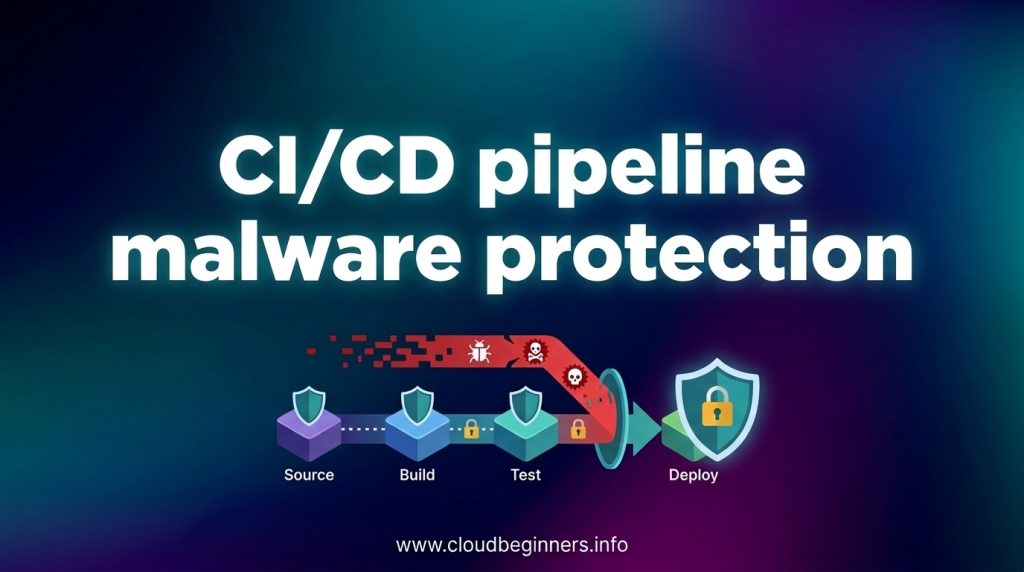
Your security team just detected a breach that bypassed all your typical defenses. The culprit? Not a direct attack on your applications, but malware injected directly into your CI/CD pipeline.
You’re not alone. While you’ve been hardening your production environments, attackers have shifted focus to where your code is built and deployed.
CI/CD pipeline security has become the new battlefield where sophisticated hackers are exploiting the very tools meant to accelerate your development.
Think about it: your pipeline has access to production environments, sensitive credentials, and your entire codebase. One compromised build script, and attackers own everything.
But what exactly makes these attacks so devastating? And why are even security-conscious organizations falling victim to pipeline injections that seem obvious in hindsight?
Understanding CI/CD Pipeline Security Threats
A. The rising trend of CI/CD attacks
CI/CD pipeline security is no longer just a nice-to-have – it’s become ground zero for some of the most devastating cyberattacks. The numbers don’t lie: attacks targeting development pipelines jumped 430% in the last two years alone.
Why? Because your CI/CD pipeline has everything hackers dream about – access to source code, build processes, and deployment credentials.
When you’re racing to meet delivery deadlines, security often takes a backseat. Hackers know this and are capitalizing on it.
B. Why hackers target development pipelines
Think about what runs through your pipelines – credentials, API keys, and sensitive code. For attackers, it’s like finding a treasure map with X marking every spot.
When they compromise your CI/CD pipeline, hackers gain:
- Access to inject malicious code that bypasses traditional security scans
- The ability to poison your software supply chain at its source
- Your signing certificates to make malware look legitimate
- Persistent access that’s hard to detect since it’s baked into your deployment process
C. Common entry points for malware injection
Your pipeline has more openings than you realize:
- Compromised dependencies: Those third-party packages you pull in? Not always safe.
- Build scripts: Custom scripts rarely undergo security reviews.
- Environment variables: Storing secrets here without protection is asking for trouble.
- Worker nodes: Your build servers might be running outdated, vulnerable software.
- Developer workstations: The initial access point for many sophisticated attacks.
D. Real-world examples of successful attacks
The SolarWinds attack wasn’t a one-off – it was a wake-up call. Attackers injected malicious code directly into the build process, affecting over 18,000 organizations.
CodeCov’s bash uploader script was silently modified, stealing credentials from thousands of CI pipelines. The attack went undetected for months.
More recently, hackers targeted npm packages with typosquatting attacks, getting their malicious code into legitimate software builds at companies just like yours.
These aren’t theoretical risks – they’re happening right now, even to teams with mature DevOps practices.
How Malware Enters Your Pipeline
A. Compromised dependencies and libraries
Your CI/CD pipeline is only as secure as its weakest component. When you pull in third-party libraries and dependencies, you’re essentially inviting external code into your environment.
Attackers know this and target popular packages, injecting malicious code that executes when you build your application. Remember the infamous SolarWinds attack?
Hackers compromised the build system and inserted backdoors into software updates that were then distributed to thousands of customers.
B. Insecure code repositories
Your code repositories are prime targets for attackers. Without proper access controls, anyone might commit malicious code that gets automatically built and deployed.
Even worse, public repositories with hardcoded credentials or API keys give attackers the keys to your kingdom. They can use these secrets to gain access to your build environments and inject malware directly.
C. Weak authentication mechanisms
Still using basic username/password combinations for your pipeline access? That’s asking for trouble. Attackers can easily brute force these credentials or steal them through phishing attacks. Once they’re in, they can modify build scripts, inject malicious code, or create backdoors that persist across deployments.
D. Build server vulnerabilities
Your build servers run code from multiple sources and have elevated privileges to deploy applications. This makes them perfect targets. Unpatched vulnerabilities in Jenkins, TeamCity, or other CI/CD tools can give attackers direct access to your pipeline. From there, they can modify build artifacts before they’re deployed to production.
E. Poisoned container images
Container images you pull from public registries might contain hidden malware. Attackers create images with innocuous names but backdoored contents, hoping you’ll use them as base images. Once these compromised containers are running in your environment, attackers can move laterally through your systems.
Types of Malware and Their Impacts

Data theft payloads
When attackers infiltrate your CI/CD pipeline, their primary goal is often data theft. They’ll inject malicious code designed to silently extract your most valuable assets: source code, credentials, customer data, and intellectual property.
These payloads typically operate under the radar, exfiltrating data to attacker-controlled servers while leaving minimal traces.
Think of it this way: your pipeline has access to practically everything – production credentials, API keys, database connections. A well-placed data theft payload can harvest these treasures in seconds, often before you’ve noticed anything unusual.
Cryptominers hidden in build processes
Your high-performance build servers make perfect targets for cryptomining operations. Attackers inject mining software directly into your pipeline, stealing your computing resources to mine cryptocurrency. The impact? Dramatically slower builds, increased cloud costs, and overheated infrastructure.
You’ll notice your normal 5-minute builds suddenly taking 20 minutes while your cloud bill mysteriously doubles. These miners often activate only during specific conditions to avoid detection, making them particularly sneaky threats.
Backdoors for persistent access
Once attackers breach your pipeline, they want to stay inside. Backdoor malware creates permanent access points, allowing them to maintain control even after you’ve addressed the initial breach.
Your CI/CD pipeline becomes their gateway to your entire infrastructure. Backdoors often masquerade as legitimate system utilities or harmlessly named functions buried in your application code.
Supply chain attacks affecting end users
The most devastating scenario? When attackers use your pipeline to inject malware that reaches your end users. Your trusted software becomes the delivery mechanism for attacks targeting your customers.
Your reputation takes a massive hit when customers discover the software you delivered contains malware. SolarWinds and Log4j demonstrated how these attacks can impact thousands of organizations through a single compromised pipeline.
Building Strong CI/CD Security Foundations
Implementing the principle of least privilege
Think of your CI/CD pipeline as your home. Would you give every delivery person a key to access all rooms? Of course not! The same applies to your pipelines.
Start by auditing who has access to what. Many security breaches happen because someone had permissions they didn’t actually need. Restrict access rights to only what’s necessary for each team member or service account to do their job.
Some quick wins you can implement today:
- Use short-lived credentials that automatically expire
- Implement just-in-time access for sensitive operations
- Regularly audit and revoke unused permissions
- Separate duties between development, testing, and production environments
Securing your code repositories
Your repositories are prime targets for attackers looking to inject malicious code. Here’s how to lock them down:
- Enable branch protection rules to prevent direct commits to main branches
- Require code reviews before merging – always have a second pair of eyes
- Sign all commits so you know exactly who added what code
- Use secret scanning tools to catch accidentally committed credentials
- Set up webhooks to trigger automatic security scans when code changes
Isolating build environments
Cross-contamination is a real problem in CI/CD security. One compromised build can infect your entire pipeline.
You need proper isolation between builds. Use ephemeral containers that spin up fresh for each build and get destroyed afterward. This prevents malware from persisting between builds.
Consider implementing:
- Read-only base images that can’t be modified during builds
- Network segmentation to limit what your build environments can access
- Separate credentials for each stage of your pipeline
- Runtime monitoring to detect unusual behavior during builds
Advanced Protection Strategies

A. Automated security scanning and testing
You need to make security scanning an automated, non-negotiable part of your CI/CD pipeline. Don’t wait until deployment to discover vulnerabilities.
Integrate tools like SonarQube, Snyk, or Trivy directly into your build process to catch issues early. These tools scan your code, dependencies, and container images for known vulnerabilities before they reach production.
Set up your pipeline to fail builds automatically when critical security issues are detected. This “shift-left” approach makes security everyone’s responsibility, not just the security team’s problem.
B. Integrity verification of pipeline components
Your pipeline components themselves are prime targets. Verify the integrity of your build tools, base images, and dependencies through cryptographic checksigns and hash verification.
Tools like Sigstore can help you enforce supply chain integrity by verifying that components haven’t been tampered with. Set up your pipeline to only accept components with valid signatures from trusted sources.
C. Runtime application self-protection
Your applications need self-defense mechanisms. Implement runtime application self-protection (RASP) to detect and block attacks during execution.
RASP tools monitor your application from within, identifying suspicious behaviors like unexpected file system access or network connections that could indicate malware activity in your pipeline outputs.
D. Monitoring for unusual pipeline behavior
Normal pipeline behavior has patterns. Unusual execution times, unexpected resource consumption, or strange network connections during builds could signal compromise.
Set up monitoring solutions that establish baselines for normal pipeline operations and alert you when deviations occur. Tools like Datadog or New Relic can track metrics and detect anomalies worth investigating.
E. Using signed commits and artifacts
Require developers to cryptographically sign their commits using tools like GPG. This prevents attackers from impersonating legitimate developers to inject malicious code.
Similarly, sign all artifacts created by your pipeline. This creates a chain of trust from code commit to deployment, making it much harder for attackers to tamper with any step in your CI/CD process.
Implementing DevSecOps Practices
A. Shifting security left in your development process
You can’t afford to treat security as an afterthought in your CI/CD pipelines. When you shift security left, you’re essentially building protection into every stage of development rather than bolting it on at the end. Start by implementing automated security scanning in your earliest development phases.
Run SAST (Static Application Security Testing) tools as part of your pre-commit hooks to catch vulnerable code before it even enters your repository. This stops malware from gaining that initial foothold in your pipeline.
Integrate vulnerability scanning directly into your IDE so you spot issues while coding, not after deployment when remediation costs skyrocket.
B. Training developers on secure coding practices
Your developers are your first line of defense against CI/CD pipeline attacks. Equip them with knowledge about common attack vectors like dependency confusion, typosquatting, and compromised build tools.
Create dedicated training sessions focusing specifically on supply chain security threats. Show your team exactly how hackers might target your specific stack and tools. Practical exercises beat theoretical lessons every time.
Remember that one-off training doesn’t stick. Schedule regular refreshers and make security part of your code review process. When developers understand the “why” behind security practices, they’re more likely to follow them consistently.
C. Creating a security-aware development culture
Culture trumps policy every time. Build a development environment where everyone feels responsible for security, not just your security team. Start by celebrating when team members identify and report potential vulnerabilities instead of hiding them.
Implement a blameless post-mortem process when security issues occur. Focus on learning rather than finger-pointing.
Create security champions within your development teams – these are developers with extra security training who help promote secure practices among peers.
These champions bridge the gap between security experts and developers, translating complex security requirements into practical coding advice.
D. Establishing incident response procedures
When (not if) your CI/CD pipeline gets attacked, having clear response procedures makes all the difference. Develop detailed playbooks for common CI/CD attack scenarios like compromised credentials, poisoned dependencies, or manipulated build artifacts.
Define specific roles and responsibilities during security incidents. Who has authority to pause deployments? Who communicates with stakeholders? How do you isolate affected systems?
Practice your response plans regularly through tabletop exercises. These simulations help you identify gaps before a real attack happens. Nothing reveals weaknesses in your incident response like actually walking through the steps.
Tools and Technologies to Secure Your Pipeline
Container Security Solutions
You’ve built a pipeline, but is it secure? Container security solutions are your first line of defense against malware infiltration. Tools like Aqua Security, Sysdig Secure, and Snyk Container offer real-time monitoring of your containerized applications. They scan for vulnerabilities, detect suspicious activities, and enforce security policies automatically.
Want to stop attackers before they strike? Implement runtime protection that blocks unauthorized code execution and prevents privilege escalation attempts.
Most solutions integrate directly with Docker, Kubernetes, and your existing CI/CD tools, giving you visibility without disrupting your workflow.
Dependency Scanning Tools
Those innocent-looking dependencies? Yeah, they’re prime targets for attackers. Dependency scanning tools like Dependabot, Snyk, and OWASP Dependency-Check automatically identify vulnerable components in your code.
Set these up to run on every build, and you’ll catch issues before they reach production. The best part? Many tools remediate automatically by creating pull requests with updated, secure versions of compromised packages.
Infrastructure as Code Security Checkers
Your IaC templates could be harboring security gaps. Tools like Checkov, tfsec, and Terrascan analyze your Terraform, CloudFormation, and Kubernetes manifests to spot misconfigurations before deployment.
Run these checks early in your pipeline to catch things like unencrypted storage, overly permissive security groups, or public-facing resources that should be private.
Secrets Management Systems
Stop hardcoding credentials in your repo! Secrets management systems like HashiCorp Vault, AWS Secrets Manager, or Azure Key Vault keep your sensitive data encrypted and accessible only to authorized services.
These tools rotate credentials automatically, generate temporary access tokens, and provide audit logs of who accessed what. The right secrets management system integrates seamlessly with your pipeline while keeping your keys and passwords locked down tight.
Protecting your CI/CD pipelines from malicious actors requires a multi-layered security approach. By understanding common threats, implementing strong security foundations, and adopting advanced protection strategies, you can significantly reduce your risk exposure.
Remember that security isn’t just about tools; integrating DevSecOps practices ensures that security becomes everyone’s responsibility throughout the development lifecycle.
Take action today to secure your pipeline by conducting a thorough security assessment, implementing the recommended tools and technologies, and providing continuous security training for your team.
Your CI/CD pipeline is a critical part of your infrastructure; investing in its security now will prevent costly breaches and maintain the integrity of your software delivery process in the future.
I’ve also built a platform that shows you how to build the right hands-on cybersecurity skills to help businesses achieve their cloud security goals while you build the career you love for a better, higher-paying reward. Check it out here and start working on projects that will help you get hired.
The Author