IP Addressing in the Cloud: Avoiding Exhaustion & Conflicts
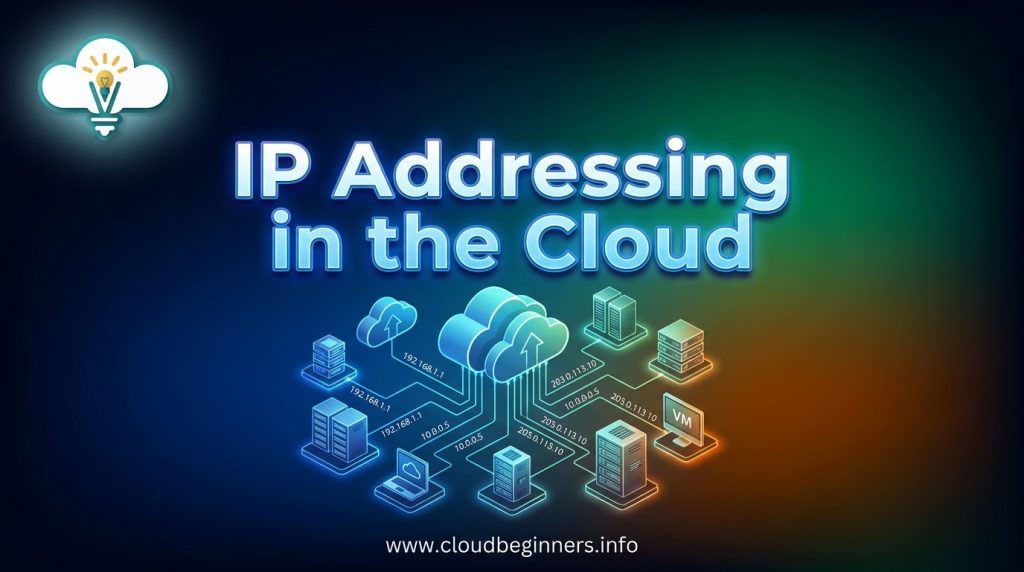
Have you ever run out of IP addresses in your cloud environment? If you’re nodding right now, you know the cold sweat of realizing you can’t launch new services because your addressing scheme hit a wall.
You’re not alone. A shocking 68% of cloud architects report having to redesign their IP addressing strategy after initial deployment due to poor planning.
In this guide, you’ll discover how to build a future-proof IP addressing architecture for cloud environments that scales without creating addressing nightmares.
Managing IP addressing in the cloud requires balancing immediate needs with long-term growth; something many teams get wrong in their rush to deploy. And the consequences? They’re worse than you might think.
What happens when your carefully planned architecture suddenly can’t accommodate that urgent new project from leadership?
Understanding IP Addressing Fundamentals in Cloud Environments
How IP addresses function differently in cloud vs. traditional networks
When you’re running workloads in a traditional on-premises network, you control everything. Your IP addressing scheme is yours to design and manage. You assign static IPs to servers, configure DHCP scopes, and handle the entire network topology.
Cloud environments flip this model on its head. Now you’re operating within someone else’s network infrastructure where IP addressing is more fluid and abstracted.
In AWS, Azure, or GCP, you don’t directly manage the physical network; instead, you work with logical constructs that the cloud provider creates for you.
The biggest difference? IP address assignment in the cloud is largely ephemeral. When you spin up a VM and shut it down, that IP address typically goes back into the pool.
Next time you start it, you might get a completely different address. This dynamic allocation makes cloud environments more flexible but requires a different mindset when designing your applications.
Another key distinction is that cloud providers handle the routing between their services for you. You don’t need to configure physical routers or switches; the provider’s control plane manages this invisibly.
Private vs. public IP addressing in major cloud platforms
Each major cloud provider approaches IP addressing with subtle differences that matter when you’re designing multi-cloud environments.
AWS
In AWS, your EC2 instances get both a private IP (for internal communication) and potentially a public IP (for internet accessibility). Private IPs come from your VPC’s CIDR block, while public IPs are drawn from Amazon’s pool of public addresses. A critical detail: when you stop and start an EC2 instance, it loses its public IP unless you’ve assigned an Elastic IP.
Azure
Azure follows a similar pattern but with different terminology. VMs receive private IPs from their virtual network’s address space. For public access, you assign public IP addresses as separate resources that can be static or dynamic. Azure gives you more flexibility to preserve public IPs across VM restarts.
Google Cloud
GCP’s approach is slightly different. Every VM gets an internal IP from its VPC network range. For external connectivity, you can assign external IPs that are either ephemeral or static (reserved). GCP’s unique feature is its global VPC, where a single VPC can span multiple regions without peering.
| Provider | Private IP Source | Public IP Behavior | IP Preservation |
|---|---|---|---|
| AWS | VPC CIDR block | Lost on restart unless Elastic IP | Elastic IPs persist |
| Azure | VNet address space | Can be static or dynamic | Static public IPs persist |
| GCP | VPC network range | External IPs – ephemeral or static | Reserved IPs persist |
The relationship between subnets, VPCs, and IP allocation
Your cloud network hierarchy directly impacts how IP addressing works. Think of VPCs (Virtual Private Clouds) as your isolated network environments within the cloud. Each VPC gets its own CIDR block—essentially the range of IP addresses you can use.
Within each VPC, you create subnets that divide your IP space into smaller, manageable chunks. These subnets are where your actual resources live. When you launch a cloud resource, it gets an IP from the subnet you specified.
What’s not obvious at first is that subnets in the cloud are often tied to specific availability zones. This means your IP addressing strategy needs to account for the geographical distribution of your workloads.
Cloud providers also reserve several IP addresses in each subnet for internal use:
- The first address (network address)
- The last address (broadcast address)
- Addresses for DNS servers
- Gateway addresses
This means your usable IP space is slightly smaller than the CIDR block might suggest. When planning your IP allocation strategy, factor in these reserved addresses or you’ll run short of IPs faster than expected.
IPv4 vs. IPv6 implementation in modern cloud infrastructure
Cloud providers know we’re running out of IPv4 addresses globally. That’s why they all support IPv6, but implementation varies significantly between platforms.
AWS offers “dual-stack” VPCs where resources can have both IPv4 and IPv6 addresses. You can request an IPv6 CIDR block for your VPC, and AWS will assign it from their pool of addresses. Unlike IPv4 addresses that you bring to AWS, you can’t bring your own IPv6 addresses.
Azure supports IPv6 for virtual networks, load balancers, and public IPs. Their implementation requires dual-stack configurations where both IPv4 and IPv6 are used together. You can’t run IPv6-only workloads yet in most Azure services.
Google Cloud’s IPv6 support is perhaps the most comprehensive, offering external and internal IPv6 addressing for VMs, global load balancers, and Cloud DNS.
The transition to IPv6 in cloud environments brings massive advantages:
- Practically unlimited address space
- Simplified network addressing (no more NAT headaches)
- Better performance (more direct routing)
- Enhanced security features built into the protocol
Despite these benefits, IPv6 adoption in cloud workloads remains relatively low. Why? Because many enterprise applications still expect IPv4, and building truly dual-stack applications requires careful testing.
Your best approach is to design new cloud workloads with IPv6 compatibility in mind, even if you’re not implementing it immediately. This future-proofing will save you from painful migrations later.
Common Causes of IP Address Exhaustion in Cloud Deployments

A. Inefficient subnet design and address space fragmentation
Ever noticed how quickly your closet fills up when you toss things in randomly? The same happens with IP addresses in cloud environments. When you create subnets without proper planning, you’ll end up with odd-sized chunks that don’t fit your actual needs.
The classic mistake? Creating too many small subnets. You might think you’re being organized, but what you’re really doing is wasting address space. For instance, a /24 subnet gives you 254 usable addresses, but if you only need 30, you’re leaving 224 addresses stranded.
Another common blunder is using fixed-size subnets regardless of requirements. Different workloads need different-sized address pools. Your database cluster might need fewer IPs than your web tier.
Watch out for this fragmentation nightmare:
- Creating a /16 network
- Carving out various /24s for different applications
- Later realizing you need a /23 for a new service
- Finding no consecutive /24s available to form a /23
Boom. IP exhaustion, even though you technically have plenty of addresses left.
B. Over-provisioning resources without proper IP planning
We’ve all been there; spinning up instances “just in case” or because it’s so darn easy to click that “Launch” button. Each VM, load balancer, and network interface consumes an IP address. Without tracking this consumption, you’ll hit your limit faster than free pizza disappears at a developer meetup.
Cloud environments make over-provisioning incredibly easy. Got a traffic spike? Just auto-scale! Need redundancy? Deploy across availability zones! While these are fantastic features, each resource needs an IP address.
A typical scenario:
- You provision 50 VMs for an anticipated workload
- The workload only needs 20 VMs
- The other 30 sit idle but still consume IP addresses
- Multiply this across several teams and projects
The result? IP address wasteland.
C. Legacy addressing schemes carried into cloud migrations
Those addressing schemes from your on-premises data center? They’re probably not cloud-optimized. When migrating to the cloud, many organizations simply lift-and-shift their existing IP addressing plan without rethinking it.
Your old scheme might have made perfect sense when you had physical hardware and static growth. But cloud environments are dynamic and elastic; they need addressing schemes that can scale and flex accordingly.
Common legacy issues include:
- Using larger subnets than necessary because “that’s how we’ve always done it”
- Reserving large blocks for future growth that never happens
- Continuing to use inflexible addressing tied to physical locations when cloud resources are virtual
This approach is like trying to use your old flip phone’s contact system to manage your modern social media connections; it just doesn’t scale.
D. Multi-region deployments with overlapping address spaces
When you expand your cloud footprint across multiple regions, IP address management gets tricky. If you’re not careful, you’ll create overlapping address spaces that cause connectivity nightmares when you try to connect these environments.
Picture this: You deploy a VPC with CIDR 10.0.0.0/16 in US-East. Then, without much thought, you use the same range in EU-West. Now you need these regions to communicate—good luck with that!
This problem gets exponentially worse when you:
- Expand to multiple cloud providers
- Need to establish VPC peering
- Try to maintain hybrid connectivity with on-premises networks
Each of these scenarios requires unique, non-overlapping IP space. Without central coordination, you’ll create a tangled web that’s impossible to unravel without major rework.
E. Containerization and microservices multiplying IP requirements
Remember when an application meant one server with one IP address? Those days are long gone. With containers and microservices, a single application might involve dozens or hundreds of IP addresses.
Container orchestration platforms like Kubernetes need IPs for:
- Each pod (which might contain multiple containers)
- Service IPs
- Load balancers
- Ingress controllers
A moderately complex application with 20 microservices, each running 3 replicas, already needs 60 IP addresses just for the pods. Add in services, and you’re looking at 80+ IPs for a single application.
The shift to microservices architecture has dramatically increased IP consumption rates. When each function becomes its own service with its own network identity, your IP requirements explode.
And if your address planning doesn’t account for this architectural shift, you’ll hit exhaustion much sooner than expected.
Effective IP Address Management Strategies
Implementing CIDR-based hierarchical addressing
IP address exhaustion isn’t just a theoretical problem; it’s a real headache you’ll face as your cloud footprint grows. That’s where CIDR-based hierarchical addressing comes in.
Think of your cloud network like a well-organized office building. You wouldn’t randomly assign desk spaces without a system, right? With CIDR (Classless Inter-Domain Routing), you can create a logical structure for your IP addressing scheme.
Start by mapping out your network needs. For instance:
/16blocks for regions/20blocks for environments (dev, test, prod)/24blocks for individual application subnets
This approach gives you room to grow without painting yourself into a corner. You’ll thank yourself later when you need to add that unexpected new environment or service.
Region A (/16) → Production (/20) → Web tier (/24)
→ App tier (/24)
→ Data tier (/24)
→ Development (/20) → [Similar structure]
The beauty of hierarchical addressing? When you need to troubleshoot, you can instantly tell where a resource lives just by looking at its IP. Your future self will appreciate this foresight when it’s 3 AM, and you’re trying to figure out which subnet is causing problems.
Leveraging Cloud Provider IPAM tools
Why reinvent the wheel when your cloud provider has already built a great one? Most major providers offer robust IP Address Management (IPAM) tools that take the heavy lifting out of address planning.
AWS offers VPC IPAM, Azure provides Virtual Network Manager, and GCP has VPC Network Peering. These tools aren’t just nice-to-haves—they’re essential for maintaining sanity as your cloud network grows.
With these tools, you can:
- Reserve IP blocks for future use
- Track utilization and identify waste
- Enforce consistent policies across your organization
- Visualize your address space with easy-to-read dashboards
The real power comes when you connect these tools to your infrastructure-as-code workflows. Imagine automatically allocating the perfect-sized CIDR block each time a new project spins up, with zero manual intervention.
Automated address assignment and reclamation processes
Manual IP management doesn’t scale. Period. As your cloud environment grows, automation becomes your best friend.
Set up dynamic allocation systems that assign addresses when needed and—just as importantly—reclaim them when resources are decommissioned. Without reclamation, you’ll leak addresses faster than a sieve leaks water.
Consider implementing:
- DHCP for temporary workloads
- API-driven assignment for permanent infrastructure
- Scheduled scans to identify orphaned IPs
- Integration with your CI/CD pipeline
Many organizations lose 20-30% of their IP space to “zombie” addresses; resources that were terminated but whose IPs were never properly released. That’s throwing away perfectly good addresses!
A simple Lambda function or Azure Function that runs nightly can identify these orphaned addresses and return them to your available pool.
Designing for scale with proper subnet sizing
You need to be a bit of a fortune teller when sizing your subnets. Too small, and you’ll run out of space. Too large, and you’re wasting precious addresses.
Here’s a practical approach:
- Calculate your current needs
- Estimate 2-3 years of growth
- Double that number (trust me on this one)
- Pick the next power of 2 for your subnet size
For workloads with unpredictable scaling needs, consider the N+2 rule: whatever capacity you think you need, add room for two more of your largest possible scaling events.
Remember, subnet resizing is painful, often requiring complete rebuilds. Getting it right the first time saves enormous headaches down the road.
When planning subnet sizes, don’t just think about host counts. Consider:
- Load balancers (often need multiple IPs)
- Reserved addresses (first and last in each subnet)
- Future services you might add
- High availability pairs
With thoughtful subnet sizing and a hierarchical approach, you’ll create an IP addressing foundation that supports your growth rather than constraining it.
Preventing IP Address Conflicts in Multi-Cloud Environments
A. Non-overlapping IP space planning across cloud providers
You’ve probably experienced this nightmare before; you’re expanding to another cloud provider, and suddenly your systems can’t communicate because of overlapping IP ranges. Ouch.
The key to avoiding this headache is proactive IP space planning. Start by documenting your existing IP ranges across all environments. Then create a clear CIDR block allocation strategy that gives each cloud provider its own unique IP range.
For example:
- AWS: 10.0.0.0/16
- Azure: 10.1.0.0/16
- Google Cloud: 10.2.0.0/16
This approach prevents those frustrating routing conflicts that can bring your multi-cloud strategy to its knees. Remember to leave buffer space between allocations; your future self will thank you when you need to expand.
B. Creating network address translation boundaries
NAT boundaries are your secret weapon in multi-cloud deployments. They create clean separation between environments while allowing controlled communication.
Set up NAT gateways at the boundaries between your cloud environments. This way, even if you inherit legacy systems with problematic IP assignments, you can translate addresses at the border to prevent conflicts.
Many organizations create a dedicated transit network with its own IP space. Your traffic flows through this neutral zone, where NAT handles the address translations between clouds.
Think of it as creating diplomatic territory where your different cloud nations can safely exchange information without citizenship confusion.
C. Implementing consistent IP governance policies
Without clear policies, your well-designed IP space quickly descends into chaos. You need governance that works across all your environments.
Create a centralized IP address management (IPAM) system that serves as the single source of truth. This should cover reservation, allocation, and reclamation processes for all your clouds.
Your policies should address:
- Who can request IP allocations
- Approval workflows for new subnets
- Mandatory documentation requirements
- Regular auditing schedules
- Procedures for decommissioning and reclaiming addresses
Document these in plain language and make them part of your standard operating procedures. Regular compliance checks help ensure nobody’s creating rogue networks in corners of your infrastructure.
D. Using transit gateways and hub-spoke models effectively
The hub-spoke network model dramatically simplifies your multi-cloud connectivity while minimizing IP conflicts.
Your transit gateway acts as the central hub where all routing and policy decisions happen. Each cloud environment connects as a spoke to this central authority. This approach gives you:
- Centralized routing control
- Simplified security policy enforcement
- Reduced number of interconnections
- Easier troubleshooting of cross-cloud communication
When implementing this model, keep your transit hub in a separate IP range from any of your cloud environments. This clean separation prevents confusion and ensures proper routing between your environments.
The beauty of this approach is scalability; adding a new cloud environment means just connecting another spoke, not redesigning your entire network architecture.
Advanced Solutions for IP Resource Optimization
A. Implementing IPv6 dual-stack architecture
Running out of IPv4 addresses? You’re not alone. IPv6 gives you access to an astronomical number of addresses (340 undecillion to be exact) compared to IPv4’s measly 4.3 billion.
By implementing a dual-stack architecture, you can run both IPv4 and IPv6 simultaneously, giving you the best of both worlds.
Start by configuring your cloud resources to support IPv6 alongside existing IPv4 resources. Most major cloud providers- AWS, Azure, and GCP- now offer robust IPv6 support. You’ll want to:
- Update your VPC/VNet configurations to enable IPv6 addressing
- Modify security groups and network ACLs to accommodate IPv6 traffic
- Ensure your applications are IPv6-compatible
A bonus? You’ll future-proof your infrastructure while solving immediate IP constraints.
B. Leveraging elastic IP and floating IP capabilities
Elastic IPs (AWS) and floating IPs (other providers) are game-changers for your cloud infrastructure. These dynamic addressing options let you reassign public IP addresses between instances on the fly.
Instead of permanently allocating addresses to resources that don’t need them 24/7, you can:
- Attach an elastic IP to a production instance during business hours
- Release it during off-hours or reassign it to maintenance resources
- Create disaster recovery systems that can rapidly take over an IP address
This approach dramatically reduces the number of public IPs you need, cutting costs and simplifying management. Many organizations see up to 40% reduction in public IP usage after implementing elastic IP strategies.
C. Using NAT gateways and load balancers to conserve public IPs
Why give every resource its own public IP when you can share? NAT gateways and load balancers act as traffic intermediaries, allowing multiple private instances to communicate with the internet through a single public IP address.
With a NAT gateway:
- Hundreds of private instances can share one outbound IP
- You maintain tighter security by keeping most resources in private subnets
- You simplify firewall configurations for external partners
Load balancers take this concept further by:
- Distributing inbound traffic across multiple backend instances
- Providing health checks and automatic failover
- Offering SSL termination and connection draining
A single application load balancer can serve dozens of microservices while using just one public IP address, dramatically reducing your public IP footprint.
D. Containerization networking models that reduce IP consumption
Container orchestration platforms like Kubernetes have revolutionized IP management. Instead of assigning IPs to each application instance, you can deploy multiple containers that share a single IP address.
Modern container networking models offer several IP-saving approaches:
- Host networking: Containers share the host’s IP address and port space
- Overlay networks: Virtual networks that span multiple hosts while minimizing physical IP usage
- Service meshes: Intelligent routing layers that optimize communication paths
For example, with Kubernetes’ Services abstraction, hundreds of pods can be accessed through a single cluster IP. This approach slashes your IP requirements while enhancing scalability.
Many organizations report 80-90% reduction in IP address needs after moving from traditional VMs to containerized workloads.
E. Serverless architecture as an IP conservation approach
The ultimate IP conservation strategy? Not using IPs at all. Serverless computing eliminates the need to provision or manage servers—and by extension, their IP addresses.
By adopting serverless services like AWS Lambda, Azure Functions, or Google Cloud Functions, you:
- Pay only for actual computation time, not idle resources
- Scale automatically without managing networking
- Eliminate the need for dedicated IPs for each application component
Your cloud functions, database instances, and storage services all communicate through provider-managed endpoints, dramatically reducing your IP management overhead.
Consider this: a traditional three-tier application might require 10+ IP addresses across web servers, application servers, and databases. The serverless equivalent uses zero customer-managed IPs while offering better scaling characteristics.
Managing Your Cloud IP Resources Effectively
Proper IP addressing is the foundation of successful cloud infrastructure management. As we’ve explored, understanding IP fundamentals in cloud environments helps you identify the common causes of address exhaustion and implement effective management strategies.
By adopting practices like CIDR block planning, implementing private addressing with NAT, and utilizing proper subnetting, you can significantly extend your IP resource lifespan.
When operating across multiple cloud environments, vigilant planning and automated conflict detection tools become essential to prevent disruptive IP conflicts.
You now have the knowledge to optimize your cloud IP resources through advanced solutions like IPv6 migration, IP address management tools, and cloud-native networking options.
Remember that proactive planning is far more effective than reactive problem-solving when it comes to IP resources.
Start implementing these strategies today to build more resilient, scalable cloud infrastructure that won’t be hindered by IP exhaustion or conflicts as you grow. Your future cloud deployments will thank you for the foresight.
I’ve also built a platform that shows you how to build the right hands-on cybersecurity skills to help businesses achieve their cloud security goals while you build the career you love for a better, higher-paying reward. Check it out here and start working on projects that will help you get hired.
The Author