AWS vs. Azure vs. GCP: Which Cloud Giant Should You Choose?
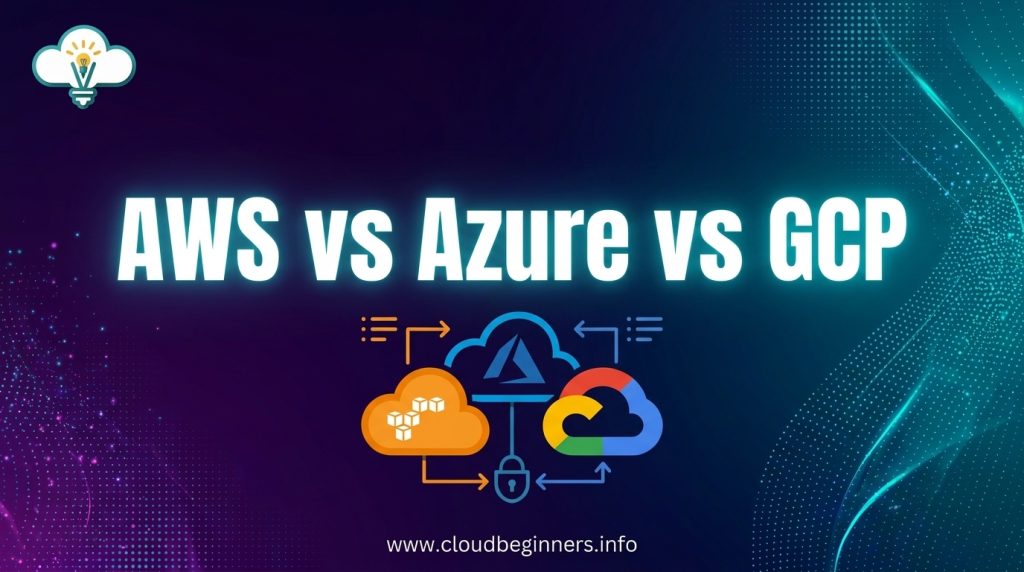
Choosing the right cloud platform is crucial for businesses and IT professionals navigating the complex world of cloud computing.
AWS, Azure, and Google Cloud Platform each offer unique advantages that might make one a better fit for your specific needs.
This guide compares these three cloud giants across key features, pricing structures, and integration capabilities to help you make an informed decision.
We’ll examine AWS’s market dominance and extensive service catalog, Azure’s seamless integration with Microsoft products, and GCP’s cutting-edge innovations in AI and machine learning.
By the end, you’ll have a clear understanding of which cloud provider aligns best with your technical requirements and business goals.
Understanding Cloud Computing Fundamentals
Key benefits of cloud migration for businesses
Switching to the cloud isn’t just a tech trend; it’s a business game-changer. When you move your operations to the cloud, you’ll immediately notice how your IT expenses shift from hefty upfront capital costs to more manageable operational expenses. No more buying expensive servers that sit half-empty in your office.
The scalability factor is huge too. Need more computing power during holiday season sales? Scale up. Business slowing down in summer? Scale back and save money. This flexibility means you’re never paying for resources you don’t use.
Your team gains the superpower of working from anywhere with an internet connection. The pandemic made this benefit crystal clear—companies already in the cloud adapted quickly while others scrambled.
Don’t overlook the disaster recovery advantages. Cloud providers maintain multiple data centers across different regions, so your data stays safe even if one location experiences problems.
How cloud infrastructure works
Cloud computing is basically someone else’s computers working for you. Instead of managing physical hardware, you’re renting exactly what you need from massive data centers.
The magic happens through virtualization: splitting physical servers into multiple virtual machines that operate independently. This means your applications run on virtual servers that aren’t tied to specific hardware.
Behind the scenes, three service models power everything:
- IaaS: You rent the raw computing resources, like virtual machines and storage, and manage everything else
- PaaS: The provider handles the infrastructure and platforms, so you just focus on your applications
- SaaS: Complete applications delivered over the internet (think Gmail or Salesforce)
Everything’s connected through robust networks and APIs that let different services talk to each other seamlessly.
The importance of choosing the right provider
Picking between AWS, Azure, and GCP isn’t just about price; it’s about finding the right fit for your specific needs. The wrong choice can leave you struggling with compatibility issues or paying for features you’ll never use.
Consider your existing tech stack first. If you’re heavily invested in Microsoft products, Azure offers natural integration advantages. Already using Google Workspace? GCP might make more sense.
The learning curve matters too. Your team will need time to get comfortable with any platform, so factor in training costs and potential productivity dips during transition.
Geographic availability should be on your radar, especially if you serve customers globally. All three major providers have data centers worldwide, but coverage varies by region.
Security certifications and compliance capabilities differ between providers. Make sure your choice supports the regulatory requirements in your industry, whether that’s HIPAA for healthcare or GDPR for European customers.

AWS: The Market Leader’s Offering
A. Comprehensive service portfolio overview
When diving into AWS, you’re stepping into the largest pool of cloud services available today. You’ll find over 200 fully-featured services spanning computing, storage, databases, networking, analytics, machine learning, IoT, security, and more.
Unlike its competitors, AWS often provides multiple solutions for the same problem – think EC2, Lambda, Fargate, and ECS all offering different ways to run your applications.
What makes AWS stand out is how deeply each service integrates with others. Need to process images uploaded to S3? Trigger a Lambda function automatically. Want to analyze data? Connect your S3 bucket to Athena or Redshift within minutes.
B. Pricing structure and cost management
AWS follows a pay-as-you-go model, but don’t be fooled – managing costs takes work. You’ll pay for exactly what you use, calculated down to the second for many services.
To keep your bills in check, AWS offers:
- Reserved Instances: Commit for 1-3 years and save up to 72%
- Savings Plans: More flexible commitments with similar discounts
- Spot Instances: Use spare capacity for up to 90% off (if interruptions work for you)
- Free Tier: Test the waters with limited free usage
The AWS Cost Explorer and Budgets tools help you track spending, but many companies still find themselves needing third-party tools to fully optimize costs.
C. Global infrastructure and availability zones
AWS boasts the most extensive global footprint among cloud providers. You get:
- 26 geographic regions
- 84 availability zones
- 310+ edge locations
This massive infrastructure lets you deploy applications close to your users worldwide. Each region contains multiple availability zones (AZs) – physically separate data centers with independent power, cooling, and networking. This design lets you build truly resilient applications.
The global network backbone connecting these locations is entirely AWS-owned, giving you consistent performance when moving data between regions.
D. Enterprise integration capabilities
Migrating your enterprise workloads to AWS doesn’t mean starting from scratch. AWS provides numerous tools to bring your existing systems along:
- AWS Directory Service integrates with your Active Directory
- Storage Gateway connects on-premises applications to cloud storage
- Database Migration Service moves your databases with minimal downtime
- Application Migration Service (formerly CloudEndure) lifts and shifts entire servers
The AWS Control Tower service helps establish landing zones with pre-configured security and compliance settings, making enterprise-wide governance manageable.
E. Notable AWS success stories
Netflix streams billions of hours of content from AWS infrastructure. They’ve moved nearly all their computing and storage needs to AWS, using over 100,000 server instances.
Airbnb scaled from a small startup to handling millions of guests without building a single data center, relying entirely on AWS.
Capital One became the first major bank to go all-in on public cloud, announcing in 2020 they’d completed their AWS migration, citing improved security and innovation speed.
Even competitors use AWS – Apple spends over $30 million monthly on AWS services despite having their own cloud platform.
These companies prove AWS can handle workloads of any scale, from startups to the world’s largest enterprises.
Microsoft Azure: The Enterprise-Friendly Option
Seamless integration with Microsoft ecosystem
Already invested in Microsoft products? Azure will feel like home. Your existing Windows Server, Active Directory, SQL Server, and Office 365 deployments connect naturally with Azure services. No awkward handshakes or compatibility issues here.
You’ll save countless hours with single sign-on capabilities that let your team use their existing credentials across both on-premises and cloud environments. Plus, your developers who already know .NET and other Microsoft technologies can hit the ground running.
Hybrid cloud capabilities
Azure Arc might be your new best friend if you’re not ready to go all-in on cloud. This powerful feature lets you extend Azure management to your on-premises infrastructure, multi-cloud environments, and edge locations.
You can run Azure data services anywhere and manage Windows and Linux servers across environments from a single pane of glass. Azure Stack even brings the cloud to your datacenter when data sovereignty or latency concerns make full cloud adoption tricky.
AI and machine learning services
Azure’s AI offerings aren’t just impressive; they’re accessible. You’ll find pre-built cognitive services that add intelligence to your apps without requiring a PhD in data science. Need vision, speech, language, or decision-making capabilities? Simply plug them in via API.
For more advanced scenarios, Azure Machine Learning provides all the tools you need to build, train, and deploy models. The integration with familiar tools like Visual Studio and GitHub makes the experience seamless for your development team.
Compliance and security features
Security concerns keeping you up at night? Azure’s got your back with more compliance certifications than any other cloud provider. Your industry-specific requirements, from healthcare’s HIPAA to government’s FedRAMP, are likely covered.
Azure Security Center gives you unified security management and advanced threat protection across your hybrid workloads. You’ll appreciate Azure Sentinel’s AI-powered security analytics that detect, investigate, and respond to threats before they become problems.
Google Cloud Platform: The Innovation Powerhouse
A. Data analytics and machine learning strengths
When you’re dealing with massive datasets, GCP really shines. Google’s BigQuery lets you analyze terabytes in seconds with zero infrastructure management. Unlike AWS Redshift or Azure Synapse, you only pay for what you query – perfect if your data analysis needs fluctuate.
For machine learning, you get access to the same tech that powers Google’s own products. TensorFlow runs smoother on Google’s infrastructure (no surprise there), and their pre-trained AI models for vision, language, and speech are ready to plug into your applications with minimal coding.
What’s really game-changing is their AutoML platform. You can build custom machine learning models even if you’re not a data scientist. Just bring your data, and GCP handles the complex parts.
B. Open source commitment
Google isn’t just using open source – they’re driving it forward. Kubernetes? That’s Google’s creation before they handed it to the Cloud Native Computing Foundation. TensorFlow? Also Google-born.
This approach benefits you in several ways. Your applications avoid vendor lock-in, and you can leverage a massive ecosystem of tools and libraries. Their approach is refreshingly different from AWS, which often creates proprietary versions of open-source technologies.
If your development team values working with cutting-edge open tools, GCP’s philosophy will align perfectly with your needs.
C. Network performance advantages
Google’s network infrastructure is genuinely impressive. They own one of the world’s largest private networks, handling about 40% of internet traffic globally. This translates to real benefits for your applications.
Their premium tier routing means your traffic stays on Google’s private backbone longer, reducing latency by 30-50% compared to the public internet. Your global users get a faster, more reliable experience.
Live-streaming, global apps, or latency-sensitive services? GCP’s network performance gives you a competitive edge. Their load balancing tech can instantly scale to handle millions of queries per second with consistent performance.
D. Kubernetes and containerization leadership
Since Google invented Kubernetes, it’s no shock they excel at container orchestration. GCP’s Google Kubernetes Engine (GKE) is the most mature managed Kubernetes service available.
You’ll appreciate GKE’s auto-scaling, auto-repair, and auto-upgrading capabilities. Your containers practically manage themselves. The service includes useful features like:
- Four-way auto-scaling (nodes, pods, containers, clusters)
- Built-in security scanning
- Streamlined CI/CD integration
For containerization beginners, GKE gives you the easiest path to production. For Kubernetes veterans, you get advanced features without the management headaches.
E. Competitive pricing models
GCP consistently offers aggressive pricing to win your business away from AWS and Azure. Their sustained-use discounts kick in automatically – the longer your instances run during the month, the higher your discount.
You’ll love their committed use discounts, which can save you up to 57% in exchange for 1-3 year commitments. The best part? Unlike AWS Reserved Instances, these discounts apply automatically to any resource in the same region and family.
Their free tier is genuinely useful for testing and small workloads, including:
- Always-free small Compute Engine instance
- 5GB/month Cloud Storage
- 1 million monthly invocations of Cloud Functions
GCP’s pricing calculator is also the most transparent among cloud providers, helping you avoid surprise bills.
Head-to-Head Comparison
A. Computing power and performance metrics
When picking a cloud provider, you need raw computing muscle that matches your workload demands. Each of the big three brings different strengths to the table.
AWS offers the most mature and diverse computing options with over 200 instance types. You’ll find specialized EC2 instances for nearly everything: compute-optimized C5 instances for processing-heavy tasks, memory-optimized R5 instances for databases, and GPU-powered P3 instances for AI workloads.
Azure counters with its tight Windows integration (no surprise there) and impressive virtual machine options. If you’re running Windows-based applications, you’ll likely see better performance and compatibility on Azure’s platform.
GCP’s secret weapon? Their custom-designed hardware and global fiber network. Google’s live migration technology means your VMs keep running even during host system maintenance; something you’ll appreciate during critical operations.
| Provider | Compute Strengths | Ideal For |
|---|---|---|
| AWS | Most instance variety, best maturity | Diverse workloads, enterprise applications |
| Azure | Windows optimization, integrated services | .NET applications, Microsoft workloads |
| GCP | Network performance, live migration | Big data, machine learning, consistent performance |
B. Storage solutions and scalability
Cloud storage isn’t just about dumping your files somewhere; it’s about accessing them quickly, reliably, and affordably when you need them.
AWS storage options range from S3 (object storage) to EBS (block storage) and EFS (file storage). Their Glacier archival storage lets you stash rarely-accessed data at pennies per GB. You’ll appreciate the maturity of these services, with robust versioning and lifecycle policies.
Azure’s Blob Storage gives you hot, cool, and archive tiers, helping you balance cost and accessibility. Their ZRS (zone-redundant storage) spreads your data across multiple facilities, giving you peace of mind without breaking the bank.
GCP’s storage shines with automatic tiering in Cloud Storage; your data automatically moves to cheaper storage classes based on access patterns. You don’t need to micromanage your storage tiers, saving you operational headaches.
Scalability-wise, all three providers offer virtually unlimited growth, but with different approaches:
| Provider | Scalability Approach | Storage Specialty |
|---|---|---|
| AWS | Broad ecosystem, many storage types | Most comprehensive options |
| Azure | Seamless hybrid integration | StorSimple hybrid storage |
| GCP | Global network performance | Automatic tiering |
C. Database services comparison
Your application is only as good as its database backbone. Each cloud giant offers managed database services, but with different strengths.
AWS boasts the widest selection with RDS supporting six database engines, plus purpose-built options like DynamoDB (NoSQL), Aurora (MySQL/PostgreSQL compatible with 5x performance), Neptune (graph), and Timestream (time series).
Azure’s SQL Database provides impressive compatibility with on-premises SQL Server instances, making migrations less painful. Their Cosmos DB stands out with multiple consistency models and global distribution built-in—perfect if you need global scale with flexible data models.
GCP’s BigQuery is a game-changer for analytics workloads, letting you run SQL queries across petabytes of data without provisioning infrastructure. Their Spanner database combines relational structure with horizontal scale that’s hard to match elsewhere.
| Provider | Database Strength | Consider For |
|---|---|---|
| AWS | Most options, specialized databases | Varied workloads, enterprise needs |
| Azure | SQL Server compatibility, Cosmos DB | Hybrid deployments, global applications |
| GCP | BigQuery, Spanner | Analytics, globally distributed apps |
D. Pricing and cost optimization opportunities
Cloud pricing feels like deciphering ancient hieroglyphics sometimes, but understanding the differences can save you thousands.
AWS typically charges you for everything—compute, storage, data transfer, IP addresses; you name it. Their Reserved Instances can save 40-75% over on-demand pricing if you commit to 1-3 years. Spot Instances can slash costs by up to 90% for interruptible workloads.
Azure often works out cheaper for Windows workloads thanks to licensing benefits. Their hybrid benefits program lets you apply existing licenses to cloud deployments. Their pricing calculator is more user-friendly than AWS’s, helping you forecast costs more accurately.
GCP tends to offer the most straightforward pricing with sustained use discounts applied automatically—the longer your instances run, the bigger your discount. Their per-second billing (versus per-hour) adds up to significant savings for variable workloads.
Cost optimization tips for each platform:
| Provider | Best Savings Opportunity | Unique Advantage |
|---|---|---|
| AWS | Savings Plans, Reserved Instances | Most granular control |
| Azure | Hybrid Benefits, Dev/Test pricing | Best for existing Microsoft customers |
| GCP | Automatic sustained use discounts | Simplest pricing structure |
Industry-Specific Considerations
A. Financial services requirements
Working in financial services?
Your cloud choice matters tremendously. AWS leads with the most financial service-specific compliance certifications and has built robust services for risk modeling and fraud detection. You’ll appreciate their dedicated Financial Services Competency Partners program.
Azure stands out if you’re already invested in Microsoft infrastructure, offering seamless integration with existing financial systems and strong analytics capabilities through Power BI for financial reporting.
GCP shines in data analytics and AI capabilities; perfect if you’re building sophisticated trading algorithms or need to process massive transaction datasets in real-time.
B. Healthcare compliance advantages
In healthcare, compliance isn’t optional. AWS offers the most comprehensive HIPAA-eligible services, while Azure has strong BAA agreements that might save you headaches down the road.
GCP’s healthcare API gives you a significant advantage if you’re working with medical data interoperability. Consider this comparison:
| Cloud Provider | HIPAA Support | Healthcare-Specific Tools | International Compliance |
|---|---|---|---|
| AWS | Extensive | AWS HealthLake | Strong global coverage |
| Azure | Comprehensive | Azure Healthcare APIs | Good EU coverage |
| GCP | Strong | Cloud Healthcare API | Growing coverage |
C. Retail and e-commerce optimization
Running an online store? AWS brings retail expertise from Amazon itself, offering specialized solutions like Amazon Personalize that you can implement for recommendation engines.
Azure’s strength lies in its omnichannel capabilities and Dynamics 365 Commerce integration—incredibly useful if you’re managing both physical and digital storefronts.
GCP offers the most powerful analytics through BigQuery, helping you understand customer behavior at scale. Their AI tools for demand forecasting are unmatched if you’re dealing with complex inventory management.
D. Manufacturing and IoT capabilities
For manufacturing operations, your IoT infrastructure choice is critical. AWS IoT Core supports millions of devices and provides specialized services for equipment monitoring and predictive maintenance.
Azure’s Digital Twins platform gives you a massive advantage in creating virtual representations of your physical factory—something you’ll value when optimizing complex production lines.
GCP’s Edge TPU devices offer on-premise machine learning capabilities that can transform your factory floor operations without constant cloud connectivity.
E. Media and entertainment solutions
Creating or distributing media content? AWS Elemental services provide the most comprehensive media workflow solutions, handling everything from encoding to content delivery.
Azure’s strength comes from its integration with creative tools and gaming technologies; particularly valuable if your team uses Visual Studio or if you’re developing cross-platform gaming experiences.
GCP gives you unparalleled video analytics capabilities through its AI tools, which you’ll find invaluable for content recommendation or audience analysis. Their global network also delivers exceptional streaming performance, especially important if your audiences span multiple continents.
Making Your Decision
Assessing your organization’s specific needs
Choosing between AWS, Azure, and GCP isn’t a one-size-fits-all decision. Your business has unique requirements that should drive your choice. Start by asking yourself some tough questions:
- What does your current tech stack look like? If you’re heavily invested in Microsoft products, Azure might feel like coming home.
- Got specific compliance requirements? Each cloud handles regulatory frameworks differently.
- Where are your customers located? Geographic coverage varies between providers.
Don’t just follow industry trends. Map out your workloads, data needs, and growth projections. Then match these against each provider’s strengths.
Migration complexity evaluation
Moving to the cloud isn’t just flipping a switch. The migration path can be smooth or bumpy depending on your choice:
- AWS offers the most mature migration tools but expects you to do more heavy lifting
- Azure streamlines transitions for Windows-centric environments
- GCP shines with containerized workloads and offers smart migration planning tools
Your existing architecture will significantly impact migration complexity. A monolithic application might require complete refactoring for some clouds but not others. Check each provider’s migration assessment tools before committing.
Support and training resources
The learning curve can make or break your cloud journey. Consider:
- AWS has the largest community and extensive documentation, but official support can get pricey
- Azure provides excellent enterprise support packages and Microsoft’s familiar training paths
- GCP offers the most straightforward documentation and intelligent support systems
Your team’s existing skills matter too. Cloud certifications aren’t interchangeable, so factor in training time and costs when calculating total investment.
Future-proofing your cloud strategy
Cloud technologies evolve at breakneck speed. Think about:
- Which provider is investing in technologies relevant to your future needs?
- Do you need the flexibility of a multi-cloud approach?
- How vendor lock-in might impact your options down the road
Each provider has their innovation focus: AWS leads in service breadth, Azure in enterprise integration, and GCP in data analytics and AI. Pick the one that aligns with where your business is headed, not just where it stands today.
Cloud computing has transformed the way businesses operate, with AWS, Azure, and GCP emerging as the dominant players in the market.
Each platform offers distinct advantages: AWS provides the most comprehensive service portfolio and global infrastructure, Azure delivers seamless integration with Microsoft’s ecosystem and enterprise-friendly features, while GCP excels in data analytics, machine learning capabilities, and competitive pricing models.
Your choice should align with your specific business needs, technical requirements, and long-term strategic goals.
The ideal cloud provider for your organization depends on numerous factors, including your existing technology stack, required services, budget constraints, and industry-specific considerations.
Rather than viewing this as a winner-takes-all decision, many organizations are adopting multi-cloud strategies to leverage the strengths of different providers while mitigating vendor lock-in risks.
As cloud technologies continue to evolve, the most successful approach involves regular reassessment of your cloud strategy to ensure it continues to support your business objectives effectively.
I’ve also built a platform that shows you how to build the right hands-on cybersecurity skills to help businesses achieve their cloud security goals while you build the career you love for a better, higher-paying reward. Check it out here and start working on projects that will help you get hired.
The Author