How Cloud Networking Differs from Traditional IT (Key Changes)
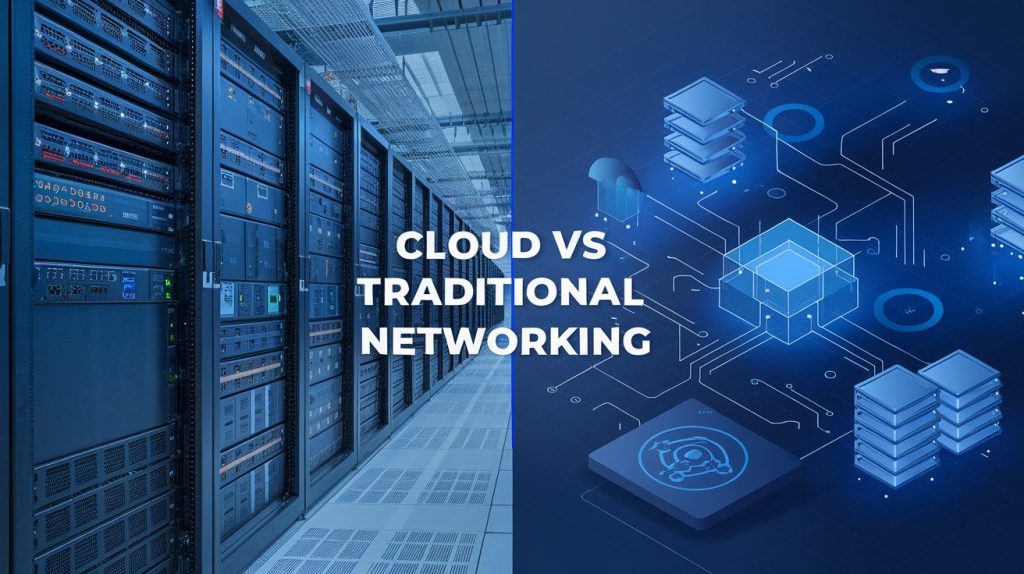
How Cloud Networking Differs from Traditional IT (Key Changes)
Remember when IT meant server rooms you could walk into and network cables you could physically touch? Those days are fading faster than a 56K modem connection.
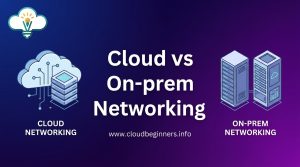
Your traditional networking setup and cloud networking might as well be different species. While both connect your stuff, cloud networking fundamentally changes how you think about, build, and manage your infrastructure.
Let’s be real; if you’re still approaching cloud networking with your traditional IT mindset, you’re probably making your life way harder than it needs to be.
By the end of this post, you’ll understand exactly how cloud networking differs from the old-school approach, and why those differences matter to your bottom line.
But first, let’s talk about the shift that’s making even seasoned IT pros rethink everything they know…
Core Architectural Differences Between Cloud and Traditional Networking
Virtualization’s Role in Cloud Infrastructure
Think of traditional networking as physical buildings you own – everything from the foundation to the roof is your responsibility.
Cloud networking? It’s more like renting a fully furnished apartment where you can knock down digital walls whenever you need.
At the heart of this difference is virtualization. In cloud environments, you’re not dealing with physical switches, routers, and firewalls. Instead, you’re working with software-defined versions of these components.
Your networking components exist as code rather than hardware. This means you can:
- Create new network segments in minutes, not weeks
- Modify network paths without physically rewiring anything
- Deploy identical network configurations across multiple environments
When you need a new network connection in a traditional setup, someone physically plugs in cables. In cloud networking, you simply click a few buttons or run some code, and voilà – new connection established.
On-Demand Resource Allocation vs. Fixed Hardware Configurations
Remember buying networking equipment for your traditional infrastructure? You’d calculate your peak capacity needs, then add 20-30% for “just in case.” That meant paying for resources sitting idle 90% of the time.
Cloud networking flips this model completely. You pay for what you use, when you use it.
| Traditional Networking | Cloud Networking |
|---|---|
| Buy hardware upfront | Pay as you go |
| Size for peak capacity | Scale with actual usage |
| Months to expand | Minutes to expand |
| High idle resource waste | Minimal resource waste |
Got a traffic spike? Your cloud network automatically scales to handle it. Traffic drops? Your resources (and costs) scale back down.
Elasticity and Scalability Advantages
The old way of scaling your network was painful. You’d forecast growth, get budget approval, wait for equipment delivery, schedule downtime, and finally install and configure. Months of lead time for something you needed yesterday.
With cloud networking, you can:
- Double your bandwidth in minutes
- Add new regions or availability zones without buying hardware
- Automatically scale based on traffic patterns
- Test large-scale configurations without massive investment
Your network becomes responsive to actual needs rather than educated guesses about future requirements. Handling seasonal traffic? Just set auto-scaling rules and forget about it.
Distributed vs. Centralized Network Models
Traditional networks operate on a hub-and-spoke model. Everything routes through central points, creating bottlenecks and single points of failure.
Cloud networks distribute traffic and processing across multiple locations. This fundamental shift changes how you approach:
- Fault tolerance: A data center outage in traditional environments might mean downtime. In cloud environments, traffic automatically routes to healthy locations.
- Performance: Your users connect to the nearest edge location, not a distant central data center.
- Security: Instead of protecting a network perimeter, you secure each service independently.
This distributed approach means your services can survive regional outages, deliver consistent performance globally, and scale independently based on their specific needs.
Cost Structure Transformation
A. CapEx to OpEx: The Financial Shift
Making the jump from traditional IT to cloud networking means you’re essentially trading your big upfront hardware purchases for a subscription-based model.
Instead of dropping huge sums on servers, switches, and routers that sit on your balance sheet as capital expenditures (CapEx), you’re moving to operational expenditures (OpEx) – regular monthly payments.
This isn’t just accounting semantics. When you pay for cloud networking, you’re renting infrastructure rather than owning it.
That means no more depreciation headaches, less money tied up in assets, and more financial flexibility. Your finance team might even thank you – OpEx often gets more favorable tax treatment compared to CapEx in many jurisdictions.
B. Pay-as-you-go vs. Upfront Investment
Think about how you buy groceries vs. how you buy a car. Traditional networking is like buying that car – big money upfront with ongoing maintenance costs. Cloud networking? It’s like only paying for the exact groceries you need each week.
With cloud networking, you can:
- Scale your resources up during busy periods
- Scale down when demand drops
- Only pay for what you actually use
- Avoid overprovisioning “just in case”
This flexibility can be a game-changer for businesses with seasonal traffic or unpredictable growth patterns. Your costs actually align with your usage patterns instead of being locked into hardware sized for your peak demands.
C. Hidden Costs and Savings in Both Models
Traditional networking comes with plenty of sneaky expenses you might not consider:
| Traditional IT Hidden Costs | Cloud Networking Hidden Costs |
|---|---|
| Power and cooling | Data transfer fees |
| Physical space/real estate | API call charges |
| Hardware maintenance | Storage retention costs |
| Staff for physical maintenance | Premium support plans |
| Replacement parts | Feature/service add-ons |
| Upgrade cycles | Egress charges |
The cloud can save you money on electricity, staffing, and physical infrastructure, but watch those data transfer costs – they can add up quickly if you’re moving large amounts of data in and out of the cloud.
Many organizations get surprised by their first cloud bill because they didn’t account for these seemingly small charges that multiply at scale.
D. ROI Comparisons Between Cloud and Traditional IT
Calculating your return on investment looks completely different in the cloud world. With traditional networking, your ROI typically improves over time as you squeeze more value from your initial investment. In the cloud, your ROI is more about agility and opportunity costs.
Consider these factors when comparing ROI:
- Time-to-market: Cloud deployments happen in minutes, not months
- Scaling costs: No need to overprovision “just in case”
- Resource utilization: Traditional hardware often sits at 20-30% utilization
- Opportunity cost: Capital not tied up in hardware can be invested elsewhere
- Risk mitigation: Less chance of technology obsolescence
For most businesses, cloud networking delivers better ROI when you factor in total cost of ownership and the value of business agility.
But this isn’t universal – if you have steady, predictable workloads that don’t change much, traditional infrastructure might still make financial sense.
E. Budget Planning for Cloud Networking
Budgeting for cloud networking requires a different mindset. You’re shifting from predictable but large periodic expenses to variable monthly costs.
Start by:
- Understanding your usage patterns – seasonal spikes, daily patterns
- Setting up detailed monitoring and tagging to track costs by department or project
- Using cloud provider calculators to estimate baseline expenses
- Building in buffers for unexpected growth
- Creating alerts for spending thresholds
The good news is you can adjust your cloud spending much faster than traditional IT if business conditions change. Budget overruns aren’t permanent – you can optimize and right-size on the fly.
Don’t forget to account for training your team on cloud cost management – it’s a new skill set that traditional IT pros often need to develop. Many organizations now create dedicated FinOps roles specifically to optimize cloud spending.
Security Paradigm Changes
A. Shared Responsibility Models in Cloud Environments
Gone are the days when your IT team handled everything. Cloud providers now share security responsibilities with you in a model that’s fundamentally different from traditional setups.
In traditional environments, you owned all security aspects – from physical hardware to application code. With cloud, that burden gets split.
Your cloud provider typically handles:
- Physical security
- Host infrastructure
- Network infrastructure
- Virtualization layer
While you remain responsible for:
- Data security
- Identity management
- Application security
- Configuration management
This division isn’t always clear-cut, which creates confusion. AWS, Azure, and GCP each implement slightly different models. You need to understand exactly where your responsibilities begin and end – because any gaps can lead to security incidents.
B. Identity and Access Management Evolution
Your approach to IAM must evolve dramatically when moving to the cloud. Traditional environments typically relied on Active Directory with relatively static permissions. Cloud environments demand dynamic, granular controls.
In cloud networking:
- You’ll manage permissions across multiple services
- Role-based access control becomes essential
- Just-in-time access replaces permanent privileges
- API keys and service accounts require careful management
Cloud IAM systems offer sophisticated options like conditional access policies, where access depends on factors like device compliance, location, and risk scores.
You can implement multi-factor authentication across your entire cloud infrastructure with a few clicks – something that would take months in traditional environments.
C. Network Segmentation Approaches: VPCs vs. VLANs
The way you segment networks changes entirely in cloud environments. Traditional networks use VLANs (Virtual Local Area Networks) to create logical network divisions.
Cloud platforms introduce VPCs (Virtual Private Clouds) that operate on completely different principles.
With VLANs, you’re constrained by physical hardware limitations and complex router/switch configurations. VPCs provide logical isolation that’s software-defined and can span multiple availability zones or regions.
Key differences you’ll encounter:
| Traditional VLANs | Cloud VPCs |
|---|---|
| Layer 2 segmentation | Layer 3 segmentation |
| Limited by physical switches | Software-defined boundaries |
| Complex spanning tree protocols | Simple subnet architecture |
| Manual configuration | API-driven automation |
| Static address assignment | Dynamic CIDR block allocation |
Your security groups and network ACLs in cloud replace traditional firewall rules, offering stateful and stateless filtering options that integrate directly with other cloud services.
D. Encryption Requirements and Implementation Differences
Encryption implementation differs drastically between traditional and cloud environments. In traditional setups, you might have encrypted sensitive databases or specific communication channels. In the cloud, encryption becomes ubiquitous and multi-layered.
You’ll need to implement:
- Encryption at rest for all storage services
- Encryption in transit across all network paths
- Key management systems for centralized control
- API-based certificate management
Cloud platforms offer built-in encryption services that integrate with their storage and compute offerings. Instead of purchasing expensive HSMs (Hardware Security Modules), you can use cloud key management services that provide similar functionality at a fraction of the cost.
Your encryption strategy must account for regulatory requirements that may dictate where encryption keys are stored and who controls them. This is especially important if you operate in industries with strict compliance needs like healthcare or finance.
Performance and Reliability Considerations
A. Latency Challenges in Cloud Environments
When you shift from traditional networking to cloud environments, you’ll immediately notice differences in latency profiles.
Your data now travels across the internet to reach cloud servers, adding inevitable delay compared to your on-premises solutions where everything lives within your building’s walls.
Think about it – your packets might traverse multiple countries before reaching their destination! This geographical distance introduces latency that simply doesn’t exist when your server is down the hall.
You’ll experience this most acutely with latency-sensitive applications like voice, video conferencing, or real-time trading platforms.
To combat these challenges, you can:
- Deploy your workloads across multiple regions to keep data closer to users
- Use content delivery networks (CDNs) to cache static content near your users
- Implement WAN optimization techniques to maximize throughput
- Consider direct connect options from major cloud providers that bypass public internet routes
B. Bandwidth Management Differences
Gone are the days when you could physically trace cables to diagnose bandwidth issues. In cloud environments, your bandwidth management takes on entirely new dimensions.
With traditional IT, you probably purchased fixed bandwidth that rarely changed. Cloud networking flips this model – your bandwidth requirements fluctuate constantly based on actual usage. This elasticity is both a blessing and a curse.
You’ll need to monitor bandwidth consumption differently:
| Traditional Approach | Cloud Approach |
|---|---|
| Fixed monthly costs | Pay-as-you-go models |
| Manual capacity planning | Auto-scaling capabilities |
| Physical traffic shaping devices | Software-defined policies |
| Limited burst capacity | On-demand resource expansion |
Most cloud providers charge for data transfer, especially traffic leaving their networks. This means your bandwidth optimization directly impacts your monthly bill – something you rarely worried about with traditional networks.
C. SLA Structures and Guarantees
Your SLAs look dramatically different in cloud environments. Traditional networking SLAs typically guaranteed uptime percentages for specific hardware components you owned and maintained.
Cloud SLAs break down services into tiers with different guarantees. You’ll find yourself working with multiple SLAs across your stack:
- Network availability SLAs
- Compute uptime guarantees
- Storage durability promises
- API availability commitments
The devil’s in the details – cloud providers typically calculate availability differently than you might expect. A 99.9% uptime guarantee might sound impressive until you realize it allows for nearly 9 hours of downtime annually.
Your traditional networking equipment might have promised 99.999% uptime (just 5 minutes of downtime yearly).
You’ll need to carefully review what triggers SLA violations and what compensation mechanisms exist. Most cloud SLAs offer service credits rather than direct refunds when issues occur.
D. Redundancy Implementation Methods
Your approach to redundancy undergoes a fundamental shift in cloud environments. Traditional networks relied heavily on physical redundancy – duplicate switches, routers, and connections with automatic failover capabilities.
Cloud redundancy operates at a more abstract level. You’re now thinking about:
- Multi-availability zone deployments
- Cross-region replication
- Auto-healing infrastructure
- Stateless application design
The beauty of cloud redundancy is you can implement it programmatically. Instead of manually configuring backup systems, you’ll write infrastructure as code that automatically provisions redundant resources.
Your disaster recovery planning changes too. Rather than maintaining costly hot/cold sites, you can spin up entire environments in minutes when needed.
This gives you much more flexibility but requires careful planning to avoid configuration drift between your primary and backup systems.
Management and Operational Changes
Infrastructure as Code vs. Manual Configuration
Gone are the days of logging into individual network devices to make configuration changes. In traditional IT, you’d spend hours manually configuring routers, switches, and firewalls; documenting everything in spreadsheets or Word docs that quickly become outdated.
With cloud networking, you’re now defining your entire infrastructure as code (IaC). This means you write declarative configurations that automatically provision and manage your network resources.
Instead of clicking through GUI interfaces or typing CLI commands, you’re creating YAML or JSON files that define your desired network state.
The benefits? You get:
- Version control for your entire network infrastructure
- Reproducibility across environments
- Consistency that eliminates human error
- Auditability of all network changes
When you need to make a change, you simply update your code, run it through testing, and deploy it—no more late-night maintenance windows configuring devices one by one.
Automation’s Critical Role in Cloud Networking
Automation isn’t just nice to have in cloud networking; it’s absolutely essential. In traditional environments, you might script some tasks, but many processes remained manual.
In the cloud, you’re leveraging automation for nearly everything:
- Network provisioning: Spin up VPCs, subnets, and routing tables in seconds
- Policy deployment: Update security groups across hundreds of instances with a single command
- Scaling operations: Automatically adjust resources based on traffic patterns
- Remediation: Self-healing networks that respond to failures without human intervention
Automation tools like Terraform, Ansible, and cloud-native services have transformed how you manage networks. What used to take days now happens in minutes, and without the typos and configuration drift that plague manual approaches.
Monitoring and Analytics Capabilities
Traditional network monitoring gave you basic metrics: bandwidth usage, device status, and maybe some NetFlow data if you were lucky. You’d stare at dashboards waiting for something to break.
Cloud networking flips the script completely. Now you’re drowning in data, but in a good way. Cloud platforms provide:
- Deep visibility into traffic patterns and application behavior
- AI-powered anomaly detection that spots issues before they impact users
- End-to-end tracing across microservices and distributed systems
- Cost analytics that help optimize spending in real-time
The tools have evolved too.
Rather than just monitoring for uptime, you’re analyzing performance trends, security threats, and business impact simultaneously. Your monitoring isn’t just reactive anymore; it’s predictive and proactive.
DevOps Integration with Network Operations
Remember when network teams operated in complete isolation from development teams? That siloed approach doesn’t work in cloud environments.
Today, you’re seeing the rise of NetDevOps, where network operations integrate directly with DevOps workflows. This means:
- Network configurations deploy through the same CI/CD pipelines as application code
- Infrastructure changes are tested automatically before deployment
- Network services are exposed through APIs for developer consumption
- Collaboration happens through shared tools and platforms
This integration breaks down the traditional barriers between network engineers and developers. You’re no longer the “network person” who gets blamed when applications are slow; you’re part of a unified team delivering digital services together.
Skill Set Evolution for IT Teams
The shift to cloud networking demands an entirely new skill set from IT professionals. If you’re still focusing solely on Cisco certifications and CLI mastery, you’re falling behind.
Today’s cloud network engineers need to be:
- Software-fluent: Understanding Python, YAML, JSON, and API interactions
- Security-focused: Implementing zero-trust principles and compliance controls
- Business-aware: Optimizing for cost and performance trade-offs
- Cloud-native: Familiar with the unique networking models of AWS, Azure, and GCP
The most successful teams are cross-training across domains. Network engineers are learning cloud architecture principles, while system administrators are picking up networking concepts.
This evolution isn’t optional; it’s survival. Organizations that maintain rigid skill silos find themselves struggling to compete with more agile cloud-native competitors who’ve embraced this new operational model.
Regulatory and Compliance Implications
Data Sovereignty in Cloud Environments
Moving to the cloud? You need to know where your data lives. Unlike traditional IT, where your servers sit in your office or data center, cloud data can cross borders without you even realizing it.
Cloud providers store your data in multiple locations for redundancy and performance. But this creates a tricky situation when you’re subject to laws like GDPR in Europe or CCPA in California.
When you use traditional infrastructure, you know exactly where your data resides. With cloud networking, your customer information might be processed in Singapore one minute and Ireland the next. This matters because different countries have different rules about data handling.
To stay compliant:
- Ask your cloud provider for specific geographic guarantees
- Use region-specific deployments when handling sensitive information
- Implement data classification policies that route information to appropriate storage locations
- Consider data residency requirements in your architecture planning
Many cloud providers now offer region-specific guarantees, letting you control where your workloads run. This wasn’t even a consideration with your old on-prem setup, where physical access meant physical control.
Audit Trails and Logging Differences
Traditional IT logs are like having security cameras just inside your building. Cloud logs are like having cameras everywhere – on your phone, your car, and even your coffee maker.
In traditional environments, you’d typically collect logs from a limited set of devices you control. Your options were determined by what your hardware could support and what your team configured.
Cloud environments flip this script completely:
| Traditional Logging | Cloud Logging |
|---|---|
| Limited to physical devices | Captures API calls, configuration changes, and user actions |
| Usually stored locally | Centralized and immutable |
| Often incomplete | Comprehensive visibility |
| Manual collection | Automated aggregation |
Cloud platforms automatically track who did what and when across your entire infrastructure. This means better visibility but also much more data to sort through. You’re no longer limited by storage or processing power to maintain compliance records.
The benefit? When auditors come knocking, you can provide detailed logs showing exactly who accessed sensitive data, modified security settings, or deployed new resources. Try getting that level of detail from your old on-prem system!
Compliance Framework Adaptations
Remember when compliance meant giant binders of policies and quarterly manual checks? Those days are over.
Traditional compliance approaches were static and labor-intensive. You’d establish controls, document them, and manually verify them periodically. Cloud compliance is continuous and often automated.
Your existing compliance frameworks need updating for cloud environments:
- Continuous vs. Point-in-Time: Replace annual assessments with real-time monitoring. You can’t wait months to discover a misconfiguration.
- Infrastructure as Code: Your compliance controls should be coded into your deployment templates. When traditional IT had you manually configuring firewalls, cloud networking lets you define security in code that’s version-controlled and tested.
- Shared Responsibility: Understand what your provider handles and what remains your responsibility. In traditional environments, you owned everything. Now, responsibilities are split.
- API-Based Verification: Stop relying on screenshots and start using automated testing. Your compliance checks should verify configurations programmatically rather than through manual inspection.
Major frameworks like PCI-DSS, HIPAA, and SOC 2 have all evolved to address cloud environments. The smart move? Leverage your provider’s compliance programs as a foundation, then build your controls on top of their certified infrastructure.
Transitioning from traditional networking to cloud-based solutions represents a fundamental shift in how your IT infrastructure operates.
As you’ve seen, cloud networking differs significantly in architecture, cost structure, security approaches, performance expectations, operational demands, and compliance requirements.
These changes aren’t merely technical adjustments but represent a complete transformation in how your organization conceptualizes and manages its network resources.
As you consider your own network evolution, remember that successful cloud adoption requires both technical knowledge and strategic planning.
Take time to assess your specific business needs, security requirements, and operational capabilities before making the leap.
Whether you’re just beginning your cloud journey or looking to optimize existing cloud networks, understanding these key differences will help you navigate the complexities of modern networking and position your organization for greater agility, scalability, and innovation in today’s rapidly evolving digital landscape.
I’ve also built a platform that shows you how to build the right hands-on cybersecurity skills to help businesses achieve their cloud security goals while you build the career you love for a better, higher-paying reward. Check it out here and start working on projects that will help you get hired.
The Author