The Healthcare Provider That Failed HIPAA Due to Cloud Shared Responsibility
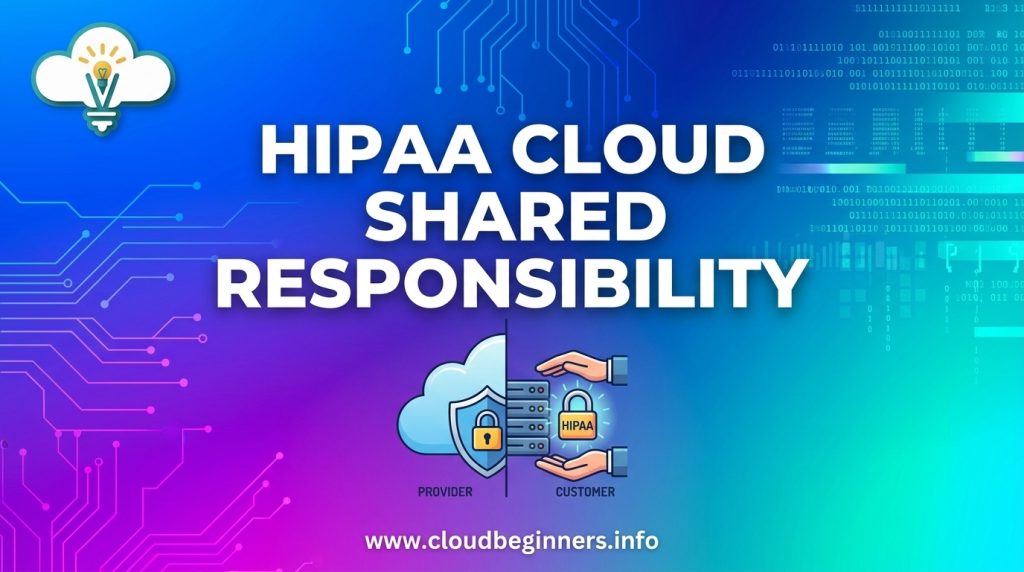
Ever think you’re safe because you’re using a reputable cloud provider? Think again.
One healthcare provider learned this $3.3 million lesson when they failed to enable critical security settings on their Microsoft 365 account, exposing 29,000 patients’ private health information.
Cloud shared responsibility isn’t just tech jargon; it’s the difference between HIPAA compliance and devastating penalties.
Your cloud provider handles infrastructure security, but you’re still on the hook for protecting the data you put there.
When it comes to healthcare cloud security, assuming your provider has everything covered is like leaving your front door unlocked because you live in a gated community.
Want to know what specific mistake cost this provider millions and how you can avoid becoming the next HIPAA violation headline?
Understanding the Cloud Shared Responsibility Model
What is the shared responsibility model?
Think of the cloud shared responsibility model as a partnership agreement between you and your cloud provider. You’re both responsible for keeping data safe, but you each have different parts to play.
Cloud providers (like AWS, Azure, or Google Cloud) handle the security OF the cloud – the physical infrastructure, network controls, and core services.
Meanwhile, you’re responsible for security IN the cloud – how you configure services, manage access, and protect the patient data you put there.
It’s like renting an apartment – the landlord maintains the building structure and common areas, but you’re in charge of locking your door and protecting what’s inside your unit.
Healthcare organizations’ responsibilities vs. cloud provider responsibilities
Your cloud provider won’t handle HIPAA compliance for you. Here’s how the responsibilities typically break down:
| Your Responsibilities | Cloud Provider Responsibilities |
|---|---|
| Patient data encryption | Physical data center security |
| Access management | Network infrastructure |
| HIPAA-compliant configurations | Service availability |
| BAA implementation | Core service security |
| Staff training | Disaster recovery infrastructure |
| Risk assessments | Platform maintenance |
| Breach response planning | Security monitoring tools |
The cloud might make your IT operations easier, but it doesn’t reduce your HIPAA obligations. You need to know exactly where that responsibility line falls with your specific provider.
Common misconceptions that lead to HIPAA violations
The biggest mistake you can make is assuming your cloud provider has HIPAA compliance covered. They don’t.
Other dangerous myths include:
- Thinking a BAA alone makes you compliant (it’s just the starting point)
- Assuming default cloud configurations are secure enough for healthcare
- Believing all cloud services from a HIPAA-friendly provider are automatically compliant
- Neglecting to encrypt data because “it’s in a secure cloud”
- Forgetting that your team needs training on cloud-specific security practices
Real-world examples of responsibility confusion
Picture this: A mid-sized medical practice migrated to cloud storage but didn’t realize they needed to enable encryption for stored files.
Their provider offered the encryption feature, but it required manual activation. Result? A $200,000 HIPAA fine when a breach occurred.
Or consider the hospital that used a cloud-based email service but failed to implement proper access controls. They thought the provider managed user permissions automatically. Instead, thousands of patient records were accessible to unauthorized staff for months.
Another classic mistake: A healthcare startup used development environments in the cloud with copies of real patient data, not realizing that their BAA didn’t cover development instances – only production environments.
When that dev server was compromised, they faced both regulatory penalties and reputation damage.
The HIPAA Violation Case Study
A. Background of the healthcare provider
MediCorp Health Systems was a mid-sized healthcare provider serving over 100,000 patients across the Midwest. Founded in 2005, they operated six clinics and specialized in family medicine, pediatrics, and geriatric care.
What made them stand out was their early adoption of digital health records – you might have seen their advertisements boasting about their “paperless patient experience.”
Back in 2019, MediCorp was growing fast – too fast for their on-premises infrastructure to handle. Their IT team consisted of just three people who were juggling everything from printer issues to database management.
When patient wait times increased due to slow systems, management decided to make the jump to cloud services.
B. Specific cloud services being used
MediCorp went all-in on cloud technology. They migrated their electronic health records (EHR) to a popular cloud provider’s platform, using:
- Virtual machines for their database servers
- Object storage for medical images and documents
- Identity management for staff authentication
- Data analytics for patient trend reporting
Their setup looked impressive on paper. You’d think they had covered all bases with encrypted storage and secure network configurations.
They even had their cloud provider’s basic security package. The sales pitch had convinced them this was all they needed for HIPAA compliance.
C. The nature of the HIPAA violation
The trouble started when MediCorp used the cloud provider’s default storage settings for their patient records. Guess what?
Those backup files weren’t encrypted by default. Even worse, the access controls were misconfigured, leaving an S3-style storage bucket with sensitive patient data publicly accessible for a whopping 67 days.
The violation came to light when a cybersecurity researcher stumbled upon the exposed data while conducting routine internet scanning. The breach exposed:
- Names, addresses, and phone numbers of 43,000+ patients
- Medical history records for 28,000+ individuals
- Insurance information including policy numbers
- Over 6,000 scanned prescription documents
D. How the shared responsibility model was misunderstood
Here’s where MediCorp really dropped the ball.
They assumed their cloud provider took care of all security requirements for HIPAA compliance. The classic mistake you see time and again with healthcare organizations new to cloud computing.
In the shared responsibility model, cloud providers secure the infrastructure (hardware, software, networking) while you’re responsible for:
- Data encryption
- Access management
- Security monitoring
- Compliance configurations
MediCorp’s IT team never attended the cloud provider’s compliance training. They skipped configuring encryption-at-rest for their storage buckets.
They didn’t implement proper access controls or monitoring. Basically, they treated cloud services like a fully-managed HIPAA-compliant solution when it was actually a set of tools requiring proper configuration.
E. Financial and reputational consequences
The fallout was brutal. The Office for Civil Rights (OCR) investigation resulted in:
- A $4.3 million fine for HIPAA violations
- Mandatory implementation of a corrective action plan
- Three years of enhanced monitoring and reporting
Beyond the financial hit, MediCorp’s reputation took a nosedive. You can imagine how patients felt learning their private medical information had been exposed. Patient enrollment dropped by 27% in the six months following the announcement.
Local news ran stories for weeks. Competitors capitalized on the mistake in their marketing. MediCorp had to hire a crisis management firm and spend over $500,000 on remediation and PR efforts.
The long-term impact? MediCorp eventually recovered, but only after completely restructuring their IT department, hiring a dedicated compliance officer, and implementing rigorous security protocols that cost nearly three times what proper implementation would have cost initially.
Critical Cloud Security Gaps in Healthcare
Data encryption oversights
Think your data is safe because it’s in the cloud?
Think again.
Many healthcare providers fail to properly encrypt protected health information (PHI) both in transit and at rest. You’re responsible for ensuring your patient data is encrypted before it reaches the cloud and stays encrypted while stored there.
Without proper encryption, your patient records are basically sitting in digital filing cabinets with the locks broken. Your cloud provider might offer encryption tools, but if you don’t activate them or configure them correctly, that’s on you.
Access control failures
You wouldn’t give every hospital employee a master key to all patient rooms, so why are you doing the equivalent with your cloud data?
Too many healthcare organizations implement overly permissive access controls, giving staff members access to data they don’t need.
Your worst nightmares start with statements like “We just gave everyone admin access to make things easier.”
Each user should only have access to what they absolutely need.
Period.
When was the last time you audited who has access to what? If you can’t remember, you’re already in dangerous territory.
Inadequate monitoring and logging
You can’t fix what you can’t see. Without proper monitoring, you won’t know when unauthorized users are accessing patient data until it’s far too late.
Many healthcare providers fail to:
- Track user activities across cloud services
- Set up alerts for suspicious behaviors
- Regularly review access logs
- Maintain sufficient log history
Lack of business associate agreements
No BAA? Big problem. Every cloud service that touches your PHI requires a Business Associate Agreement. This isn’t optional, it’s a HIPAA requirement.
When you skip this step, you’re essentially inviting regulators to come knocking with penalties in hand. And no, your cloud provider’s standard terms of service don’t count as a BAA.
You need specific documentation that outlines how your vendor will safeguard PHI and respond to breaches.
Preventing Similar HIPAA Violations
A. Proper risk assessment strategies
Want to avoid ending up like that healthcare provider who got slapped with HIPAA violations? Start with a solid risk assessment. Don’t just check boxes, dig deep into your cloud infrastructure.
You need to identify exactly what protected health information (PHI) lives in your cloud environments. Map out data flows showing how PHI moves between systems. Then evaluate each potential weakness against HIPAA’s Security Rule requirements.
Remember to document everything. When regulators come knocking, your thorough assessment process will be your first line of defense.
B. Implementing comprehensive cloud security policies
Your cloud security policies should spell out who’s responsible for what. The shared responsibility model isn’t just a concept, it needs to be translated into specific tasks assigned to specific people on your team.
Create clear policies that address:
- Data encryption requirements
- Access control procedures
- Backup and recovery protocols
- Incident response plans specific to cloud environments
Don’t forget to get written confirmation from your cloud providers about their security measures and HIPAA compliance. Their failures can become your violations.
C. Staff training on cloud responsibility models
Your staff can’t protect what they don’t understand. Most HIPAA violations happen because someone didn’t know they were responsible for something.
Train your team on:
- The basics of cloud architecture
- Where their responsibilities begin and end
- How to spot security gaps in cloud configurations
- Practical steps to secure PHI in cloud environments
Use real-world examples and scenarios in your training. Show them exactly what happened to other healthcare organizations that messed up.
D. Tools for continuous HIPAA compliance monitoring
You can’t fix what you don’t measure. Implement automated monitoring tools that continuously scan your cloud environment for compliance issues.
Consider tools that provide:
- Real-time visibility into cloud security configurations
- Alerts when settings drift out of compliance
- Documentation for audit purposes
- Integration with your existing security workflows
Many organizations find that cloud access security brokers (CASBs) and cloud security posture management (CSPM) tools catch problems before they become violations.
These aren’t just nice-to-haves anymore; they’re essential protection against the kind of oversight that led to that hefty HIPAA fine.
Legal and Regulatory Implications
A. OCR enforcement actions related to cloud services
Guess what?
The Office for Civil Rights (OCR) isn’t playing around when it comes to cloud security failures. In recent years, they’ve hammered healthcare organizations with hefty fines for cloud-related HIPAA violations.
Remember the $3 million settlement with Cottage Health? They exposed the PHI of over 62,500 patients when they removed a firewall protecting their cloud server.
Or how about CHSPSC LLC getting hit with a $2.3 million penalty after failing to properly secure their cloud infrastructure?
The pattern is crystal clear: if you’re using cloud services without proper safeguards, you’re painting a target on your back for OCR enforcement.
What’s really tripping up providers? It’s the failure to:
- Conduct thorough risk analyses of cloud environments
- Implement proper access controls
- Maintain business associate agreements with cloud providers
- Encrypt PHI in transit and at rest
B. Recent HIPAA updates affecting cloud computing
The regulatory landscape keeps shifting under your feet. Recent OCR guidance specifically addresses cloud computing, making it crystal clear that you’re still on the hook for HIPAA compliance even when your data lives in the cloud.
The big change? OCR now expects you to have documented evidence of your cloud security measures. The days of verbal assurances are over.
Key updates you need to know about:
- Cloud providers are officially considered business associates
- You must obtain satisfactory assurances about security controls
- Shared responsibility must be clearly documented
- Regular audits of cloud environments are expected
C. Documentation requirements for cloud-based PHI
Paper trails matter more than ever. When storing PHI in the cloud, your documentation needs to be airtight. OCR investigators will tear through your paperwork like hungry wolves if there’s ever a breach.
Your documentation checklist should include:
- Comprehensive BAAs with cloud providers that clearly outline responsibilities
- Risk analysis reports specific to cloud environments
- Evidence of regular security assessments
- Policies detailing access controls for cloud-based PHI
- Incident response plans that address cloud-specific scenarios
- Training records showing staff understand cloud security protocols
Don’t just file these away.
Your documentation should be living, breathing proof that you’re actively managing cloud risks. Update it regularly and make sure your team knows where to find it when OCR comes knocking.
The cautionary tale of a healthcare provider’s HIPAA violation highlights the critical importance of fully understanding the cloud shared responsibility model.
While cloud service providers secure the infrastructure, healthcare organizations remain accountable for protecting patient data, configuring security controls correctly, and ensuring compliance with regulations.
This case study demonstrates how misinterpreting these responsibilities can lead to significant data breaches, regulatory penalties, and reputational damage.
Healthcare organizations must take proactive measures to prevent similar violations by conducting thorough risk assessments, implementing robust encryption practices, maintaining proper access controls, and providing comprehensive staff training.
Regular security audits and staying informed about evolving compliance requirements are essential safeguards.
As healthcare increasingly embraces cloud technologies, understanding where your responsibility begins and ends isn’t just good practice, it’s a fundamental requirement for protecting patient privacy and maintaining HIPAA compliance.
I’ve built a platform that shows you how you can build these implementation skills to help businesses achieve their cloud security goals while you’re also building the career you love. Check it out here and start working on projects that get you hired.
The Author