The Ultimate Cloud Security Framework Cheat Sheet (Free PDF)
Ever spent hours trying to explain your cloud security posture to executives who just want the bottom line? Or worse, struggled to remember all those best practices during a 2 AM incident response?
You’re not alone. Cloud security frameworks feel like trying to assemble IKEA furniture with half the instructions missing and three extra screws.
That’s why we’ve created this cloud security framework cheat sheet. It’s your shortcut through the maze of compliance requirements, security controls, and best practices that keep your data safe in the cloud.
No more digging through 200-page white papers or translating techspeak for stakeholders. Just practical, actionable guidance you can actually use.
But here’s the thing about cloud security that most “experts” won’t tell you…
Understanding Cloud Security Fundamentals
A. Why Cloud Security Matters in Today’s Digital Landscape
Cloud adoption isn’t slowing down – and neither are the threats. Your business data now lives outside your physical walls, making it a juicy target for attackers. When you move to the cloud, you’re essentially handing over your crown jewels to a third party, trusting they’ll protect them.
But here’s the truth: cloud security isn’t just an IT problem anymore. It’s a business survival issue. A single breach could cost you millions in damages, regulatory fines, and that precious customer trust you’ve worked so hard to build.
Your cloud security framework isn’t optional – it’s the invisible shield protecting your entire digital operation.
B. Key Differences Between Traditional and Cloud Security
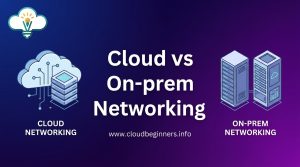
| Traditional Security | Cloud Security |
|---|---|
| You control physical infrastructure | Shared responsibility with provider |
| Clear network boundaries | Borderless environment |
| Static security configurations | Dynamic security posture |
| Limited scalability | Elastic security needs |
The game has changed. When you migrate to the cloud, you’re no longer the only one responsible for security. Your provider handles some aspects while you manage others – a dance that requires clear understanding of who does what.
The old fortress mentality doesn’t work anymore. Your data flows between services, regions, and devices with invisible boundaries. This demands a completely different security mindset.
C. Common Cloud Security Threats to Watch For
Your cloud environment faces threats old and new:
- Misconfiguration: The #1 cause of cloud breaches – one wrong setting exposes everything
- Identity theft: Compromised credentials mean attackers walk right through your front door
- Insecure APIs: Your cloud connections become prime attack targets
- Data breaches: Your sensitive information could leak without proper encryption
- Insider threats: Sometimes the danger comes from within your organization
Each of these threats requires specific controls within your cloud security framework. The free cloud security assessment template we provide helps you identify your unique risk exposure.
D. The Business Impact of Cloud Security Breaches
Cloud security failures hit your bottom line – hard. Beyond the immediate financial damage, you’re looking at:
- Regulatory penalties that grow steeper each year
- Customer exodus when trust is broken
- Reputation damage that outlasts the technical fix
- Business disruption during recovery
- Increased security costs after the fact
Building a robust enterprise cloud security strategy isn’t just about avoiding these pitfalls – it’s about creating business confidence. With the right cloud security controls checklist, you transform security from a barrier into a business enabler.
Essential Cloud Security Frameworks Overview
A. NIST Cybersecurity Framework for Cloud Environments
When you’re building your cloud security strategy, the NIST Cybersecurity Framework offers a rock-solid foundation. It breaks down security into five key functions: Identify, Protect, Detect, Respond, and Recover.
For your cloud infrastructure, this translates to:
- Identify: Map all your cloud assets and understand their vulnerabilities
- Protect: Implement access controls, encryption, and secure configuration
- Detect: Set up monitoring and anomaly detection across cloud services
- Respond: Create incident response playbooks specific to cloud breaches
- Recover: Establish backup and restoration processes for cloud workloads
You’ll find this framework particularly valuable when working across multiple cloud providers, as it gives you a consistent approach regardless of whether you’re using AWS, Azure, or Google Cloud.
B. CSA Cloud Controls Matrix (CCM)
The Cloud Security Alliance’s CCM is your go-to checklist for cloud-specific security controls. It maps to major compliance standards while addressing cloud-unique challenges.
The CCM organizes controls into 17 domains covering everything from application security to supply chain management. You can use it to:
- Assess your current cloud security posture
- Identify gaps in your security controls
- Compare cloud service providers’ security offerings
- Create a roadmap for security implementation
What makes CCM especially powerful is its cross-mapping capabilities – you can see how implementing one control might satisfy requirements across multiple regulations.
C. ISO 27017 and 27018 for Cloud-Specific Controls
When you need internationally recognized standards specifically for cloud security, ISO 27017 and 27018 have your back.
ISO 27017 extends the popular ISO 27001 framework with cloud-specific guidance. It covers shared security responsibilities between you and your cloud provider, helping you understand exactly where your security obligations begin and end.
ISO 27018, meanwhile, focuses on protecting personally identifiable information (PII) in cloud environments. It’s your blueprint for:
- Implementing proper consent mechanisms for data processing
- Setting up data retention policies
- Creating transparent data handling practices
- Establishing breach notification procedures
These standards are particularly valuable when you’re handling sensitive customer data or operating in heavily regulated industries.
D. MITRE ATT&CK Framework for Cloud Threats
The MITRE ATT&CK framework gives you the attacker’s perspective – crucial for strengthening your cloud defenses. Its cloud matrix covers tactics and techniques specifically used to compromise cloud environments.
You can use this framework to:
- Understand common attack patterns against cloud infrastructure
- Test your detection and response capabilities
- Prioritize security controls based on real-world threats
- Train your security team on cloud-specific attack scenarios
The framework breaks down techniques like credential access through cloud service dashboard and exploitation of misconfigurations in storage buckets. By mapping these to your environment, you’ll spot gaps in your defenses before attackers do.
E. Compliance Frameworks (GDPR, HIPAA, PCI DSS) in Cloud Context
Moving to the cloud doesn’t exempt you from compliance requirements – it just changes how you meet them.
For GDPR, your cloud strategy needs to address data sovereignty, processing agreements with providers, and the right to be forgotten across distributed systems.
With HIPAA, you’ll need to ensure your cloud providers sign Business Associate Agreements and implement technical safeguards like encryption for PHI at rest and in transit.
For PCI DSS, cloud environments require special attention to network segmentation, access controls, and logging – especially in multi-tenant environments.
The trick is adapting these frameworks to cloud realities. You’ll need to:
- Document shared responsibility boundaries
- Implement cloud-native controls like IAM policies
- Set up cloud-specific monitoring and logging
- Choose providers with compliance certifications relevant to your industry
Building Your Cloud Security Strategy
Assessing Your Current Cloud Security Posture
Before you dive into building a robust cloud security framework, you need to know where you stand. Take a hard look at your current setup; what’s working and what’s definitely not.
Start with a thorough audit using these key questions:
- Which cloud services are you already using?
- Who has access to what?
- What security measures are already in place?
- Where are your obvious gaps?
Many organizations think they’re more secure than they actually are. Don’t be one of them. Use assessment tools specific to your cloud provider (AWS Security Hub, Azure Security Center) or third-party solutions that can scan across platforms.
Identifying Critical Assets and Data Classifications
Not all data needs the same level of protection. You wouldn’t put your junk mail and your passport in the same type of safe, right?
Create a simple classification system:
- Critical – Would sink your business if compromised
- Sensitive – Would cause significant damage
- Internal – For employee use only
- Public – No harm if shared
Map where these data types live in your cloud environment. This mapping becomes your priority list for implementing controls.
Developing a Cloud-Specific Risk Management Approach
Cloud risks aren’t the same as on-premise risks. Your approach needs to reflect this reality.
Consider these cloud-specific challenges:
- Shared responsibility boundaries with your provider
- Multi-tenancy concerns
- API security risks
- Container vulnerabilities
- Serverless function security
Develop a risk register scoring both likelihood and impact. Focus your efforts on high-score risks first; you can’t boil the ocean.
Creating Incident Response Plans for Cloud Environments
When (not if) something goes wrong, you need a plan ready to go. Your traditional incident response plan probably won’t cut it in the cloud.
Your cloud IR plan should include:
- Clear roles and responsibilities
- Provider-specific response procedures
- Access to cloud-native logging and monitoring
- Communication templates for stakeholders
- Regular tabletop exercises to practice
Remember to involve your cloud provider in your response planning. They’re part of your security team now, whether you like it or not.
Implementing Technical Security Controls
Identity and Access Management Best Practices
Start with a solid IAM foundation to protect your cloud environment. Implement the principle of least privilege by giving users only the permissions they absolutely need. Set up multi-factor authentication across all your cloud accounts – it’s not optional anymore.
Use role-based access controls (RBAC) to simplify permission management and keep things organized as you scale. Remember to regularly audit user access – who has what permissions and do they still need them? Many breaches happen from forgotten accounts with excessive access.
Don’t overlook service accounts! They often have powerful permissions and can be your biggest security blind spot.
Data Encryption and Protection Strategies
Encrypt your data everywhere – at rest, in transit, and ideally in use. Your cloud provider offers built-in encryption tools, but you need to actually turn them on and manage the keys properly.
For sensitive data, consider using customer-managed keys (CMK) rather than provider-managed ones. This gives you more control over who can access your encrypted data.
Implement data classification to identify what needs the highest protection. Not all data is equal – focus your strongest controls on your crown jewels.
Set up data loss prevention (DLP) tools to catch sensitive information before it leaves your environment. These tools can automatically detect and block transmission of things like credit card numbers or health information.
Network Security in Cloud Deployments
Your cloud network security starts with proper segmentation. Break your environment into security zones with different trust levels and control traffic between them.
Implement defense in depth with multiple security layers:
- Security groups for instance-level protection
- Network ACLs for subnet-level security
- Web application firewalls for your public-facing apps
- DDoS protection for business continuity
Don’t forget about private connections! Use your provider’s private link options (AWS PrivateLink, Azure Private Link, etc.) to access services without exposing traffic to the internet.
Container and Serverless Security Approaches
With containers, security starts with your images. Scan them for vulnerabilities before deployment and use minimal base images to reduce attack surface.
For Kubernetes, lock down your control plane access and implement pod security policies. Don’t let containers run as root by default – it’s an unnecessary risk.
With serverless functions, focus on:
- Code security (dependency scanning is crucial)
- Tight IAM permissions for each function
- Environment variable protection for secrets
Remember that both containers and serverless still need all your standard security controls – they’re just applied differently.
Continuous Security Monitoring Solutions
You can’t secure what you can’t see. Implement comprehensive logging across all cloud services and centralize those logs for analysis.
Set up automated alerting for suspicious activities like unusual admin actions, unsanctioned API calls, or unexpected resource creation.
Use cloud security posture management (CSPM) tools to continuously check your environment against best practices and compliance requirements.
Don’t just collect data – analyze it! Look for modern SIEM solutions with machine learning capabilities that can spot unusual patterns human analysts might miss.
How to Use Our Free Cloud Security Framework PDF
Navigating the PDF’s Structure and Contents
Got our cloud security framework PDF? Great! You’ll find it’s broken down into digestible sections that won’t make your head spin. Start with the executive summary for a quick overview. Then dive into the core framework sections:
- Identity & Access Management
- Data Protection Controls
- Infrastructure Security
- Incident Response
- Compliance Mappings
Each section contains actionable controls, implementation guidance, and real-world examples. The color-coding system helps you quickly identify critical (red), important (yellow), and baseline (green) security controls.
Customizing the Framework for Your Organization
No two cloud environments are identical. That’s why we’ve made this framework super flexible.
You can:
- Prioritize controls based on your risk profile
- Add company-specific requirements to each section
- Remove irrelevant controls for your environment
- Adjust maturity levels to match your security roadmap
The editable format lets you transform our template into your organization’s cloud security bible. Small startup? Focus on the critical controls. Large enterprise? You might need the whole enchilada.
Implementation Roadmap and Timeline Suggestions
Feeling overwhelmed? Don’t sweat it. We’ve included a sample implementation roadmap with realistic timelines:
| Phase | Timeframe | Focus Areas |
|---|---|---|
| 1 | 0-30 days | Identity controls, basic data protection |
| 2 | 31-90 days | Infrastructure hardening, monitoring |
| 3 | 91-180 days | Advanced detection, compliance alignment |
| 4 | 181+ days | Continuous improvement, automation |
Adjust these timelines based on your team size and resources. Remember, cloud security is a marathon, not a sprint.
Measuring Security Effectiveness with the Framework
What gets measured gets improved. Our framework includes built-in metrics to track your progress:
- Control implementation percentages by category
- Risk reduction metrics
- Cloud security posture scores
- Compliance coverage indicators
Use the included assessment template to establish your baseline, then conduct quarterly reviews to measure improvement. The heat map visualization helps you spot areas needing attention at a glance.
Share these metrics with leadership to demonstrate your security program’s value and justify additional resources.
Real-World Cloud Security Implementation Case Studies
How Enterprise X Achieved Compliance Across Multiple Clouds
Ever tried juggling compliance requirements across AWS, Azure, and Google Cloud? That’s exactly what Enterprise X faced when expanding their operations globally. Their team tackled this by creating a unified cloud security framework that worked across all platforms.
They started with a cloud security assessment template to identify gaps in their existing setup. Instead of treating each cloud separately, they mapped common controls that satisfied requirements for SOC 2, GDPR, and HIPAA simultaneously.
The game-changer? They built automation into everything. Security checks, compliance monitoring, and remediation all ran without manual intervention. Their custom dashboard gave real-time visibility across their entire cloud ecosystem.
Results were impressive:
- 76% reduction in compliance management time
- Zero security incidents in the 18 months following implementation
- Compliance certification timelines cut from months to weeks
Small Business Success Story: Securing Cloud Operations on a Budget
Think you need enterprise-level cash to implement solid cloud security? Think again.
A marketing agency with just 15 employees and limited IT resources built robust cloud security without breaking the bank. They approached it smartly by:
- Prioritizing controls based on actual risk, not implementing everything at once
- Leveraging free and open-source tools for monitoring
- Creating a simple cloud security controls checklist their non-technical team could understand
Their approach focused on essentials first – identity management, encryption, and backup procedures. By implementing just these core elements properly, they eliminated 90% of common attack vectors.
Hybrid Cloud Security Challenges Solved
Your hybrid environment creating security headaches? You’re not alone.
A manufacturing company struggled with securing workloads that moved between their on-premises data center and cloud environments. Their breakthrough came from designing a cloud security architecture blueprint that treated security as a consistent layer across all environments.
They standardized on a single identity solution spanning all environments, implemented consistent encryption requirements, and created unified logging that captured activities regardless of where workloads ran.
The real win was how they handled network security – creating micro-segmentation rules that could follow workloads regardless of where they operated, maintaining protection even during migration.
Navigating the complex landscape of cloud security doesn’t have to be overwhelming. With the right frameworks and implementation strategies discussed throughout this guide, you can establish robust security measures for your organization’s cloud infrastructure.
The free Cloud Security Framework PDF provides a comprehensive roadmap that consolidates essential controls, compliance requirements, and implementation steps into one accessible resource.
Remember that cloud security is not a one-time implementation but an ongoing journey. Start by assessing your current security posture, select the appropriate frameworks based on your industry requirements, and systematically implement the technical controls outlined in our guide.
Whether you’re just beginning your cloud security journey or looking to enhance existing measures, the real-world case studies and practical implementation steps will help you navigate cloud security challenges with confidence.
Download the free PDF today and take the first step toward strengthening your cloud security posture.
I’ve also built a platform that shows you how to build the right hands-on cybersecurity skills to help businesses achieve their cloud security goals while you build the career you love for a better, higher-paying reward. Check it out here and start working on projects that will help you get hired.
The Author