How AI-Assisted Tools Can Detect IaC Security Misconfigurations
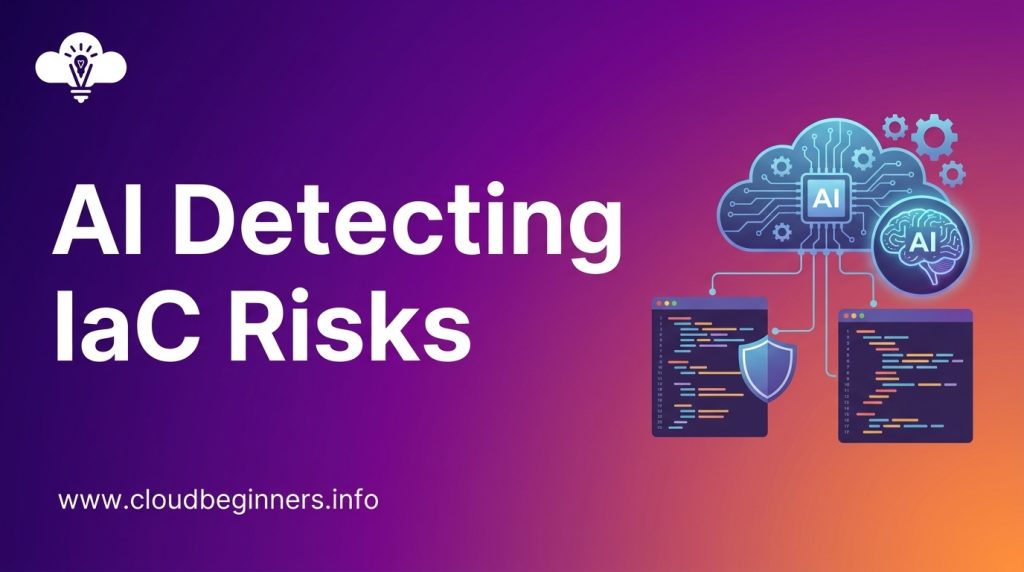
DevOps engineers and security professionals are facing a growing challenge: catching critical security flaws in Infrastructure as Code before they reach production.
AI tools are now finding IaC risks that even experienced teams overlook.
In this guide, we’ll explore how machine learning algorithms detect complex configuration vulnerabilities, examine the specific types of security gaps AI excels at identifying, and show you real examples where AI caught what humans missed.
Understanding the Critical Role of Infrastructure as Code (IaC)
A. The evolution from manual to automated infrastructure management
Remember when you had to manually configure servers one by one? Those days are rapidly fading. Your infrastructure journey has likely evolved from physical machines that took weeks to provision to cloud resources deployable in minutes.
This shift represents more than convenience; it’s a complete transformation in how you manage your tech stack.
With Infrastructure as Code (IaC), you’re now defining your entire infrastructure using configuration files. Instead of clicking through console interfaces or running commands on individual servers, you’re writing code that automatically creates and configures your infrastructure.
Tools like Terraform, AWS CloudFormation, and Ansible have become your new command center.
The benefits you’re gaining are substantial:
- Speed: Deploy complex environments in minutes instead of days
- Consistency: Eliminate the “it works on my machine” problem
- Version control: Track changes and roll back when needed
- Scalability: Replicate environments with minimal effort
- Documentation: Your infrastructure is self-documenting
B. Why IaC security matters more than ever
Your infrastructure code now wields tremendous power. With a single command, you can deploy hundreds of resources across multiple regions. This power comes with significant responsibility.
When you write IaC, you’re not just defining servers and networks; you’re establishing security boundaries, access controls, and compliance guardrails. A single misconfiguration in your code can expose sensitive data or create backdoors into your systems.
The stakes are higher because:
- Your attack surface expands with each new cloud service
- Infrastructure changes happen faster and more frequently
- Security configurations are codified and easily replicated; including mistakes
- Compliance requirements continue to grow more complex
C. Common human blind spots in IaC security reviews
Even if you’re diligent about reviewing your infrastructure code, certain security issues consistently slip past human reviewers. Your biggest blind spots typically include:
Default configurations that prioritize convenience over security. When you’re rushing to deploy, it’s tempting to accept defaults without scrutiny.
Complex access permissions that create unintended privilege escalation paths. The interaction between IAM policies, security groups, and network ACLs creates a web that’s difficult to mentally parse.
Resource dependencies that introduce unexpected vulnerabilities. Your S3 bucket might be secure, but what about the Lambda function that accesses it?
Temporary fixes that become permanent. That “quick fix” with a permissive security group rule often outlives its intended lifespan.
Configuration drift that occurs after deployment. Your IaC might be secure on day one, but manual changes often introduce weaknesses.
D. The rising cost of infrastructure security breaches
The financial impact of infrastructure security failures hits your bottom line harder than ever. Recent studies show the average cost of a data breach now exceeds $4.45 million, up 15% over the past three years.
Beyond immediate financial losses, you face:
- Regulatory penalties that grow steeper each year
- Customer trust erosion that’s increasingly difficult to rebuild
- Operational disruption during incident response
- Technical debt from rushed remediation
- Market valuation impacts that can last years
Cloud misconfigurations now rank among the top three causes of security incidents. What makes this particularly frustrating is that these breaches are largely preventable with proper IaC security controls.
AI’s Unique Advantages in IaC Risk Detection
A. Pattern recognition capabilities beyond human capacity
When you’re scanning through IaC code, your eyes can only catch so much. AI systems, though? They’re built to spot patterns you’d never notice.
These systems analyze thousands of infrastructure templates and identify subtle security gaps that would slip past even your most thorough manual reviews.
Think about it – you might recognize an obvious S3 bucket misconfiguration, but an AI can simultaneously correlate that with unusual IAM permissions, network settings, and historical attack patterns that make that misconfiguration exponentially more dangerous.
B. Continuous monitoring without fatigue
Let’s be honest – after hours of reviewing Terraform files, your attention wavers. AI doesn’t get tired, bored, or distracted. While you’re sleeping, it’s still analyzing your infrastructure code with the same precision it had at the beginning of the day.
This persistent vigilance means vulnerabilities get caught immediately, not just during scheduled reviews or after incidents. Your infrastructure stays protected around the clock without your team burning out from constant monitoring.
C. Ability to analyze complex dependencies
Modern infrastructure isn’t just complex – it’s a tangled web of interdependencies. When you change one component, you might unknowingly create security risks across multiple systems.
AI excels at mapping these relationships and understanding how they interact. It sees the entire picture of your infrastructure ecosystem, identifying cascade effects that would be practically impossible for you to track manually:
| Human Analysis | AI Analysis |
|---|---|
| Reviews individual components | Maps entire dependency chains |
| Struggles with interconnected systems | Visualizes complex relationships |
| Misses ripple effects | Predicts downstream impacts |
D. Learning from historical vulnerabilities
AI doesn’t just look at your current code – it remembers every vulnerability ever discovered. By analyzing patterns from thousands of previous security incidents, it warns you about risks before they materialize in your environment.
This historical perspective gives you a massive advantage. The AI applies lessons from countless breaches across the industry to your specific infrastructure, catching issues that you wouldn’t recognize without encyclopedic knowledge of past attacks.
E. Processing speed advantages for large codebases
When your infrastructure spans hundreds or thousands of files, manual review becomes practically impossible. AI processes your entire codebase in minutes, giving you comprehensive security analysis at scale.
This speed advantage isn’t just about convenience – it fundamentally changes how you approach security. Instead of sampling or prioritizing certain components for review, you get complete coverage of every line of infrastructure code without compromise.
Types of IaC Risks AI Excels at Finding
A. Misconfigurations in cloud resources
Ever tried finding a needle in a haystack? That’s what manually hunting for cloud resource misconfigurations feels like. AI doesn’t just spot these issues; it crushes at finding them before they become problems.
When you’re spinning up hundreds of EC2 instances or S3 buckets through code, AI catches those public-facing storage buckets with no encryption, or network security groups with ports wide open to the world.
These are the exact misconfigurations that lead to data breaches, yet they slip past human reviewers constantly because they look innocent enough in code form.
The magic happens when AI connects the dots between seemingly harmless configurations that combine to create serious vulnerabilities.
You might have a rule that looks reasonable on its own, but when paired with another resource definition elsewhere in your codebase, it creates a security nightmare.
B. Insecure default settings
Default settings are the silent killers of infrastructure security. You’re busy building features, so who has time to change every default setting, right?
AI tools excel at flagging those dangerous defaults you didn’t even know existed:
- Default admin credentials left unchanged
- Logging and monitoring features turned off by default
- TLS versions set to outdated standards
- Auto-rotation of credentials disabled
The problem isn’t just that these defaults exist; it’s that they’re scattered across hundreds of configuration parameters in your templates. AI can systematically identify every instance where you’ve left security-critical settings at their factory values.
C. Over-permissioned access controls
Nothing makes AI security tools happier than finding those wildcard IAM policies or admin-level permissions given to routine service accounts.
You might think your permission boundaries look fine at a glance, but AI catches the excessive privileges hiding in plain sight.
The classic “:” in AWS policies or Owner roles in Azure assigned to automation accounts; these are gold mines for attackers and surprisingly common in IaC templates.
What makes AI particularly good at finding these issues is its ability to analyze the actual runtime requirements of your infrastructure against what permissions you’ve granted.
Your CI/CD pipeline probably doesn’t need permissions to delete entire database clusters, but that’s exactly the kind of access many teams accidentally grant through overly permissive IaC templates.
D. Compliance violations hidden in infrastructure code
Regulations like GDPR, HIPAA, and PCI-DSS have specific requirements for how your infrastructure should be configured. Manually tracking compliance across thousands of lines of Terraform or CloudFormation code? Virtually impossible.
AI excels at mapping compliance requirements to specific infrastructure patterns. It can instantly flag resources that:
- Store sensitive data without proper encryption
- Process regulated information outside approved regions
- Lack required audit logging configurations
- Violate data sovereignty requirements
The real power comes when regulatory requirements change. Instead of manually reviewing your entire infrastructure, AI can immediately identify affected resources and suggest the necessary updates to your code.
Real-World Examples of AI-Detected IaC Vulnerabilities
A. Case study: Critical AWS security group exposures
Ever noticed how your AWS security groups can quickly become a tangled mess? You’re not alone. In one striking case, AI detection tools uncovered a critical exposure that had gone unnoticed for months.
A financial services company had inadvertently configured a security group with 0.0.0.0/0 access to their database ports. Their human reviewers missed this because the security group was referenced indirectly through a variable in their Terraform code.
The AI tool caught this by analyzing the entire dependency chain and evaluating the actual runtime configuration. You might have made similar mistakes – it’s incredibly easy when you’re juggling multiple environments and resources.
B. Hidden secrets in Terraform files
Think your Terraform files are clean? Think again. AI tools have repeatedly found hardcoded API keys, database credentials, and private keys that developers accidentally committed to repositories.
In one eye-opening example, a retail company’s DevOps team had included AWS access keys directly in their code as “temporary placeholders” during development.
Months later, those keys were still there in production. The AI security tool flagged this by analyzing git history patterns and identifying credential formats that human reviewers skimmed past during code reviews.
C. Kubernetes configuration weaknesses
Your Kubernetes manifests probably have more issues than you realize. AI detection has proven especially valuable in identifying containers running as root, missing resource limits, and overly permissive security contexts.
A healthcare company discovered through AI analysis that 73% of their Kubernetes deployments lacked proper security context configurations.
Even more concerning, you would have missed that several pods were mounting host paths with excessive permissions – a classic privilege escalation vector.
Human reviewers had checked for basic misconfigurations but missed these subtler, interconnected vulnerabilities.
D. Multi-cloud permission inconsistencies
Managing permissions across multiple cloud providers? It’s a recipe for disaster without proper tools. AI detection excels at identifying inconsistent permission models across different cloud platforms.
One tech company using both AWS and Azure had inadvertently created over-permissive IAM roles in AWS that contradicted the more restrictive policies they’d implemented in Azure.
You’d likely miss these cross-cloud inconsistencies because they require understanding equivalent permissions across different provider syntaxes.
The AI tool flagged this by normalizing permission models and comparing effective access rights, preventing potential lateral movement attacks before they happened.
Implementing AI-Powered IaC Security in Your Organization
A. Choosing the right AI security tools for your stack
Finding the perfect AI security tool for your IaC environment isn’t just about picking the shiniest new tech. You need something that understands your specific infrastructure code, whether you’re using Terraform, CloudFormation, Kubernetes manifests, or a mix of everything.
Start by mapping your IaC languages and deployment platforms. Look for tools that natively support your stack without requiring custom configurations or workarounds.
The best AI security solutions offer pre-trained models that already recognize common misconfigurations in your specific IaC syntax.
Consider these factors in your selection:
- Coverage across your entire IaC ecosystem
- Integration capabilities with existing tooling
- False positive rates (this is huge; too many alerts will kill adoption)
- Explainability of detected issues
- Speed of analysis (especially important for CI/CD integration)
Don’t just take vendor claims at face value. Run a pilot with your actual codebase and measure results against your current security findings. The right tool will catch issues your team has been missing while minimizing noise.
B. Integration with CI/CD pipelines
Embedding AI security checks directly into your deployment workflow is where the magic happens. When you integrate these tools into your CI/CD pipeline, you catch problems before they hit production; not after.
The smoothest implementations follow these patterns:
- Add security scans as early as possible in the pipeline
- Configure appropriate failure thresholds (block on critical issues, warn on medium)
- Cache results to speed up subsequent runs
- Stream findings to your team’s communication channels (Slack, Teams, etc.)
A typical integration might look like:
security_scan:
stage: test
script:
- iac-ai-scanner scan --severity-threshold=HIGH
artifacts:
reports:
security: security-report.json
The key is making security results visible but not disruptive. Your developers shouldn’t have to visit a separate dashboard—bring the insights to where they already work.
C. Balancing automation with human oversight
AI is powerful, but it’s not infallible. Finding the sweet spot between automation and human judgment is crucial for sustainable security.
Start by configuring your AI tools to auto-remediate the most straightforward issues: missing encryption flags, overly permissive access controls, and known vulnerable configurations. These are your “no-brainer” fixes.
For more complex scenarios, set up a human-in-the-loop approach:
- Auto-generate pull requests with suggested fixes for human review
- Schedule regular reviews of dismissed findings to catch patterns
- Create feedback mechanisms where engineers can flag false positives
You’ll likely find that 70-80% of issues can be handled automatically, while the remainder benefit from human context and business knowledge. This balance keeps your security posture strong without creating bottlenecks.
D. Measuring security improvements with AI-assisted detection
Once you’ve implemented AI security tools, you need to prove they’re making a difference. Raw numbers of findings aren’t enough; you need meaningful metrics that demonstrate actual risk reduction.
Track these key indicators:
- Time-to-detection (how quickly issues are found after code is written)
- Escape rate (how many issues reach production)
- Remediation time (how quickly issues are fixed once detected)
- Security debt reduction (decrease in total open findings over time)
- Prevention rate (issues caught in development vs. those caught later)
Create a baseline before implementation, then measure improvements monthly. A dashboard showing these metrics helps justify the investment and identify areas for further optimization.
E. Training teams to work alongside AI security tools
Your AI tools are only as effective as the humans working with them. Investing in training pays massive dividends in adoption and effectiveness.
Start with basic awareness sessions explaining how the AI models work; not as magic black boxes, but as pattern-matching systems with specific strengths and limitations. Then move to hands-on workshops where teams can:
- Interpret AI security findings correctly
- Understand suggested remediations
- Provide feedback to improve detection accuracy
- Create custom rules for organization-specific requirements
Cross-functional pairing sessions between security experts and developers help build shared understanding. When developers see security specialists using these tools to solve real problems, adoption accelerates.
Consider creating “security champions” within development teams who receive advanced training and serve as local experts and advocates for the AI security tooling.
Modern cloud infrastructure demands robust security measures, and AI has emerged as a critical ally in detecting IaC risks that human reviewers frequently overlook.
Through pattern recognition and continuous learning capabilities, AI security tools can identify misconfigurations, compliance violations, and potential vulnerabilities within infrastructure code at scale and with remarkable precision.
As organizations continue to embrace infrastructure as code practices, incorporating AI-powered security tools into your development pipeline is no longer optional; it’s essential.
By leveraging these intelligent systems alongside human expertise, teams can dramatically improve their security posture, reduce operational risks, and deploy cloud resources with greater confidence.
Start by integrating AI security scanning into your CI/CD pipeline today to catch the critical IaC issues that might otherwise slip through undetected.
I’ve also built a platform that shows you how to build the right hands-on cybersecurity skills to help businesses achieve their cloud security goals while you build the career you love for a better, higher-paying reward. Check it out here and start working on projects that will help you get hired.
The Author