AI is Now Writing IaC Templates – Is That a Good Thing?
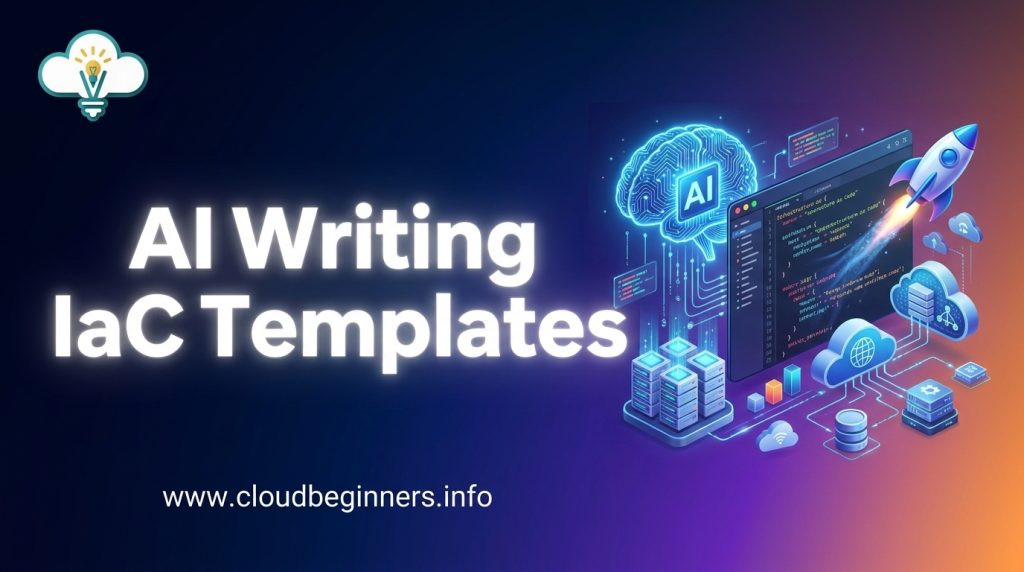
DevOps engineers and cloud architects are seeing a new trend: AI systems that automatically generate Infrastructure as Code templates.
These tools promise to speed up cloud deployments and reduce configuration errors, but come with their own set of challenges.
This article explores how AI is changing infrastructure automation, highlighting both the time-saving benefits and the potential security risks.
We’ll also look at practical ways to integrate AI-generated templates into your workflow while maintaining control over your infrastructure.
Understanding AI-Generated Infrastructure as Code (IaC)
A. What exactly is AI-written IaC and how does it work
AI-written Infrastructure as Code (IaC) represents a major shift in how you manage your cloud resources. Instead of manually writing every line of Terraform, CloudFormation, or Pulumi code, AI systems analyze your requirements and generate the templates for you.
The process typically works like this:
- You describe what you need in plain English (e.g., “Create a load-balanced web app with a database on AWS”)
- The AI processes your request using natural language processing (NLP)
- It maps your requirements to infrastructure components
- It generates code in your preferred IaC format
The AI models behind these tools are trained on massive datasets of infrastructure templates, documentation, and best practices. They learn patterns for creating secure, efficient infrastructure configurations without you having to remember every syntax detail.
B. Current capabilities of AI in generating infrastructure templates
Right now, AI excels at creating:
- Standard cloud architectures (3-tier web apps, microservices)
- Basic networking configurations
- Storage and database setups
- Security group and IAM role definitions
The most impressive part? AI can suggest optimizations you might have missed. If you’re overprovisioning resources or creating potential security gaps, many AI tools will flag these issues.
What AI still struggles with:
- Highly customized or unusual architectures
- Complex multi-cloud deployments
- Deep integration with niche services
- Understanding context-specific compliance requirements
C. Popular tools and platforms offering AI-assisted IaC creation
You’ve got several options when looking for AI assistance with your infrastructure code:
| Tool | Specialties | Integration |
|---|---|---|
| GitHub Copilot | In-editor code completion | VSCode, JetBrains IDEs |
| AWS CodeWhisperer | AWS-focused templates | AWS Console, VSCode |
| Pulumi AI | Multi-cloud templating | Pulumi CLI, VSCode |
| HashiCorp Copilot | Terraform expertise | Terraform Cloud |
| InfraGPT | Custom infrastructure blueprints | Web-based |
Many of these tools offer free tiers for you to experiment with before committing to a subscription.
D. Real-world examples of AI-generated templates
Want to see AI-generated IaC in action? Here are some real examples:
When Acme Corp needed to migrate 50+ microservices to Kubernetes, they used AI to generate Terraform templates for their EKS cluster.
What would have taken weeks of manual coding was completed in days, with the AI handling the repetitive boilerplate while their engineers focused on customization.
A fintech startup used AI to generate their entire AWS infrastructure, including VPC configuration, security groups, and RDS instances. The AI even suggested adding WAF rules they hadn’t considered.
You might be surprised to learn that many cloud architecture diagrams you see online are now being reverse-engineered into working IaC by AI tools. Give an AI a diagram, and it can often produce functional code that matches the visualization.
The Benefits of AI-Generated IaC Templates
A. Accelerating development cycles and reducing time-to-market
When you’re racing against tight deadlines, AI-generated IaC templates become your secret weapon. Instead of spending days crafting infrastructure code from scratch, you can now generate deployable templates in minutes.
This dramatic time reduction means you can ship products faster and respond to market demands before your competitors.
Many teams report cutting their infrastructure setup time by 60-80% after adopting AI-powered template generation. That’s not just saving hours; it’s saving weeks on complex projects.
B. Minimizing human errors and configuration mistakes
Ever deployed a template with a tiny typo that crashed your entire system? You’re not alone. Human errors in IaC can be costly and frustrating. AI-generated templates significantly reduce these mistakes by following best practices and security guidelines automatically.
The machines don’t get tired after eight hours of coding or forget to include essential security groups. They consistently produce tested, validated configurations that work right the first time.
C. Democratizing infrastructure management for non-experts
You don’t need to be a cloud architecture guru to deploy rock-solid infrastructure anymore. AI-powered tools translate your plain English requirements into technical specifications, making infrastructure management accessible to your entire team.
Product managers, developers, and even business stakeholders can now participate in infrastructure decisions without diving into complex syntax. This democratization breaks down silos between your teams and speeds up decision-making.
D. Cost savings through optimized resource allocation
Your cloud bill getting out of hand? AI doesn’t just create working templates; it creates efficient ones. These systems can analyze your workload patterns and recommend the most cost-effective configurations.
Many organizations report 20-30% cloud cost reductions after implementing AI-optimized infrastructure templates. The AI considers factors you might overlook, like reserved instance opportunities, spot instance candidates, and right-sizing recommendations.
E. Enhanced standardization across deployment environments
Maintaining consistency across dev, staging, and production environments has always been a challenge. With AI-generated templates, you get standardized configurations every time.
This consistency eliminates those frustrating “it works on my environment” conversations. Your development team spends less time debugging environment-specific issues and more time building features that matter to your customers.
Potential Risks and Challenges

A. Security vulnerabilities from non-human code review
When AI writes your infrastructure code, you’re missing that human intuition that spots potential security issues. Think about it – AI systems don’t understand the broader security context or the subtle ways attackers might exploit your infrastructure.
Your team might accidentally deploy templates with hardcoded credentials, overly permissive access controls, or unpatched vulnerabilities simply because the AI didn’t flag them.
Unlike human reviewers who develop instincts about security risks over years of experience, AI tools can only identify patterns they’ve been trained on.
This creates a dangerous blind spot. Without proper human oversight, you could be putting your entire cloud environment at risk without even realizing it.
B. Over-reliance on AI without understanding the infrastructure
Getting too comfortable with AI-generated templates can erode your team’s fundamental understanding of infrastructure principles. You might start treating your cloud infrastructure as a black box – just feed prompts to the AI and deploy whatever comes out.
This dependency becomes problematic when:
- You need to troubleshoot complex issues
- Your infrastructure requires custom optimizations
- You face unique requirements not covered in training data
Without knowing what’s happening under the hood, you’re setting yourself up for bigger problems down the road. The convenience of AI shouldn’t replace your team’s core competencies.
C. Template quality and performance concerns
The templates your AI produces might work, but are they actually good? AI tends to generate “good enough” solutions that don’t account for cost optimization, performance efficiency, or scaling considerations.
You might get templates that:
- Create redundant resources
- Miss opportunities for cost savings
- Implement inefficient architectures
- Ignore best practices for your specific cloud provider
Unlike experienced infrastructure engineers who fine-tune configurations based on real-world performance data, AI models often default to generic implementations that don’t address your specific workload patterns.
D. Integration issues with existing systems and workflows
Dropping AI-generated templates into your existing infrastructure isn’t always smooth sailing. Your current systems probably have unique quirks, legacy components, and custom configurations that an AI model has no way of knowing about.
You’ll likely face friction when:
- Integrating with legacy systems
- Maintaining consistency across your infrastructure
- Adapting templates to fit existing naming conventions and tagging strategies
- Incorporating company-specific security policies and compliance requirements
Your established DevOps workflows might also resist this new approach, especially if they’re built around human review processes or specific infrastructure patterns that the AI hasn’t encountered.
Best Practices for Using AI-Generated IaC
A. Implementing thorough validation and testing protocols
When you incorporate AI-generated IaC into your workflow, validation becomes non-negotiable. Start by running automated linting tools to catch syntax errors and style issues before deployment. Tools like Checkov or tfsec can scan your AI-generated templates for security misconfigurations.
Don’t skip manual reviews either. Have a teammate examine the generated code; they’ll often catch things AI missed. Create a validation checklist:
- Does the template follow your naming conventions?
- Are all required security controls implemented?
- Does it align with your compliance requirements?
Test in isolation first. Deploy the template to a sandbox environment where it can’t impact production systems. Simulate different scenarios to ensure it behaves as expected under various conditions.
B. Balancing AI assistance with human oversight
AI tools are your assistants, not your replacements. You’ll get the best results when you treat AI as a first draft generator rather than the final authority.
Set up a workflow where AI proposes infrastructure templates that your team then refines and approves. This “human in the loop” approach combines AI efficiency with human judgment.
For critical infrastructure components, increase human oversight. Your payment processing infrastructure might need more human attention than your development environments.
Create clear documentation about which parts of your infrastructure can be fully AI-managed versus which require deeper human review. This prevents confusion and helps team members understand their responsibilities.
C. Establishing clear governance for AI-generated infrastructure
Your governance framework needs updating when AI enters the picture. Define who can approve AI-generated templates before they’re deployed.
Create a version control strategy specifically for AI-generated code:
- Tag all AI-generated templates
- Document the prompts used to generate the code
- Track modifications made by humans after generation
Implement drift detection to ensure deployed infrastructure matches what was approved. This catches unauthorized changes whether they came from AI or humans.
Draft policies clarifying when AI tools can be used and when they shouldn’t. Some regulated environments might restrict certain AI use cases, and you need to respect those boundaries.
D. Training teams to effectively collaborate with AI tools
Your team needs new skills to work effectively with AI coding assistants. Invest in training that covers:
- Crafting effective prompts that produce quality IaC
- Recognizing common AI-generated patterns and mistakes
- Understanding the limitations of current AI models
Run pair programming sessions where team members work alongside AI tools. This hands-on experience builds comfort and reveals practical workflows.
Create a knowledge base where team members share successful prompts and approaches. This collective learning dramatically speeds up everyone’s AI proficiency.
Remember that learning to work with AI is a process. Schedule regular retrospectives to discuss what’s working and what needs adjustment in your AI collaboration practices.
E. Setting appropriate expectations for AI capabilities
AI isn’t magic; it has specific strengths and limitations you need to understand. It excels at generating boilerplate code and common patterns but struggles with novel architectural decisions.
Be realistic about what your AI tools can do today:
| Good for | Not (yet) good for |
|---|---|
| Templating standard resources | Understanding business context |
| Following clear patterns | Handling complex dependencies |
| Implementing best practices | Making risk trade-offs |
| Generating documentation | Troubleshooting unique issues |
When introducing AI to stakeholders, avoid overpromising. Frame AI as a productivity multiplier rather than a complete automation solution.
Keep track of AI advancements. What AI can’t do today might be possible next year, so periodically reassess your assumptions about AI capabilities.
Future Implications for DevOps and Infrastructure Teams
A. Evolving skill requirements for infrastructure engineers
Gone are the days when you could thrive as an infrastructure engineer with just networking and server knowledge. With AI now generating IaC templates, your skillset needs a serious upgrade.
You’ll need to become more of an AI wrangler than a template writer. This means developing a working knowledge of machine learning concepts and understanding how AI makes decisions about infrastructure design.
Don’t worry; you don’t need a PhD in computer science, but you should get comfortable with prompt engineering and learning how to “speak AI” to get the results you want.
Critical thinking becomes even more valuable in your toolkit. When AI suggests a configuration, you need the judgment to know when it’s brilliant and when it’s completely off base. Your value shifts from writing the code to validating, improving, and implementing AI-generated solutions.
B. The changing role of infrastructure specialists
Your job isn’t disappearing; it’s transforming. Instead of spending hours crafting Terraform or CloudFormation templates, you’ll focus on architecture strategy and business outcomes.
You’re becoming more of a curator and less of a creator. Think of yourself as the editor who polishes AI’s first draft into production-ready gold. The mundane parts of your job- boilerplate code, standard configurations—those are being automated away.
This shift pushes you closer to the business side. You’ll spend more time understanding what the organization actually needs rather than how to code it.
Your conversations will change from “How do I configure this load balancer?” to “What resiliency requirements does this application have?”
C. New career opportunities at the intersection of AI and infrastructure
The collision of AI and infrastructure is creating entirely new roles you can step into:
AI Infrastructure Translator – You’ll bridge the gap between what business stakeholders request and what the AI needs to hear to generate appropriate templates.
IaC Quality Assurance Specialist – As companies rely more on AI-generated code, they’ll need experts who can systematically validate these outputs against security best practices and compliance requirements.
AI/IaC Training Engineer – Someone needs to teach these AI systems about your company’s specific infrastructure patterns and preferences. This role involves creating training datasets and fine-tuning models to align with organizational standards.
Infrastructure Prompt Engineer – You’ll craft the perfect prompts that yield optimal infrastructure designs from AI systems, becoming the company’s expert in getting the best results from AI tools.
The most exciting part? These roles don’t even have standardized titles yet. You’re looking at the ground floor of entirely new career paths.
As AI continues to transform how we create and manage Infrastructure as Code, organizations must balance the clear advantages- faster development cycles, reduced errors, and access to expert knowledge- against important considerations around security, customization, and overreliance.
The key lies in viewing AI-generated templates as a starting point that requires human oversight, understanding, and refinement.
DevOps and infrastructure professionals who adopt a hybrid approach, leveraging AI for efficiency while maintaining human expertise for critical decision-making, will be best positioned for success.
By implementing proper review processes, customizing generated templates to specific needs, and staying informed about AI capabilities, teams can harness the power of AI-generated IaC while mitigating potential risks and preparing for the increasingly automated future of infrastructure management.
I’ve also built a platform that shows you how to build the right hands-on cybersecurity skills to help businesses achieve their cloud security goals while you build the career you love for a better, higher-paying reward. Check it out here and start working on projects that will help you get hired.
The Author