How Serverless Changes the Shared Responsibility Model in AWS, GCP & Azure
Serverless computing shifts security responsibilities between cloud providers and customers in ways DevOps teams and cloud architects need to understand.
This guide examines how the traditional shared responsibility model transforms when you adopt serverless services across AWS Lambda, Google Cloud Functions, and Azure Functions.
We’ll cover key security responsibility changes in each platform, compare their approaches to serverless security, and explore practical strategies to protect your serverless applications.
Understanding Traditional Shared Responsibility Models
A. Key components of cloud security responsibility
When you’re using cloud services, security isn’t just the provider’s job; it’s a team effort. The shared responsibility model breaks down who handles what in your cloud environment. At its core, this model has several key components:
- Infrastructure security: Your cloud provider manages the physical data centers, networking hardware, and host operating systems.
- Platform security: This includes the security of the cloud management console, API endpoints, and core services.
- Data security: While providers secure the storage infrastructure, you’re typically responsible for encrypting your data, managing access keys, and implementing proper retention policies.
- Identity and access management: You need to configure user permissions, role-based access controls, and authentication mechanisms.
- Application security: The code you deploy, its dependencies, and configurations remain your responsibility regardless of cloud platform.
B. How responsibilities are divided in standard cloud deployments
In standard cloud models, the division of responsibilities looks something like this:
| Responsibility | Cloud Provider | Customer |
|---|---|---|
| Physical security | ✓ | |
| Host infrastructure | ✓ | |
| Network controls | Partial | Partial |
| Operating system | Varies by service | Varies by service |
| Application code | ✓ | |
| Identity management | Provides tools | ✓ |
| Data | ✓ | |
| Client-side encryption | ✓ |
Your responsibilities increase as you move from IaaS (where you manage more) to PaaS to SaaS (where you manage less). For example, with EC2 instances, you’re responsible for patching the operating system, while with managed databases, the provider handles OS updates.
C. Why the model matters for compliance and risk management
The shared responsibility model isn’t just a technical framework; it’s crucial for your compliance and risk management strategy.
When you understand exactly what you’re responsible for, you can:
- Align your security controls with regulatory requirements like GDPR, HIPAA, or PCI DSS
- Properly scope your compliance efforts instead of wasting resources securing what the provider already covers
- Accurately assess your actual risk exposure rather than assuming the cloud provider handles everything
- Create more effective incident response plans that account for the limitations of your access and control
- Demonstrate due diligence to auditors by showing you understand and have addressed your security obligations
Misalignment between your understanding of responsibilities and reality creates dangerous security blind spots that can lead to breaches and compliance violations.
D. Common misunderstandings that lead to security gaps
Even experienced cloud users fall prey to misconceptions about the shared responsibility model:
The “it’s in the cloud so it must be secure” fallacy leads many organizations to neglect their security duties. Just because AWS or Azure has world-class security doesn’t mean your applications are automatically protected.
Another common mistake is assuming data backups are the provider’s responsibility. While cloud platforms may offer backup tools, configuring and managing backups typically falls on you.
Configuration errors represent a huge vulnerability, you might think enabling a security feature is the provider’s job when it actually requires your action. For instance, many assume S3 buckets are private by default (they weren’t for many years).
Network security misunderstandings abound too. While providers secure their infrastructure, you’re responsible for security groups, firewall rules, and network access controls.
Perhaps most dangerous is the assumption that compliance is outsourced to the cloud provider. Though they may maintain certifications for their infrastructure, your applications must still meet regulatory requirements independently.
Serverless Computing Fundamentals
A. Defining modern serverless architectures
Serverless isn’t just a buzzword – it’s a fundamental shift in how you build and deploy applications. At its core, modern serverless architecture lets you run code without managing the underlying infrastructure. Your code executes in stateless containers that spin up on demand when triggered by events.
Think of serverless as “functions as a service” where you only pay for actual compute time used, not idle servers. Your applications break down into small, focused functions that each perform specific tasks, automatically scaling from zero to whatever your workload demands.
The key components you’ll encounter include:
- Functions (the code you write)
- Event sources (triggers like HTTP requests, database changes)
- Supporting services (authentication, databases, queues)
B. Evolution from IaaS to FaaS
The cloud journey started with you renting virtual machines. Remember those days? You’d spin up EC2 instances, manage OS updates, and configure everything yourself.
That initial Infrastructure as a Service (IaaS) model gave way to Platform as a Service (PaaS), where you focused on applications while the platform handled more infrastructure concerns.
Now you’ve reached Function as a Service (FaaS) – serverless computing’s engine. The progression looks like this:
| Model | Your Responsibility | Provider Handles |
|---|---|---|
| IaaS | Applications, data, runtime, middleware, OS | Virtualization, servers, storage, networking |
| PaaS | Applications, data | Runtime, middleware, OS, virtualization, servers, storage, networking |
| FaaS | Application code, logic | Everything else |
C. Core benefits driving serverless adoption
Why are you and countless others rushing to serverless? The benefits are compelling:
Cost optimization – Pay only for execution time measured in milliseconds, not for idle capacity. Your bill directly reflects actual usage.
Automatic scaling – Your applications instantly handle traffic spikes without pre-provisioning or capacity planning. No more guessing your infrastructure needs.
Reduced operational overhead – Focus on writing code, not managing servers. Kiss goodbye to patching, updates, and capacity management headaches.
Faster time to market – Deploy individual functions independently. Your development cycles shrink dramatically when you’re not deploying entire applications.
Enhanced security posture – With shorter function lifespans and immutable infrastructure, your attack surface shrinks considerably.
These benefits fundamentally change your relationship with cloud providers, shifting more operational responsibilities away from your team to the provider.
AWS Serverless Responsibility Shifts
A. Traditional vs. serverless responsibility boundaries
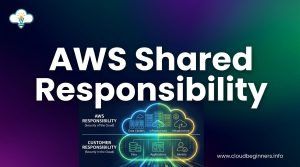
When you use traditional AWS services like EC2, you’re responsible for a hefty chunk of the security stack. You manage the OS, patching, network configurations, and application security. It’s like owning a house – you handle everything from the foundation up.
With serverless, that boundary shifts dramatically. You’re now more like an apartment renter. AWS handles the infrastructure, OS, patching, and runtime environment. Your responsibility zone shrinks to your code and configurations.
| Area | Traditional AWS | Serverless AWS |
|---|---|---|
| Infrastructure | You configure | AWS manages |
| OS Management | Your job | AWS handles |
| Patching | Your headache | AWS responsibility |
| Runtime | You maintain | AWS manages |
| Code | You own | You still own |
| IAM Config | You manage | You manage |
B. What responsibilities Amazon now handles completely
With serverless, AWS takes several critical tasks off your plate. They now completely handle:
- Operating system security and patching
- Runtime environment maintenance
- Capacity provisioning and scaling
- Server-level security controls
- Infrastructure redundancy
- Hardware failure management
- Network infrastructure security
This shift means you don’t worry about CVEs in the underlying systems or runtime environments. AWS automatically applies security patches without you lifting a finger.
They maintain compliance certifications for the infrastructure components. The platform scales instantly based on your needs without you configuring auto-scaling groups.
C. Customer responsibilities that remain critical
Despite AWS shouldering more of the burden, you still own crucial security aspects:
- Function code security (it’s your code after all)
- Dependencies management and updates
- IAM permissions and role configurations
- Data encryption choices (at-rest and in-transit)
- API Gateway security settings
- Application logic vulnerabilities
- Authentication implementation
Your code security becomes even more critical since it’s the primary area under your control. A vulnerability in your function could compromise your entire application, so proper code reviews and security testing remain essential.
D. Security configuration best practices unique to AWS Lambda
To secure your Lambda functions properly:
- Scope permissions tightly – Create function-specific IAM roles with minimal privileges
- Layer your security – Implement security groups for VPC-connected functions
- Set memory/timeout appropriately – Prevent DoS scenarios by limiting execution resources
- Validate all inputs – Never trust data from any source
- Encrypt environment variables – Use KMS to protect sensitive configuration
- Enable X-Ray tracing – Monitor for unusual execution patterns
- Deploy through CI/CD pipelines – Ensure consistent security checks
Unlike traditional infrastructure, Lambda’s execution environment is ephemeral. You can’t rely on persistent security agents, so you need different approaches to security monitoring and response.
E. Case study: Enterprise migration impact on security teams
When Coca-Cola shifted their marketing analytics platform to serverless, their security team experienced a profound transformation. Previously, they maintained a 24/7 patching and monitoring rotation for hundreds of servers.
After migrating to Lambda, they redirected 40% of their security staff to application-level security initiatives. Their incident response time dropped from hours to minutes because they eliminated most infrastructure troubleshooting.
Their security engineers developed Lambda-specific guardrails and standardized deployment patterns rather than managing infrastructure. By focusing on IAM configurations and code security, they reduced their security incidents by 60% in the first year.
The team built automated tools to analyze Lambda configurations across hundreds of functions, ensuring consistent security controls. This shift required new skills – their security engineers became more code-focused and collaborated more closely with developers.
GCP Serverless Security Model
A. Cloud Functions and Cloud Run responsibility division
When you deploy serverless solutions on GCP, you’re entering a partnership where Google handles significant heavy lifting. With Cloud Functions and Cloud Run, Google manages the underlying infrastructure, runtime environment, and OS patching. You won’t need to worry about server provisioning, scaling, or maintaining the execution environment.
Your responsibilities focus primarily on application code and configuration. You still need to ensure your code is secure, properly authenticated, and follows best practices. Think of it this way: Google builds and maintains the house, but you’re in charge of what goes inside and who gets the keys.
B. Google’s enhanced security guarantees
Google’s serverless platforms come with robust security features baked in. Your Cloud Functions and Cloud Run services automatically benefit from:
- Infrastructure protection through Google’s global network security
- Automated binary authorization
- Runtime vulnerability scanning
- Default encryption for data at rest and in transit
You get these protections without configuration. It’s like having a professional security team working for you 24/7, handling threats you might not even be aware of.
C. Customer-retained configuration responsibilities
Despite Google’s comprehensive security coverage, you maintain control over crucial configuration aspects:
- Identity and access management (IAM) permissions
- Service account scopes and permissions
- API access controls
- Network security configurations (VPC Service Controls)
Getting these configurations right is essential. You might have the most secure serverless platform, but misconfigured permissions can still leave your back door wide open.
D. Monitoring considerations specific to GCP serverless
With GCP serverless, your monitoring approach needs adjustment. Cloud Logging and Cloud Monitoring automatically capture essential metrics and logs, but you need to:
- Set up appropriate alerting policies
- Configure custom metrics for business-specific monitoring
- Implement tracing for complex serverless workflows
- Establish security monitoring through Cloud Security Command Center
The monitoring tools are powerful, but they’re only effective when you configure them to watch for the right signals. Think of Google as providing the security cameras, but you need to decide where to point them.
Azure Serverless Security Landscape
A. Azure Functions responsibility boundaries
When you deploy Azure Functions, you’re stepping into a world where responsibility lines blur compared to traditional infrastructure. Microsoft handles the underlying OS, runtime environment, and scaling infrastructure, freeing you from patching servers or managing hardware. But don’t mistake this for a security free pass.
You’re still on the hook for your function code security, proper authentication configuration, and managing secrets. Think of it this way: Microsoft provides the secure house, but you need to lock your own rooms and safeguard your valuables.
This split creates a security partnership. Microsoft secures the foundation while you secure what runs on top of it. The good news? This arrangement dramatically reduces your attack surface compared to managing VMs or containers.
B. Microsoft’s security automation features
Azure takes a lot of security heavy lifting off your plate. The platform automatically encrypts function apps data at rest and in transit. You get built-in protection against DDoS attacks without lifting a finger.
The coolest part? Microsoft’s continuous security monitoring runs silently in the background, scanning for vulnerabilities and suspicious activities across your serverless environment. Advanced threat protection is always on, watching for unusual patterns that might indicate a breach.
These automation features mean you’re getting enterprise-grade security without maintaining a security operations center. The platform handles patching, monitoring, and infrastructure hardening automatically – tasks that would typically require dedicated security teams.
C. Customer security obligations
Despite all Azure does automatically, you still have crucial security responsibilities. Your function code security remains entirely your domain – Microsoft can’t protect you from writing vulnerable code with SQL injection flaws or insecure dependencies.
You must implement proper authentication and authorization controls. Using Azure AD integration is your best bet, but you need to configure it correctly. Secret management is another critical area – storing API keys or credentials in your function code is asking for trouble.
Input validation, proper error handling, and implementing the principle of least privilege fall squarely on your shoulders. Think of it this way: Microsoft secures the playing field, but you need to follow the security rules of the game.
Regular code reviews and security testing should be part of your routine. The security of your data and your compliance obligations remain your responsibility, regardless of how “serverless” your architecture is.
D. Integration with Azure Security Center
Azure Security Center becomes your security command center for serverless deployments. It gives you a unified view of security across all your Azure resources, including Functions.
The Center provides continuous assessment, highlighting misconfigurations and suggesting fixes specific to serverless environments. You’ll get actionable security recommendations tailored to your Function apps, like enabling HTTPS-only access or configuring authentication.
The threat protection features detect unusual patterns that might indicate compromised functions or credentials. What makes this powerful is the integration with other Azure services – you can see how a security issue in one area might affect your Functions.
When you connect Security Center to your CI/CD pipeline, you get security checks before deployment, preventing vulnerable code from reaching production. This shift-left approach catches issues early when they’re cheaper and easier to fix.
Cross-Platform Comparison
A. Key differences in responsibility models between providers
When you’re choosing between AWS, GCP, and Azure for your serverless journey, you’ll find each provider draws the responsibility line in slightly different places:
| Provider | Your Responsibilities | Provider Responsibilities | Unique Approach |
|---|---|---|---|
| AWS Lambda | Application code, IAM configurations, function permissions | Runtime environment, compute resources, OS patching | More granular controls but requires more configuration |
| Google Cloud Functions | Function code, authentication settings | Auto-scaling, infrastructure security, network isolation | Simplified security model with less configuration overhead |
| Azure Functions | Application security, data handling, access controls | Platform updates, host security, network infrastructure | Strong integration with Azure Active Directory |
You’ll notice AWS gives you more control but expects more hands-on security work. GCP takes more off your plate, while Azure strikes a middle ground with excellent identity management tools.
B. Universal security constants across all three platforms
No matter which cloud provider you choose, some security responsibilities are always yours:
- Data classification and protection remains your job
- Identity and access management configuration falls on your shoulders
- Your application code’s security is never the provider’s problem
- Proper configuration of serverless resources is your responsibility
- Secrets management requires your attention
Each provider might offer tools to help with these areas, but the buck stops with you. Think of it this way: if it’s about what your application does or who can use it, that’s on you.
C. Provider-specific security advantages
AWS
You get the most mature serverless security ecosystem with AWS. Their Lambda service offers resource-based policies, fine-grained IAM roles, and VPC integration that lets you isolate functions completely. Their security tools like AWS Shield and WAF integrate seamlessly with your serverless applications.
GCP
Google’s approach shines with simplicity. Their Cloud Functions give you built-in DDoS protection and automatic TLS encryption. You’ll appreciate their integrated Cloud Security Command Center that provides security analytics across your serverless environment. Their serverless VPC connector makes network security much more straightforward than competitors.
Azure
Microsoft’s strongest card is identity management. When you use Azure Functions, you get seamless integration with Azure Active Directory and easy-to-implement managed identities. Their Security Center provides unified security management and advanced threat protection specific to serverless workloads. Their recent addition of durable functions also improves your ability to maintain secure state across function executions.
Practical Implementation Strategies
A. Updating security policies for serverless environments
When shifting to serverless, your old security playbooks won’t cut it anymore. You need to rethink your policies from the ground up. Start by mapping out exactly where your responsibilities end and your cloud provider’s begin.
For AWS Lambda functions, you’re still on the hook for code security and access permissions, but infrastructure patching falls on AWS. Make these boundaries crystal clear in your updated policies.
Don’t forget to add serverless-specific items to your checklist:
- Function timeout configurations
- Memory allocation limits
- Permission boundaries for each function
- Event source authentication methods
- Secrets management approach
B. Tools for monitoring serverless security boundaries
Getting visibility into your serverless stack requires different tools than traditional infrastructure. You can’t just install an agent or scan a server; there isn’t one!
Try these tools to keep an eye on your serverless security:
- CloudWatch (AWS), Cloud Monitoring (GCP), or Azure Monitor for performance metrics
- AWS X-Ray, Google Cloud Trace, or Azure Application Insights for tracing
- Third-party solutions like Thundra, Lumigo, or Epsagon for deeper insights
- SAST/DAST tools adapted for serverless code scanning
Your monitoring should focus on unusual execution patterns, permission changes, and configuration drifts—signs that something might be crossing a security boundary.
C. Training teams on the new responsibility paradigm
Your team probably thinks about security in terms of networks, machines, and operating systems. With serverless, they need a mental shift.
Hold hands-on workshops where developers:
- Build and deploy basic serverless functions
- Identify which security controls they own vs. the provider
- Practice responding to serverless-specific security incidents
- Learn to read serverless-specific logs and metrics
Pair your security teams with developers during these sessions. Security folks often struggle the most with the serverless mindset shift since many traditional controls disappear.
D. Documentation practices for compliance assurance
With serverless, your compliance documentation needs to evolve. Create living documents that clearly delineate the split responsibilities.
For each compliance requirement, document:
- Which party (you or provider) owns each control
- Evidence collection methods
- How provider certifications (like SOC 2) cover your requirements
- Gaps requiring compensating controls
Pro tip: Create visual responsibility matrices for each cloud provider you use. When auditors come knocking, these clear visuals save hours of explanation.
E. Budget implications of the shifted model
The good news? Your security budget can shift dramatically with serverless.
You’ll spend less on:
- Infrastructure security tools
- OS patching systems
- Network security appliances
But expect to spend more on:
- Application-level security testing
- Code scanning tools with serverless support
- Cloud-native security monitoring
- Developer security training
Many companies report 15-30% savings on overall security costs after serverless adoption, but the spending pattern looks very different. Budget for a transition period where you’ll run parallel security systems as you migrate.
Future Trends in Serverless Security
A. Emerging responsibility model evolutions
The responsibility model you’ve gotten used to is about to change again. As serverless architectures mature, you’ll notice cloud providers taking on even more security responsibilities while creating new categories of shared duties.
Think of it this way: your cloud provider might soon handle vulnerability patching automatically, but you’ll need to configure new security boundaries around service-to-service communications. This shift means less time worrying about infrastructure but more focus on application logic security.
Many organizations are already seeing this play out with new serverless mesh architectures where security happens at the function communication level rather than at infrastructure boundaries.
B. AI-powered security automation on the horizon
AI is completely reshaping serverless security. Soon, you’ll interact with AI systems that can:
- Analyze your serverless application flow and suggest security improvements
- Automatically detect and respond to unusual patterns in function executions
- Generate least-privilege IAM policies based on actual runtime behavior
The game-changer? These systems learn from collective security insights across thousands of deployments. When one customer’s function gets attacked, everyone’s protection improves automatically.
C. Regulatory impacts on shared responsibility
Regulations like GDPR, CCPA, and industry-specific frameworks are forcing cloud providers to rethink the responsibility model. You’re going to see new compliance-focused features built directly into serverless platforms.
For example, data residency guarantees will become standard features rather than complex configurations you need to implement yourself. Data flow tracking across functions will be automated, giving you ready-made audit trails.
The catch? You’ll still need to understand which compliance controls are handled by your provider versus which ones remain your responsibility. This distinction will become increasingly important as regulators specifically address serverless computing in upcoming guidance.
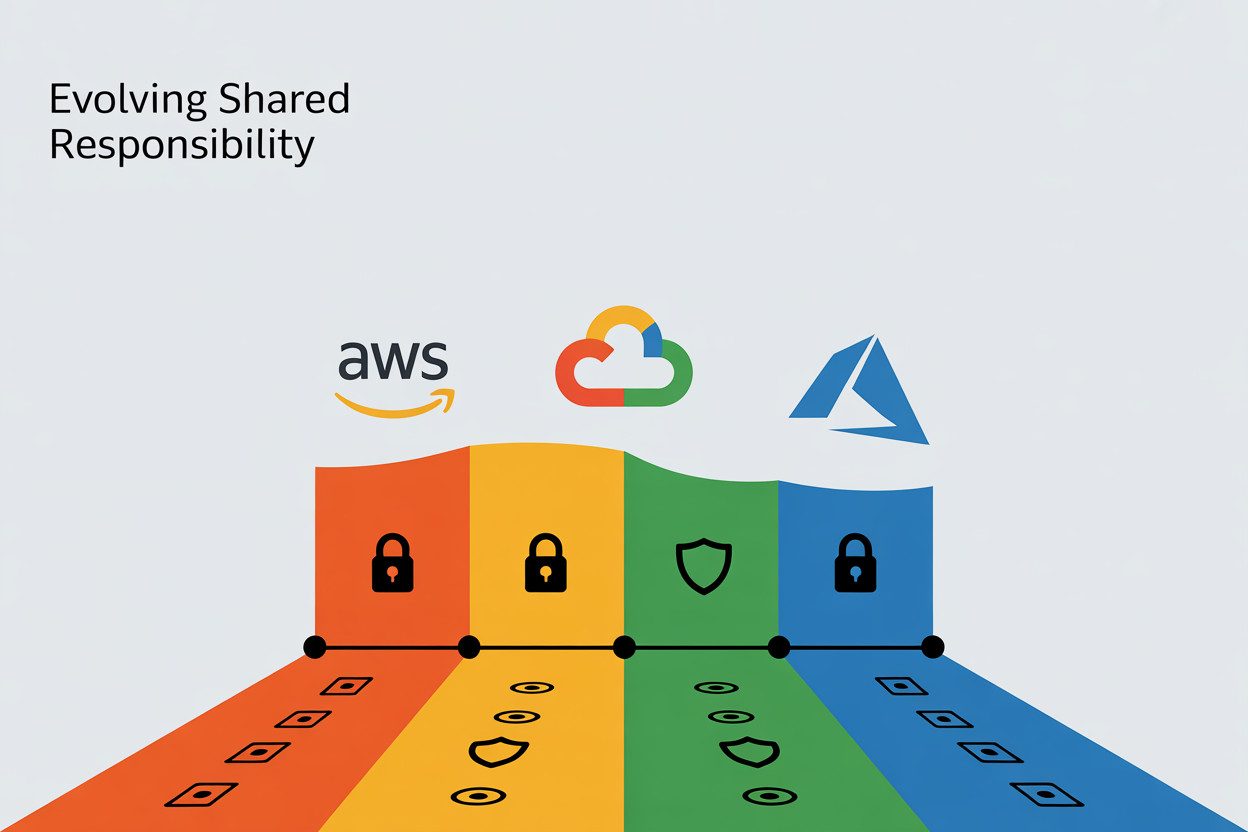
Serverless computing has fundamentally transformed the shared responsibility model across AWS, GCP, and Azure. While traditional infrastructure required significant security management from customers, serverless architectures shift many responsibilities to cloud providers.
Each platform offers unique approaches AWS Lambda providing granular configurations, GCP Cloud Functions emphasizing simplified management, and Azure Functions delivering strong integration with existing security frameworks.
Despite these differences, all platforms maintain that code security, access management, and data protection remain customer obligations.
As organizations embrace serverless architectures, implementing proper security controls through infrastructure as code, comprehensive monitoring, and regular security assessments becomes crucial.
The future of serverless security will likely continue evolving toward more automated compliance tools and enhanced transparency between providers and customers.
By understanding these shifting responsibility boundaries and implementing appropriate security practices, organizations can fully leverage serverless benefits while maintaining robust security postures across their cloud environments.
I’ve built a platform that shows you how you can build the right cybersecurity skills to help businesses achieve their cloud security goals while you’re also building the career you love. Check it out here and start working on projects that get you hired.
The Author