How Netflix Uses IaaS to Stream to Millions
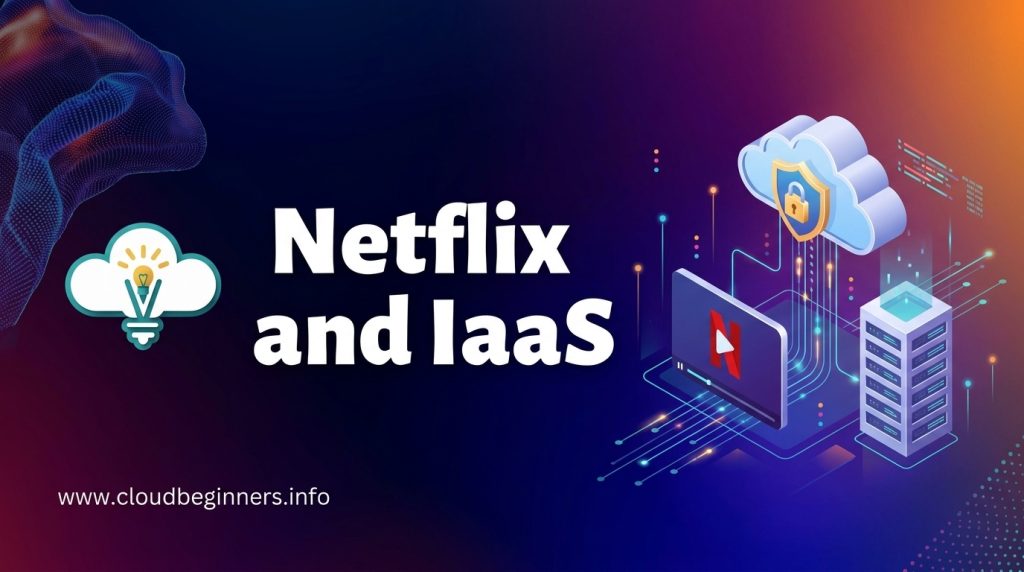
So tell me, have you ever wonder how Netflix streams “Stranger Things” to 220 million subscribers without breaking a sweat?
That’s not magic – it’s strategic Infrastructure as a Service deployment at a mind-boggling scale.
Think about it: when millions hit “play” simultaneously during a major release, Netflix’s servers don’t crash and burn. Their cloud infrastructure flexes and adapts instantaneously.
Behind this seamless streaming experience is one of tech’s most impressive IaaS implementations. Netflix’s cloud-native approach has revolutionized how streaming platforms handle massive user demand.
What’s their secret sauce?
How did they transition from shipping DVDs to becoming the cloud infrastructure powerhouse that makes tech giants jealous?
The answer involves some unexpected architectural decisions that changed everything…
Understanding Netflix’s IaaS Foundation
A. Key IaaS providers powering Netflix’s global operations
When you stream your favorite shows on Netflix, you’re actually tapping into one of the most sophisticated cloud infrastructures in the world.
Netflix primarily runs on Amazon Web Services (AWS), their main IaaS provider since completing their migration to the cloud in 2016.
Why AWS?
It gives Netflix access to thousands of virtual servers and massive storage capabilities without maintaining physical data centers.
They’re using EC2 for computing power, S3 for content storage, and DynamoDB for their database needs.
But Netflix doesn’t put all their eggs in one basket.
They’ve strategically incorporated Google Cloud Platform for specific analytics functions and even some Microsoft Azure services in certain regions.
This multi-cloud approach helps them avoid service disruptions and optimize performance where it matters most.
B. Evolution from traditional infrastructure to cloud-based solutions
Remember when Netflix was just sending DVDs by mail?
Back then, they ran everything from their own data centers. Pretty standard stuff.
Their cloud journey kicked off in 2008 after a major database corruption incident crashed their DVD shipping operations. That was their wake-up call.
The shift wasn’t overnight. You would have seen a gradual transition:
- First moving non-customer-facing systems (2009-2010)
- Then shifting customer-facing features (2011-2013)
- Finally, migrating core streaming services (2013-2016)
By January 2016, they’d flipped the switch completely.
Netflix turned off their last data center, becoming 100% cloud-based. That transformation fundamentally changed how you experience the service today.
C. Cost benefits of IaaS for large-scale streaming operations
Think about what happens when a new season of “Stranger Things” drops. Millions of viewers hammer the platform simultaneously.
With traditional infrastructure, Netflix would need to build capacity for these peak moments, leaving expensive servers idle during normal times.
With IaaS, you pay for what you use.
During those massive viewing spikes, Netflix simply scales up. When demand decreases, they scale down and stop paying for unused capacity.
This elasticity translates to serious savings:
| Traditional Infrastructure | IaaS Model |
|---|---|
| High upfront capital costs | Minimal upfront investment |
| Fixed capacity regardless of demand | Pay-as-you-go scaling |
| 3-5 year hardware replacement cycles | Always-updated infrastructure |
| Maintenance staff required | Provider handles maintenance |
Netflix estimates they’ve saved millions annually while actually improving their service quality and global reach.
D. How IaaS enables Netflix’s rapid international expansion
Netflix’s incredible growth from a US-only service to availability in 190+ countries wouldn’t be possible without IaaS.
When you decide to launch in a new region, traditional infrastructure would require building new data centers, taking months or years.
With their cloud-based approach, Netflix can deploy to new territories in days. They simply spin up resources in the closest AWS regions to their new viewers.
The cloud gives them other expansion advantages too:
- Content delivery networks (CDNs) that cache popular shows closer to you
- Regional compliance handled through configurable cloud settings
- Localized payment processing without building payment infrastructure
- A/B testing features specifically for regional preferences
This flexibility explains how Netflix managed to launch in 130 new countries in a single day back in 2016. No traditional infrastructure could have supported that kind of ambitious global rollout.
Revealed: The Secrets to Getting Hired on LinkedIn
Netflix’s Content Delivery Network (CDN) Architecture
A. Open Connect: Netflix’s custom CDN solution
Ever wondered how Netflix delivers crystal-clear 4K content to your living room without buffering? The secret lies in Open Connect, Netflix’s custom-built Content Delivery Network.
Unlike other streaming services that rely entirely on third-party cloud providers, Netflix created their own CDN solution while still leveraging IaaS for core functionality.
Open Connect consists of thousands of server appliances strategically placed within internet service providers’ data centers.
These aren’t just any servers – they’re specifically designed to store and stream Netflix content efficiently. When you hit play on “Stranger Things,” you’re not pulling that content from some distant data center – you’re grabbing it from a server that might be just a few miles away.
The beauty of this system is how it combines custom hardware with cloud infrastructure. While Netflix uses AWS for many backend operations, the actual video delivery happens through these dedicated appliances.
This hybrid approach gives you faster streaming starts, fewer interruptions, and higher quality video than would be possible with a pure cloud solution.
B. Strategic server placement for optimal streaming performance
Think about your Netflix experience during peak viewing hours. Notice how it rarely slows down, even when millions are watching?
That’s strategic server placement at work.
Netflix has placed Open Connect Appliances (OCAs) in over 1,000 separate locations worldwide.
These aren’t randomly distributed – they’re carefully positioned based on viewing patterns, internet exchange points, and ISP partnerships.
Here’s what makes this approach brilliant:
- Your content comes from the closest possible server
- During busy periods, load gets distributed across multiple nearby appliances
- Local ISPs save bandwidth costs on long-distance data transfers
- You get faster startup times and higher quality streams
Netflix engineers constantly analyze traffic patterns and adjust their deployment strategy.
They can predict where demand will spike (like when a new season of a popular show drops) and beef up capacity in those areas ahead of time.
C. How IaaS supports Netflix’s massive content library storage
Netflix’s content library is enormous – we’re talking about petabytes of data. Storing and managing this collection would be impossible without sophisticated IaaS solutions.
When you browse through Netflix’s catalog, you’re accessing content stored across multiple cloud systems.
The raw video files live in Amazon S3 storage buckets, where they’re encoded into dozens of different formats and bitrates. This process creates about 1,300 files for a single two-hour movie!
The advantage of using IaaS for storage is scalability.
As Netflix adds more content, they simply provision additional storage resources. No need to build new data centers or manage physical hardware.
Better yet, they only pay for what they use.
AWS’s global infrastructure also enables Netflix to replicate content across multiple regions.
This means if one data center has problems, your viewing experience isn’t interrupted – the system seamlessly switches to backup copies.
D. Edge computing implementation for reduced latency
Ever notice how quickly Netflix responds when you click around the interface? That’s edge computing in action.
Netflix pushes computing resources closer to you by deploying microservices at the edge of the network.
When you browse titles or click play, your request doesn’t have to travel all the way to a central data center – it’s processed much closer to your location.
This approach dramatically reduces latency – that annoying delay between clicking something and seeing the result. Lower latency means:
- Faster menu navigation
- Quicker video startup times
- More responsive search functions
- Smoother transitions between episodes
Netflix leverages AWS Lambda@Edge and similar services to run code at AWS edge locations worldwide. This distributes the computational load and ensures you get snappy performance regardless of where you’re watching from.
E. Redundancy systems that prevent service disruptions
Netflix’s famous “Chaos Monkey” isn’t just a cool name – it’s part of their strategy to make sure you never see an error message during movie night.
The streaming giant builds redundancy into every layer of their infrastructure. Their systems are designed to fail gracefully, meaning if one component goes down, others automatically take over. This redundancy extends across:
- Multiple cloud regions (if an entire AWS region fails, traffic routes elsewhere)
- Duplicate content storage (your show exists in multiple locations)
- Distributed databases (user data is replicated across systems)
- Automatic failover mechanisms (if a server dies, another takes its place)
The genius of Netflix’s approach is how they test these systems. Their famous “Chaos Engineering” team intentionally breaks parts of the infrastructure to ensure the redundancy systems work properly. They literally have programs that randomly shut down servers during the workday!
This obsession with redundancy is why Netflix maintains 99.99% uptime while delivering billions of streaming hours each month.
Scaling to Meet Unpredictable Demand

Auto-scaling capabilities during peak viewing times
Ever noticed how Netflix never seems to crash when you’re binging your favorite show, even when millions of others are watching too?
That’s because Netflix’s IaaS foundation includes powerful auto-scaling capabilities that adapt in real-time to viewer demand.
When you log in during prime time (8-10 PM in your local region), you’re actually tapping into a system that’s automatically expanded its resources.
Netflix’s infrastructure can spin up thousands of additional server instances in minutes when their monitoring systems detect increasing load.
This isn’t just reactive, they’ve built predictive models that anticipate viewership spikes based on historical patterns.
Their auto-scaling approach works on multiple levels:
- Instance scaling: Adding more virtual machines during high demand
- Container scaling: Deploying more microservices that power specific functions
- Geographic distribution: Shifting resources across regions as peak times move with time zones
How Netflix handles new show releases and viewing surges
Remember when “Stranger Things” dropped its latest season and everyone rushed to watch? Netflix was ready for you.
They prepare for big releases by pre-warming their systems—essentially scaling up resources before the anticipated surge.
For major releases, Netflix implements:
- Phased rollouts across time zones to distribute the initial viewing spike
- Temporary over-provisioning of resources in target regions
- Dynamic content caching prioritization to ensure the new content is replicated closer to you
They’ve learned from early stumbles, like when “House of Cards” season 3 caused partial outages. Now, they simulate massive viewing events before they happen, stress-testing their systems to handle up to 10x normal capacity.
Resource allocation strategies across different global regions
Netflix’s global presence means they can’t use a one-size-fits-all approach to their infrastructure. When you’re watching in Mumbai versus Los Angeles, you’re experiencing a carefully tailored regional strategy.
In regions with spotty internet infrastructure, Netflix deploys more edge servers to cache content closer to you.
They’ve actually built their own content delivery network called Open Connect, with appliances strategically positioned within internet service providers’ networks.
Their regional resource allocation includes:
- Dynamic content libraries based on viewing habits in your region
- Server capacity adjusted to match regional internet peak usage times
- Adaptive streaming quality that responds to local network conditions
During your daytime (when viewership is lower), they might run data-intensive operations like content encoding or analytics while keeping streaming resources leaner.
Cost optimization during varying usage patterns
Streaming to millions isn’t cheap, but Netflix has mastered the art of keeping costs in check while maintaining your viewing experience.
Their approach to cost optimization is impressively sophisticated.
During off-peak hours, Netflix automatically scales down resources not needed for streaming, saving millions in cloud costs.
They’ve pioneered “Chaos Engineering” to identify inefficiencies, deliberately testing system failures to build more resilient and efficient infrastructure.
Netflix optimizes costs through:
- Spot instance usage for non-critical workloads during price drops
- Intelligent caching that reduces data transfer costs
- Workload scheduling that takes advantage of lower-cost time periods
When you’re streaming at 3 AM, you might be benefiting from lower-cost resources while still getting the same quality.
Their optimization is so effective that despite growing their library and user base dramatically, their infrastructure costs as a percentage of revenue have actually decreased over time.
Data Processing and Personalization
A. How IaaS powers Netflix’s recommendation algorithms
Ever wondered how Netflix seems to know exactly what you’ll want to watch next?
Behind those spot-on recommendations is a massive IaaS infrastructure working overtime just for you. When you’re scrolling through options, you’re actually interacting with algorithms running on thousands of virtual machines in the cloud.
Netflix abandoned their data centers back in 2016, moving entirely to AWS. This shift gave them the computing muscle to process the 41+ billion events they track daily.
Your viewing habits- what you watch, when you pause, what you abandon all feed into these recommendation engines.
The beauty of using IaaS for these algorithms is scalability.
During peak viewing times (think new Stranger Things season), Netflix can instantly spin up additional resources to handle the surge in viewer data without you experiencing any slowdown.
B. Real-time analytics infrastructure that improves user experience
The moment you press play, Netflix’s real-time analytics kick into high gear. Their IaaS setup lets them monitor your streaming experience continuously, making split-second decisions that keep your binge sessions running smoothly.
Take buffering, for example. If you’re watching on a spotty connection, Netflix’s real-time analytics detect this immediately and can adjust video quality to prevent annoying interruptions.
This entire process happens thanks to a network of cloud servers processing millions of data points per second.
Their analytics infrastructure also tests different user interfaces in real-time. Notice a new layout or feature?
You might be part of an A/B test where Netflix is gathering live data on which design keeps you watching longer.
C. Data centers that process viewing habits and preferences
You generate mountains of data every time you use Netflix. Each profile in your account creates its own data stream—what you watch, how long you watch, which thumbnails catch your eye.
Netflix’s cloud-based data centers process roughly 1.3 petabytes of information daily. That’s equivalent to about 650,000 hours of HD video! All this happens through distributed computing clusters that scale automatically with demand.
The truly impressive part?
These data centers analyze viewing patterns across 190+ countries simultaneously.
When you finish a show and Netflix immediately suggests something eerily perfect for your taste, that’s because their data centers have already processed viewing habits from millions of users similar to you.
D. Machine learning implementation on cloud infrastructure
Netflix’s machine learning capabilities would be impossible without their massive cloud infrastructure. They employ over 1,000 recommendation clusters in the cloud, all focused on predicting what you’ll enjoy watching next.
Your personal recommendations come from complex ML models that categorize content into over 2,000 “taste communities.”
These models require enormous computing power that traditional data centers simply couldn’t provide cost-effectively.
The flexibility of IaaS allows Netflix to experiment with cutting-edge ML approaches. They can test new algorithms without massive upfront hardware investments.
If a new approach improves your recommendations by even 1%, they can roll it out globally within hours.
By leveraging cloud infrastructure for machine learning, Netflix saves your preferences and viewing history across devices seamlessly. Start watching on your phone during your commute, and your smart TV already knows exactly where you left off when you get home.
Technical Innovations and Future Directions
A. Microservices architecture built on IaaS foundations
Ever wondered how Netflix manages to stream your favorite shows without constant buffering? The secret sauce is their microservices architecture running on IaaS.
Instead of building one massive application, Netflix breaks everything down into hundreds of small, independent services.
Each microservice handles a specific job – from what shows up in your recommendations to tracking where you left off in that crime documentary.
This approach gives you a better streaming experience because when one component needs updating, the entire platform doesn’t need to go offline.
If you’ve noticed Netflix rarely has downtime, that’s why. Their microservices can scale individually based on demand – so when everyone rushes to watch the latest season of “Stranger Things,” Netflix can instantly ramp up resources for that specific content without overhauling their entire system.
B. Netflix’s open-source contributions to cloud technology
Netflix doesn’t just use cloud technology – they’re actively making it better for everyone. Many tools you might use at work or for personal projects could have Netflix DNA in them.
Their open-source tools like Chaos Monkey (which randomly shuts down services to test resilience) have changed how companies think about system reliability.
Other Netflix tools you might benefit from include:
- Spinnaker: Helps deploy software across multiple cloud platforms
- Hystrix: Prevents cascading failures in distributed systems
- Eureka: Handles service discovery for microservices
By sharing these tools, Netflix has helped shape modern cloud architecture beyond just streaming services. Your favorite apps might be more reliable because developers learned from Netflix’s innovations.
C. Upcoming infrastructure improvements for higher quality streaming
Think 4K streaming is impressive? Just wait. Netflix is currently overhauling their infrastructure to support even higher quality streaming experiences for you.
They’re working on improvements that will let you stream 8K content with minimal buffering, even during peak hours.
Netflix is also enhancing their infrastructure to reduce latency – that annoying delay between clicking play and when your show actually starts. Soon you’ll experience near-instantaneous streaming starts, even for high-definition content.
For mobile viewing, Netflix is developing smarter adaptive streaming technologies.
These improvements will automatically adjust your video quality based on your changing network conditions as you move around, ensuring you get the best possible experience whether you’re on Wi-Fi at home or using cellular data on your commute.
D. Environmental sustainability efforts in cloud infrastructure
Ever worried about the environmental impact of your binge-watching habits?
Netflix has too.
They’re making significant strides in reducing the carbon footprint of their massive cloud infrastructure.
Netflix is partnering with their cloud providers to power more of their operations with renewable energy. When you stream your favorite shows, increasingly that data is flowing through data centers powered by wind, solar, and hydroelectric sources.
They’re also optimizing their algorithms to reduce processing power. These efficiency improvements mean less energy used per hour of content you stream.
Netflix has even developed tools that analyze their infrastructure for unnecessary resource usage, identifying servers that can be consolidated or powered down during low-demand periods.
Now, Netflix aims to achieve carbon neutrality across their entire cloud operations. Your entertainment choices are becoming more environmentally responsible without you having to sacrifice quality or convenience.
Netflix’s cloud infrastructure represents a masterful implementation of IaaS that enables reliable streaming to millions of global users.
From their strategic migration to AWS to their sophisticated CDN architecture, Netflix has pioneered scalable solutions that handle unpredictable demand while maintaining personalized experiences.
Their innovative approach to data processing ensures that recommendations remain relevant and engaging for subscribers worldwide.
As streaming services continue to evolve, Netflix’s technical innovations provide valuable lessons for businesses of all sizes.
Their open-source contributions and continued investment in cloud technologies demonstrate that embracing IaaS isn’t just about solving today’s challenges; it’s about building the foundation for tomorrow’s opportunities.
Whether you’re running a startup or an enterprise, Netflix’s cloud journey offers a compelling blueprint for leveraging IaaS to deliver exceptional digital experiences at scale.
I’m Kafayat Faniran, and I’ve built a platform that shows you how to build the right hands-on cybersecurity skills to help businesses achieve their cloud security goals while you build the career you love for a better, higher-paying reward. Check it out here and start working on projects that will help you get hired.
The Author