Shared Responsibility Model Explained: Who Guards the Cloud?
Ever wondered who’s responsible when your cloud data goes poof? You’re not alone. A shocking 82% of organizations have experienced at least one cloud security incident, yet most still don’t understand where their security responsibilities end and their provider’s begin.
I’m about to save you from becoming another cloud security statistic by demystifying the shared responsibility model that’s keeping cloud professionals up at night.
Here’s the brutal truth: your cloud provider isn’t the all-powerful security wizard you think they are. They’re handling some aspects of security, sure, but you’re still on the hook for protecting your own data.
And that line between your responsibilities and theirs? It’s blurrier than you might expect. Let’s clear things up before that miscommunication becomes your company’s next costly mistake.
Understanding the Shared Responsibility Model
What is the shared responsibility model in cloud computing
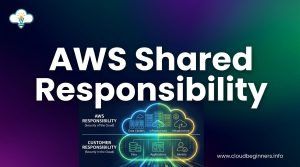
Think of the shared responsibility model as a partnership agreement between you and your cloud provider. You’re not handing over all security duties when you move to the cloud – you’re dividing them up. Your cloud provider (like AWS, Azure, or Google Cloud) handles the security OF the cloud, while you handle security IN the cloud.
This distinction matters. Your provider secures the physical data centers, hardware, and infrastructure that powers their services. They’re responsible for patching their hypervisors and maintaining the physical security of their facilities.
Meanwhile, you’re still on the hook for securing your data, managing access to your applications, configuring your cloud services correctly, and protecting your user credentials.
Why security is a joint effort between cloud providers and customers
The days of building a fortress around your data center are gone. In the cloud, security works differently – and that’s actually a good thing.
Your cloud provider brings massive resources and expertise to the table that most companies simply can’t match. They employ security teams larger than many corporations and invest billions in infrastructure protection.
But they can’t see inside your applications or know your specific compliance requirements. They don’t understand your data’s sensitivity or your business processes. That’s where you come in.
Working together creates stronger security than either party could achieve alone. When you handle your responsibilities properly and your provider handles theirs, you get the best of both worlds: enterprise-grade infrastructure security combined with your specific business knowledge.
Evolution of security responsibilities in different computing models
As you move from traditional on-premises to different cloud models, your security responsibilities shift dramatically:
| Computing Model | Your Responsibilities | Provider Responsibilities |
|---|---|---|
| On-premises | Everything (physical security, infrastructure, networking, applications, data) | None |
| IaaS | OS patching, applications, data, access management | Physical infrastructure, hypervisor, network infrastructure |
| PaaS | Applications, data, user access | OS, middleware, runtime environment, infrastructure |
| SaaS | Data, user access, compliance | Application functionality, infrastructure, patching |
The higher you go up the stack, the more security responsibilities shift to your provider. With SaaS, you’re mainly responsible for protecting access to the application and managing your data within it.
This evolution creates both opportunities and challenges. You gain efficiency but must develop new skills to manage cloud-specific security controls. Many security breaches happen not because the cloud isn’t secure, but because you might not fully understand which security controls are your responsibility.
Cloud Provider Responsibilities
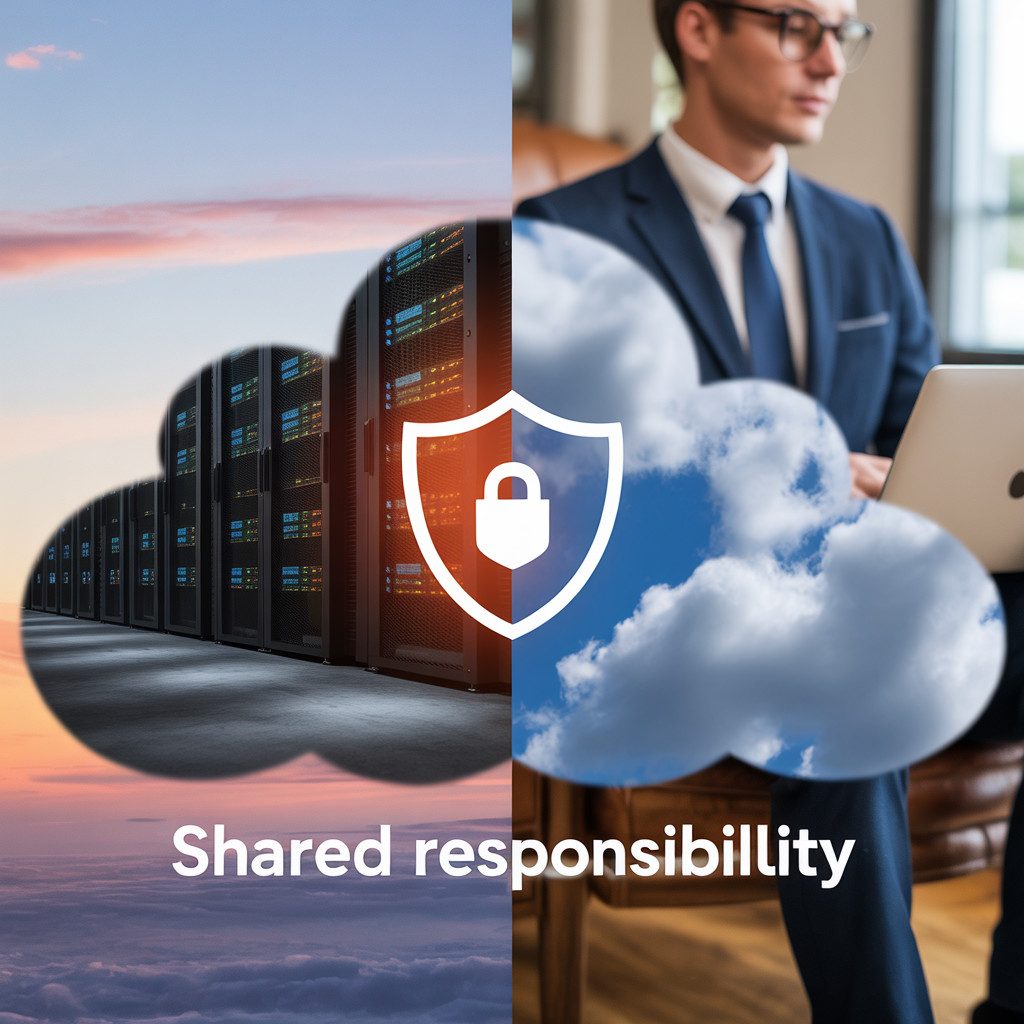
A. Physical infrastructure security measures
Picture this: You’re uploading sensitive customer data to the cloud, but have you considered who’s guarding the actual buildings where your data lives? Your cloud provider handles this crucial first layer of security.
When you partner with major providers like AWS, Azure, or Google Cloud, they’re responsible for protecting the physical locations housing their data centers. This includes:
- 24/7 security personnel and video surveillance
- Biometric access controls and security badges
- Environmental safeguards against fire, flooding, and power outages
- Multiple layers of physical barriers and checkpoints
You’ll never need to worry about someone breaking into the server room because your provider has invested millions in keeping intruders out.
B. Network and hypervisor protection
The digital highways carrying your data need protection too. Your cloud provider maintains robust network security to shield your workloads from threats.
They’re responsible for:
- Implementing network segmentation and firewalls
- DDoS attack prevention and mitigation
- Encrypting data in transit between their facilities
- Securing the hypervisor layer that separates customer environments
The hypervisor is particularly critical – it’s the technology that allows multiple virtual machines to run on the same physical hardware while keeping them isolated. If the hypervisor gets compromised, everyone’s data is at risk. That’s why providers invest heavily in hardening these systems against attacks.
C. Identity and access management foundations
Cloud providers build the foundation for identity and access management, but you’ll need to build on top of it.
Your provider typically delivers:
- Core authentication infrastructure
- Role-based access controls for their services
- Multi-factor authentication capabilities
- API security controls for service interactions
They’ve created the toolkit, but you’re responsible for using it properly. Think of it like this: they provide the locks, but you decide who gets the keys and how those keys are used.
D. Service-specific security controls
Different cloud services come with different built-in protections. Your provider tailors security based on what you’re using.
For storage services, providers typically handle:
- Data encryption at rest
- Object-level permissions
- Versioning and backup capabilities
For compute services, they manage:
- Host operating system patching
- Instance isolation
- Hardware-level security
For database services, they maintain:
- Query injection prevention
- Backup infrastructure
- Encryption capabilities
Remember though – these controls are just the foundation. You’ll still need to configure and manage these security features according to your specific needs.
Customer Responsibilities
A. Data classification and protection requirements
Think about your sensitive data like you’d think about your house keys. You wouldn’t leave them on your front porch, right? In the cloud, you’re responsible for knowing what data you have and how sensitive it is.
You need to:
- Label your data based on sensitivity (public, internal, confidential)
- Set up encryption for data at rest and in transit
- Create retention policies that match your industry requirements
- Know where your data lives geographically (important for compliance)
The cloud provider gives you the tools, but you decide how to use them. If you’re storing credit card info, that needs stronger protection than your company lunch menu.
B. Identity and access management configuration
Your cloud resources are only as secure as who can access them. You’re on the hook for:
- Setting up proper user permissions (don’t give everyone admin access!)
- Implementing multi-factor authentication
- Managing service accounts and API keys
- Regularly reviewing and removing unused access
- Creating role-based access control that follows the principle of least privilege
Remember when your coworker left but still had access to all the systems for months? That’s exactly what you’re trying to prevent here.
C. Application security best practices
The apps you build and run in the cloud are 100% your responsibility. This means:
- Securing your code through regular security testing
- Patching application vulnerabilities promptly
- Implementing secure coding practices
- Setting up web application firewalls for customer-facing apps
- Validating inputs to prevent injection attacks
If your app has a security flaw, your cloud provider won’t fix it for you. They secure the infrastructure, but your code is your domain.
D. Compliance monitoring and reporting
Cloud doesn’t mean you can forget about compliance. You’re still on the hook for:
- Documenting your security controls
- Running regular compliance scans
- Generating audit logs and reports
- Demonstrating regulatory compliance during audits
- Setting up monitoring for compliance drift
Your cloud provider might have a HIPAA-compliant platform, but if you configure it wrong, that’s on you.
E. Resource configuration and maintenance
Cloud resources don’t maintain themselves. Your responsibilities include:
- Hardening operating systems on your virtual machines
- Applying patches and updates to your systems
- Configuring network security groups and firewalls
- Setting up backup and disaster recovery
- Monitoring resource usage and performance
Think of it like renting an apartment. The building owner maintains the structure, but keeping the inside clean and functional is up to you.
Responsibility Variations Across Service Models
A. Infrastructure as a Service (IaaS) security boundaries
With IaaS, you’re renting the raw infrastructure while maintaining significant control—and responsibility. Think of it like leasing an empty apartment: the landlord (cloud provider) ensures the building is structurally sound and utilities work, but you must furnish, secure, and maintain everything inside.
Your responsibilities include:
- Operating system security patches and updates
- Network configuration and security groups
- Data encryption (both at rest and in transit)
- Identity and access management for your resources
- Application security
The cloud provider only handles:
- Physical security of data centers
- Hypervisor security
- Core infrastructure availability
- Network infrastructure security
This division creates the heaviest security burden for you compared to other service models. When using AWS EC2 instances or Azure VMs, you’re on the hook for almost everything above the virtualization layer.
B. Platform as a Service (PaaS) security considerations
PaaS shifts more responsibility to your provider. You’re now renting a furnished apartment where many elements are already in place and managed.
Your provider handles:
- Operating system security and patching
- Runtime environment maintenance
- Middleware security
- Network controls at the infrastructure level
You’re still responsible for:
- Application code security
- User access control and authentication
- Data classification and protection
- API security
- Integration security
When you deploy applications to services like Azure App Service or AWS Elastic Beanstalk, you don’t worry about OS patching, but you must ensure your application code doesn’t contain vulnerabilities.
C. Software as a Service (SaaS) security limitations
With SaaS, your provider shoulders the most responsibility. You’re essentially staying at a fully-serviced hotel where almost everything is managed for you.
Your provider covers:
- Application security and availability
- Infrastructure security
- Patching and updates
- Physical and network security
Your responsibilities narrow to:
- User access management
- Data sensitivity classification
- Compliance with relevant regulations for your data
- Secure usage of the application
When using services like Salesforce, Microsoft 365, or Google Workspace, you can’t modify the underlying application code, but you must configure security settings correctly and manage who has access to what data.
D. Serverless computing responsibility shifts
Serverless computing represents the most dramatic shift in the responsibility model. Your provider handles nearly everything except your function code and data.
What you manage:
- Function code security
- Authentication and authorization logic
- Data validation and security
- Third-party dependencies and libraries
What your provider manages:
- Runtime environment
- Scaling and availability
- OS and server security
- Network configuration
This dramatic shift means you’re freed from infrastructure concerns but must be extra vigilant about your code security. A vulnerable dependency in your AWS Lambda function or Azure Function can still expose your data, even though you never manage a server.
Practical Implementation of Shared Responsibilities
Security Assessment Frameworks
Turning the shared responsibility model from concept to reality starts with knowing where you stand. Security assessment frameworks help you map out who’s doing what in your cloud setup.
The Cloud Security Alliance’s Cloud Controls Matrix (CCM) breaks down responsibilities into digestible chunks. It’s like having a checklist that shows exactly which security controls fall on your shoulders versus your provider’s.
NIST’s Cybersecurity Framework offers another practical approach. You can use it to identify gaps in your security posture and determine whether you or your cloud provider needs to address them.
Don’t skip the CIS Benchmarks either. They give you specific, technical guidelines for securing your cloud environments across AWS, Azure, and Google Cloud.
Compliance Automation Tools
Manual tracking of responsibilities is a nightmare waiting to happen. That’s where automation tools come in clutch.
Cloud Security Posture Management (CSPM) tools constantly scan your environment for misconfigurations and compliance issues. Products like Prisma Cloud and CloudGuard automatically flag when you’ve left a security responsibility unfulfilled.
Configuration management tools like Terraform and AWS CloudFormation let you define security parameters as code, making it nearly impossible to deploy resources without the proper security controls in place.
Third-Party Security Solutions
The reality? Your cloud provider won’t cover all your security needs. Third-party solutions fill those gaps beautifully.
Cloud Access Security Brokers (CASBs) sit between your users and cloud resources, giving you visibility and control beyond what native cloud tools provide. They’re especially handy for monitoring unusual user behavior that might signal a breach.
Data Loss Prevention (DLP) solutions help ensure your sensitive information stays protected, regardless of whether it’s your responsibility or the provider’s.
Multi-cloud security platforms offer unified protection across different cloud environments, simplifying your side of the shared responsibility equation.
Documentation and Governance Strategies
Documentation isn’t just busywork—it’s your safety net when responsibilities get murky.
Create responsibility assignment matrices (RACI charts) specifically for cloud security. These clearly document who’s Responsible, Accountable, Consulted, and Informed for each security control.
Develop runbooks for security incidents that outline exactly who responds to what. When ransomware hits, you don’t want to be flipping through cloud service agreements to figure out who should be taking action.
Regular governance reviews keep your implementation current. Set quarterly sessions to review changes in your cloud usage and provider offerings that might shift responsibilities.
Consider building a cloud center of excellence (CCoE) team that specializes in managing your organization’s end of the shared responsibility bargain.
Common Security Gaps and How to Address Them
A. Misconfigurations and remediation approaches
Cloud misconfigurations happen more than you might think. You leave a storage bucket public, forget to enable encryption, or use overly permissive access controls. Boom—security gap.
To fix these issues, you need to:
- Implement infrastructure as code (IaC) to standardize your deployments and reduce human error
- Use configuration scanning tools like Cloud Security Posture Management (CSPM) solutions that continuously check for misalignments
- Establish configuration baselines for your environments and enforce them through automated policies
When you discover a misconfiguration, don’t just fix it—understand why it happened. Was it knowledge gaps? Lack of processes? Fixing the root cause prevents repeat issues.
B. Overlooked customer responsibilities
You might assume your cloud provider handles more than they actually do. This mistake can leave critical security controls unimplemented.
Common blind spots include:
- Data classification and protection – You’re always responsible for knowing what data you have and how it should be protected
- Identity and access management – Your provider offers the tools, but you need to configure them properly
- Endpoint security – The devices accessing your cloud resources remain your responsibility
- Application security – Your code, your responsibility—providers don’t check for vulnerabilities in your applications
Create a detailed responsibility checklist specific to your cloud services. Review it quarterly to ensure nothing falls through the cracks.
C. Security monitoring across responsibility boundaries
Monitoring gets tricky when responsibilities split between you and your provider. You need visibility across both sides of the fence.
Build a comprehensive monitoring strategy that:
- Integrates cloud provider logs with your security information and event management (SIEM) system
- Establishes clear alert thresholds for events that might indicate cross-boundary issues
- Creates playbooks for incidents that require coordination with your provider
- Regularly tests response procedures to ensure smooth handoffs between your team and provider support
Remember that the most dangerous security gaps often exist at the boundaries between responsibilities. Your monitoring must bridge these gaps, not stop at them.
Future of the Shared Responsibility Model
Impact of emerging technologies on security responsibilities
The cloud security landscape is changing fast. You’re probably noticing new technologies emerging every few months that shift how you handle your security responsibilities.
Container technologies like Kubernetes have blurred traditional boundaries – when you deploy containerized applications, you’re responsible for securing the container configurations while your provider handles the underlying infrastructure.
Serverless computing is another game-changer. You no longer worry about patching operating systems, but you’re still on the hook for securing function code and API configurations. The responsibility line keeps moving.
Edge computing is pushing security responsibilities even further out. When your data processing happens closer to the source, you need to rethink who’s responsible for what at each point in the network.
Zero trust security integration
“Never trust, always verify” isn’t just a catchy phrase – it’s becoming essential to your cloud security strategy.
You’ll need to implement continuous verification regardless of what your cloud provider handles. This means setting up:
- Identity verification for every user
- Device validation before any access
- Least privilege access controls
- Micro-segmentation of your network
Your responsibilities now extend beyond traditional perimeters. Even if you’re using SaaS applications, you’re still accountable for configuring proper authentication policies and monitoring user behaviors.
Regulatory influences on responsibility definitions
Regulations are reshaping the shared responsibility model faster than most companies can adapt. You’re facing a growing list of compliance requirements that explicitly define what falls into your court versus your provider’s.
GDPR made you a data controller while your cloud provider became the processor – but you’re still the one facing massive fines for breaches. California’s CCPA and other regional regulations have similar implications for your responsibilities.
Industry-specific regulations are getting more prescriptive too. If you’re in healthcare, HIPAA requires you to maintain detailed audit trails even in cloud environments. Financial services? You’re dealing with requirements that mandate specific security controls regardless of your cloud deployment model.
AI and automation reshaping security ownership
AI is dramatically changing who handles what in cloud security. You can now automate threat detection that previously required dedicated security teams. Your provider might offer AI-powered security services, but you’re responsible for configuring and tuning them to your specific needs.
Security automation is becoming less optional and more mandatory. You’ll find yourself:
- Setting up automated compliance checks
- Deploying self-healing infrastructure
- Implementing automated incident response
The good news? This automation helps you handle your growing responsibilities without proportionally increasing your team size. The challenge? You need new skills to manage these AI-driven security tools effectively.
The Shared Responsibility Model serves as the foundation for effective cloud security, clearly delineating where provider obligations end and customer responsibilities begin.
While cloud providers manage the security of their infrastructure, physical facilities, and host operating systems, customers must protect their data, applications, access controls, and compliance requirements. This division shifts across service models; IaaS demands more customer security management than SaaS, where providers handle most security aspects.
Implementing this model requires a comprehensive security strategy that includes regular risk assessments, employee training, and deployment of appropriate security tools.
By understanding and embracing your role in the shared responsibility framework, you can build a resilient cloud environment that protects your most valuable assets.
Start by mapping your current security controls against your responsibilities, identify any gaps, and develop a roadmap to strengthen your security posture in the cloud.
I’ve built a platform that shows you how you can build the right cybersecurity skills to help businesses achieve their cloud security goals while you’re also building the career you love. Check it out here and start working on projects that get you hired.
The Author